What happened on Kristallnacht, 9–10 November 1938
On this day · 9 November 1938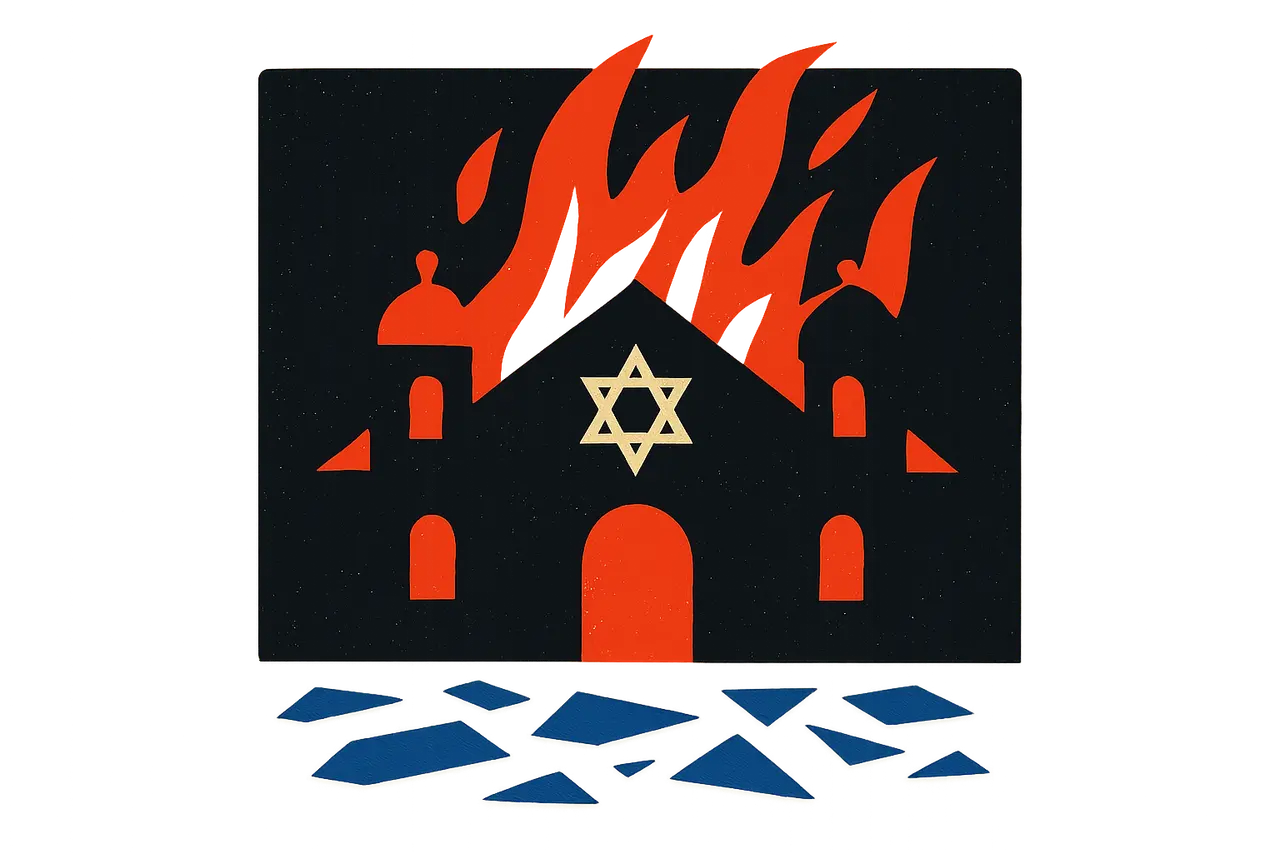
Why the death toll and arrest figures differ, why Germans now say "November pogroms", and what the Nazi state did in the weeks after.
Kristallnacht was a nationwide pogrom on 9–10 November 1938 across Germany, annexed Austria and the Sudetenland, in which Nazis burned more than 1,400 synagogues, wrecked thousands of Jewish shops and homes, and sent about 26,000 Jewish men to concentration camps.
The pretext was the shooting in Paris of diplomat Ernst vom Rath by Herschel Grynszpan, 17, whose family was among some 17,000 Polish Jews forced over the border on 27–29 October. Vom Rath died on 9 November, as Nazi leaders met in Munich to mark Hitler’s failed 1923 putsch. Goebbels authorised “spontaneous” action while keeping the Party’s role hidden. Firefighters were told only to stop flames spreading to nearby buildings.
The figures vary because sources count differently. The Gestapo ordered 20,000–30,000 arrests; the Jewish Museum Berlin puts arrests at about 30,000, while the US Holocaust Memorial Museum counts about 26,000 men held in Dachau, Buchenwald and Sachsenhausen. Counts that include only those killed in the riot itself come to around 90. The Jewish Museum’s figure of about 400 adds people driven to suicide, and hundreds more died in the camps over the following weeks.
In German the word Kristallnacht is now generally avoided: it is a euphemism, it refers only to broken glass, and the violence continued in daylight. Germans speak of the November pogroms instead. What followed shows the pogrom was a turning point after five years of discrimination under Hitler’s government:
- 12 November 1938: Göring’s meeting fines Jews 1 billion Reichsmarks collectively and confiscates their insurance payouts for the damage.
- November 1938: Roosevelt condemns the attacks and calls the US ambassador, Hugh Wilson, home from Berlin.
- 3 December 1938: A decree regulates the seizure of Jewish businesses, the process called “Aryanization”.
- December 1938–May 1940: Britain’s Kindertransport brings about 10,000 children to safety.
- By September 1939: Around 200,000 Jews have left the Reich.
Sources & references
4 referencesWell-established. Corroborated by 3 independent sources.