Treaty of Tordesillas: Spain and Portugal moved the Pope's line
On this day · 7 June 1494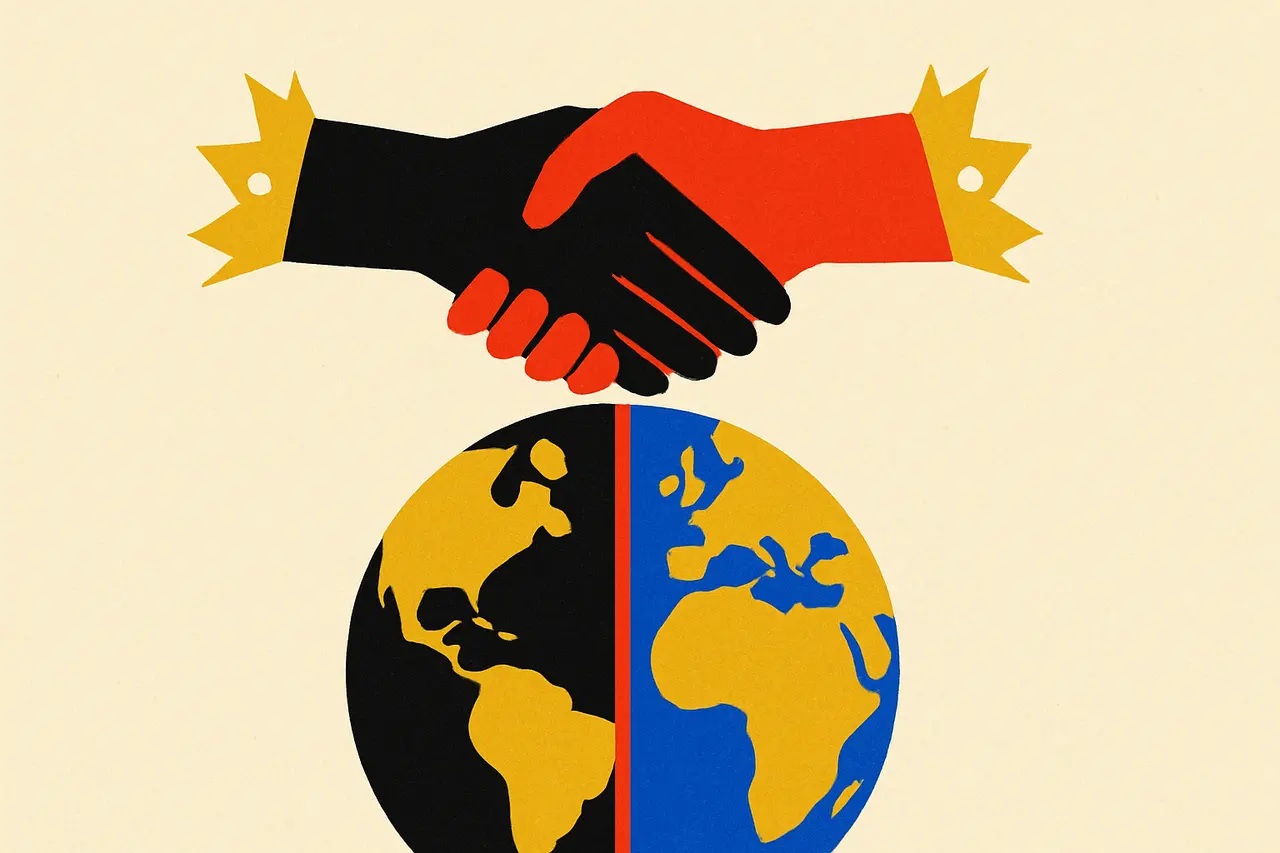
In 1494 two crowns overrode a papal decree, shifting their dividing meridian to 370 leagues west of Cape Verde — a line no one could actually measure.
The Treaty of Tordesillas, signed on 7 June 1494, divided newly found lands outside Europe between Spain and Portugal along a pole-to-pole line 370 leagues west of the Cape Verde Islands: lands to the east went to Portugal, those to the west to Spain. It is often remembered as the Pope carving up the world, but Tordesillas was the two crowns overriding a papal line.
The sequence shows how fast it moved after Columbus returned:
- 4 May 1493: Pope Alexander VI, born in Spain, issues the bull Inter caetera, awarding Spain everything west of a line just 100 leagues beyond the Azores or Cape Verde Islands. Portugal objects that its rights were overlooked.
- 1493–94: King John II of Portugal negotiates directly with Ferdinand and Isabella to push the line west.
- 7 June 1494: Envoys sign at Tordesillas, moving the boundary to 370 leagues — nearly four times as far out.
- 2007: The original treaty documents, held in Spanish and Portuguese archives, are inscribed on UNESCO’s Memory of the World register.
The line nobody could draw
The treaty was precise on paper and vague in practice. Its third article ordered both kings to send two or four caravels within ten months, carrying pilots and astrologers from both sides, to meet at Grand Canary and sail together to fix the boundary, with towers raised wherever it crossed land. But no one in 1494 could measure longitude at sea, and as Princeton University Library notes, the line was “neither defined by degrees of longitude nor strictly enforced”. So the two crowns were left free to read it differently.
The extra 270 leagues mattered. They put the eastern bulge of South America on Portugal’s side, which UNESCO credits with “the birth of Brazil” — the reason Brazil speaks Portuguese. Spain kept most of the rest of the Americas, a claim it pressed through events such as Ponce de León’s sighting of Florida in 1513.
Sources & references
3 referencesWell-established. Corroborated by 3 independent sources.