Gandhi was thrown off a train at Pietermaritzburg in 1893
On this day · 7 June 1893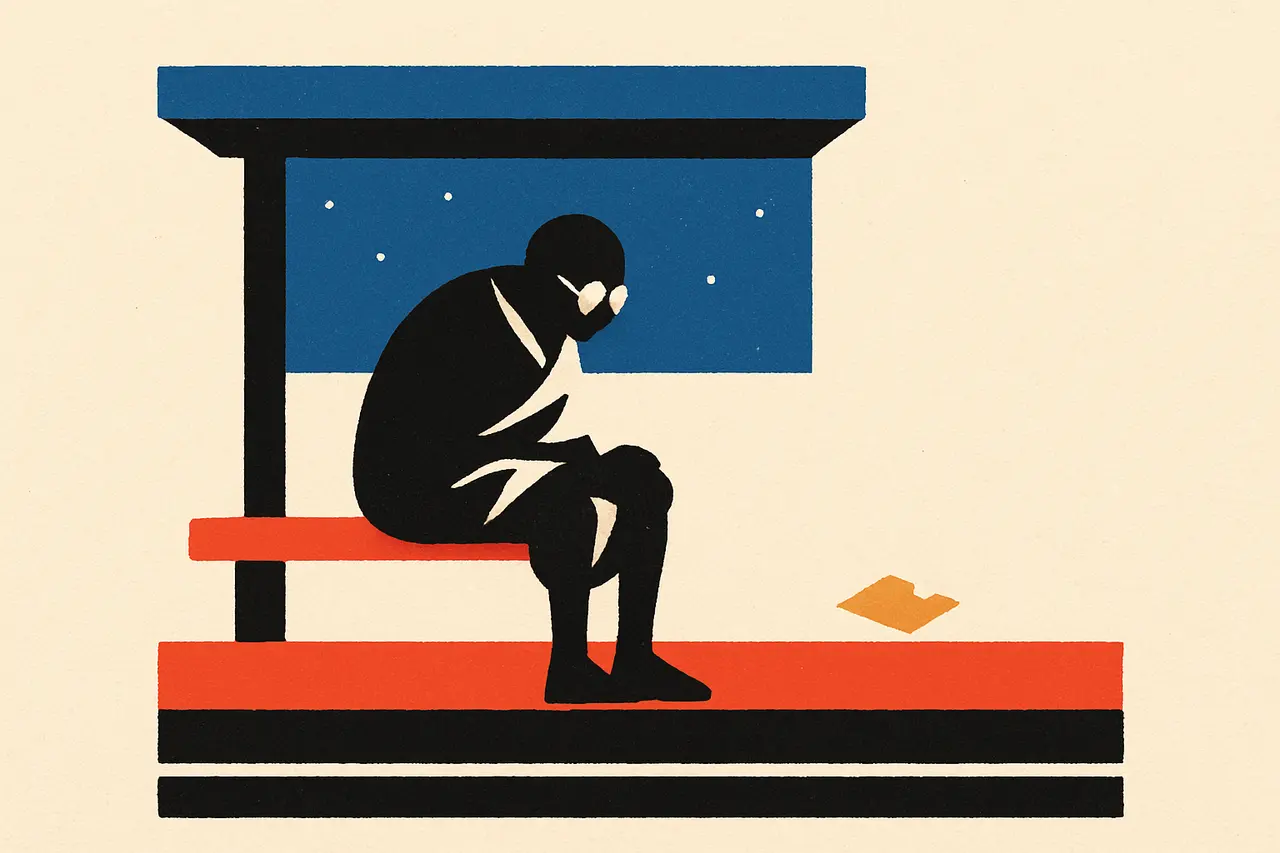
On 7 June 1893 a 23-year-old lawyer with a first-class ticket was pushed onto a freezing Natal platform. His own account is less heroic than the legend.
On the night of 7 June 1893, Mohandas K. Gandhi, a 23-year-old Indian lawyer with a valid first-class ticket, was pushed off a train at Pietermaritzburg station in Natal, South Africa, because a white passenger objected to sharing his compartment. He was travelling from Durban to Pretoria to work on a merchant’s lawsuit.
What happened on the platform?
Gandhi’s own account in his Autobiography is precise. The train reached Maritzburg at about 9 pm. A passenger “looked me up and down” and came back with officials, who told Gandhi to move to the van compartment. He refused. “You must leave this compartment, or else I shall have to call a police constable to push you out,” one said. “Yes, you may,” Gandhi replied. The constable took him by the hand and pushed him out, and the train left without him. He sat in an unlit waiting room in the bitter highland winter. His overcoat was in his luggage, which had been taken off the train, and he “did not dare to ask for it lest I should be insulted again”.
Was this the night satyagraha was born?
Not exactly. His decision that night was measured: he would neither go home nor fight on the spot, but carry on to Pretoria and finish the case.
“The hardship to which I was subjected was superficial — only a symptom of the deep disease of colour prejudice.” (M.K. Gandhi, An Autobiography)
The next morning he telegraphed the railway’s General Manager, who defended his staff. Local Indian merchants told him such treatment was nothing unusual. The humiliation was not over. On the stagecoach from Charlestown the following day, the coach’s leader tried to make him sit on a piece of sackcloth on the footboard. When Gandhi refused, the man beat him until other passengers intervened.
The organised resistance came later. In August 1894 Gandhi helped found the Natal Indian Congress, the first permanent political organisation defending Indians’ rights in South Africa. He spent 21 years in the country, developing the methods he later used in the 1930 Salt March.
Sources & references
4 referencesWell-established. Corroborated by 2 independent sources.