The first Allied troops into Paris in 1944 were Spanish
On this day · 25 August 1944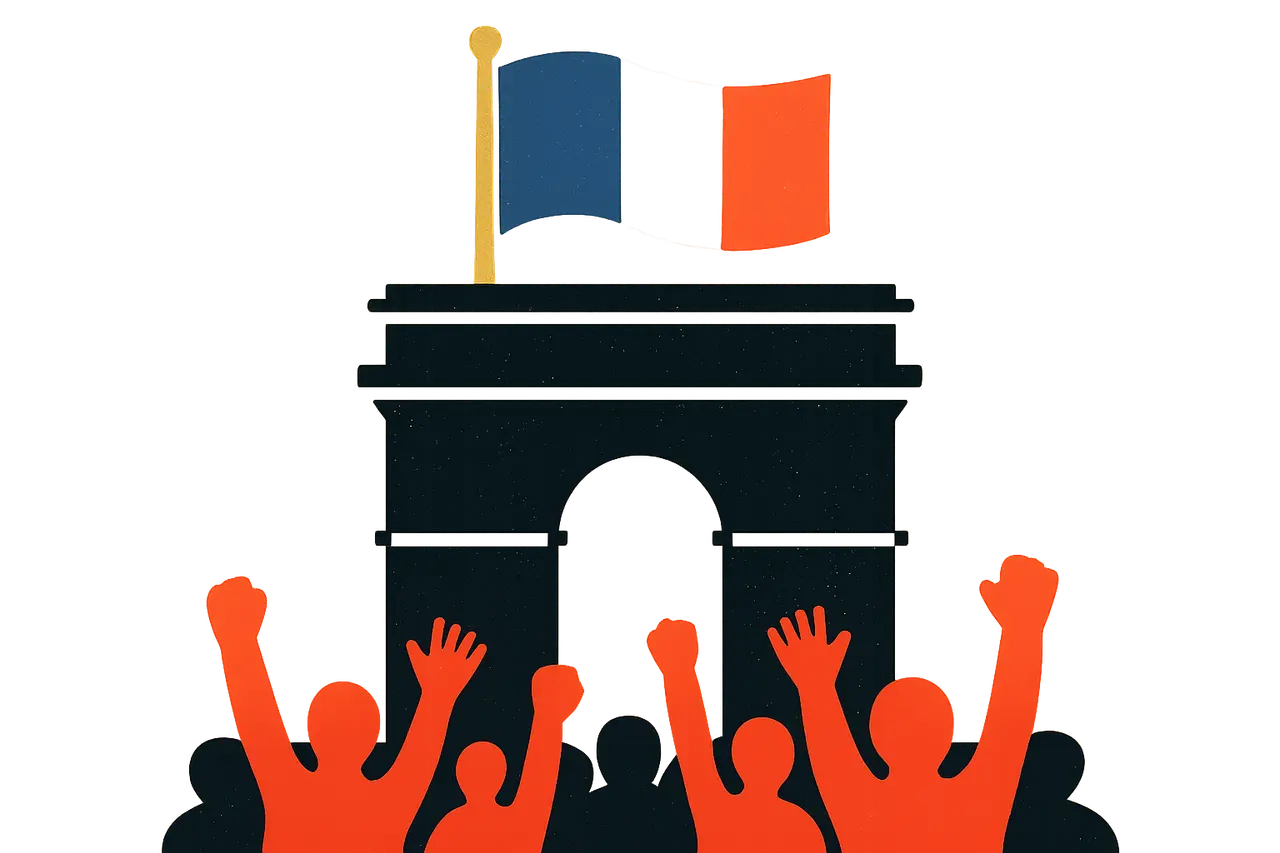
Paris was freed on 25 August 1944 — but the first Allied soldiers to reach the Hôtel de Ville were Spanish Republican exiles, the night before.
Paris was liberated on 25 August 1944, when the German garrison commander, General Dietrich von Choltitz, was captured and signed a formal surrender with General Philippe Leclerc at 3 p.m., ending four years of occupation. The first Allied soldiers had reached the heart of the city the night before, and most of them were Spanish.
Who entered Paris first?
The 9th Company of the Chad Marching Regiment, part of Leclerc’s French 2nd Armored Division, reached the Hôtel de Ville on the evening of 24 August. Of its 160 men, 146 were Spanish Republicans who had fled to North Africa after Franco’s victory in 1939, so the company was nicknamed “La Nueve”, Spanish for “nine”. Recognition came late: the City of Paris gave its Grande Médaille de Vermeil to three survivors only in 2010, and in 2015 renamed the Hôtel de Ville garden after the fighters of La Nueve.
Leclerc was there at all because the French forced the issue. Eisenhower had planned to bypass Paris, since a street battle would cost time and supplies and might wreck its monuments. A Resistance uprising, joined by the city’s police, changed his mind, and on 22 August he ordered the city taken, keeping his promise to de Gaulle that French troops would lead.
Did Choltitz really save Paris?
Only partly. Hitler had demanded that Paris fall to the Allies only as “a field of ruins”, and Choltitz did not carry out the destruction. But the National WWII Museum points out that his 20,000 men had no chance against three million Parisians with Allied tanks arriving, and that in his last days he fed his superiors reports of imaginary operations. Leclerc’s advance still cost 300 casualties and 35 tanks by the evening of 24 August.
About 15,000 Germans were captured in the city. That evening General Charles de Gaulle declared Paris liberated by the French, barely mentioning the Allies, and on 26 August he walked from the Arc de Triomphe down the Champs-Élysées to Notre-Dame as snipers still fired on the crowds. The war in Europe had another eight months to run.
Sources & references
4 referencesWell-established. Corroborated by 4 independent sources.