Napoleon crowned himself in 1804 — and it was planned
On this day · 2 December 1804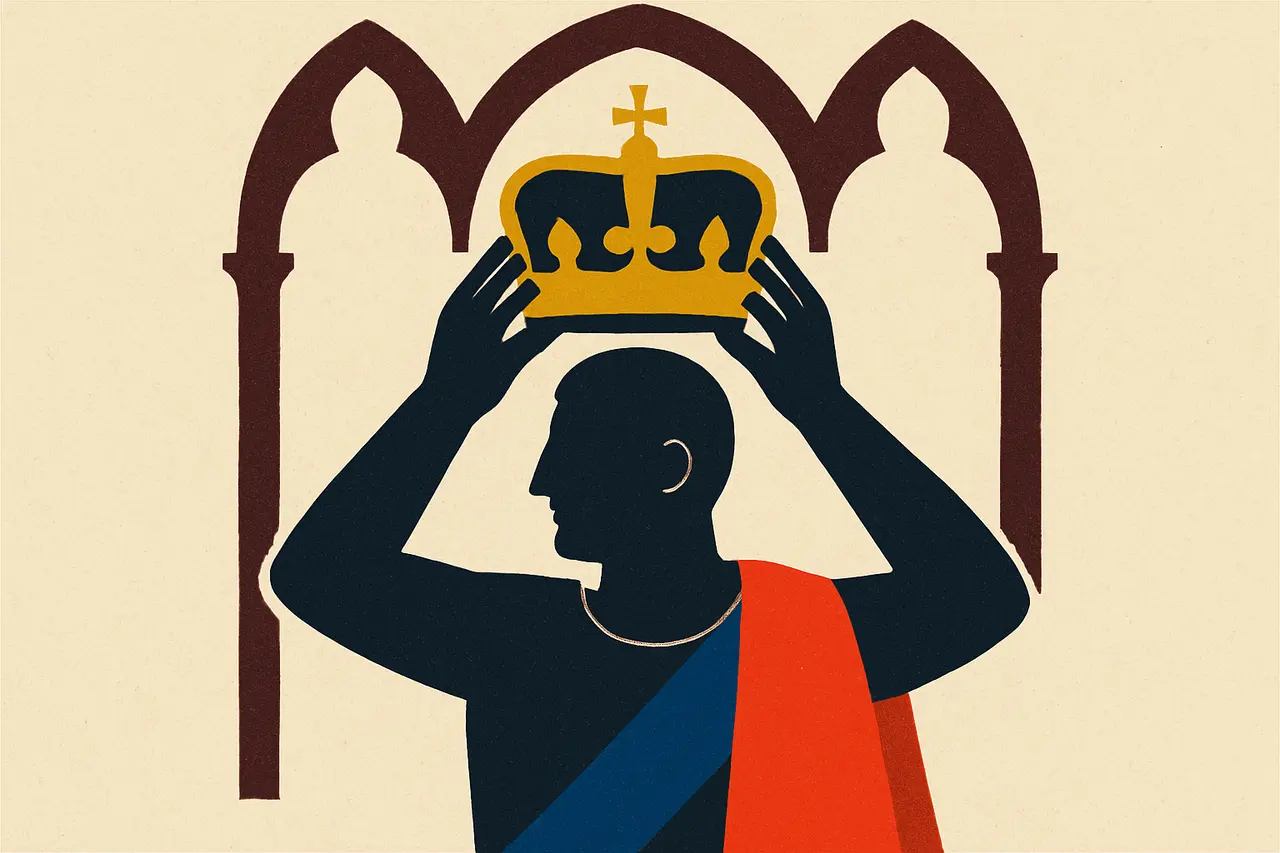
Napoleon's self-coronation at Notre-Dame wasn't a snub sprung on the Pope: it followed the agreed script, and David's famous painting edits it out.
Napoleon Bonaparte crowned himself Emperor of the French at Notre-Dame de Paris on 2 December 1804, lifting the crown from the altar and setting it on his own head while Pope Pius VII looked on, then crowning his wife Joséphine as empress.
Did Napoleon snatch the crown from the Pope?
No. The popular version has a startled pontiff watching the crown seized from his hands, but the Fondation Napoléon’s account says Napoleon picked it up from the altar “following the agreed order of service”. The gesture was scripted in advance. Its meaning was still pointed: the 35-year-old general owed his throne to no churchman, and he raised his hand at the ceremony to swear an oath to respect the constitution.
Inviting the Pope at all was politics. Charlemagne had been crowned by a pope in 800, and Napoleon wanted that lineage without the subordination. Relations were raw: French armies had invaded the Papal States, and Pius’s predecessor, Pius VI, had died a prisoner in France. Months earlier the Senate had proclaimed Napoleon emperor; Notre-Dame added the sacred theatre, in a ceremony that ran for about three hours.
Why does David’s painting show him crowning Joséphine?
Because the real moment looked too arrogant. Jacques-Louis David’s 1805 sketch showed Napoleon crowning himself, sword pressed to his chest. As political winds shifted, David switched to the gentler scene of the emperor crowning his kneeling wife. Napoleon also had David restore the Pope’s raised hand of blessing, painted back in early 1808, and insisted his mother appear, although Madame Mère, who disapproved of the coronation, had stayed away.
The finished canvas, 6.21 by 9.79 metres, occupied David from December 1805 to November 1807 and now hangs in the Louvre. It is a superb record of the day, and a carefully edited one.
Sources & references
4 referencesWell-established. Corroborated by 3 independent sources.