Barney Clark got the first permanent artificial heart in 1982
On this day · 2 December 1982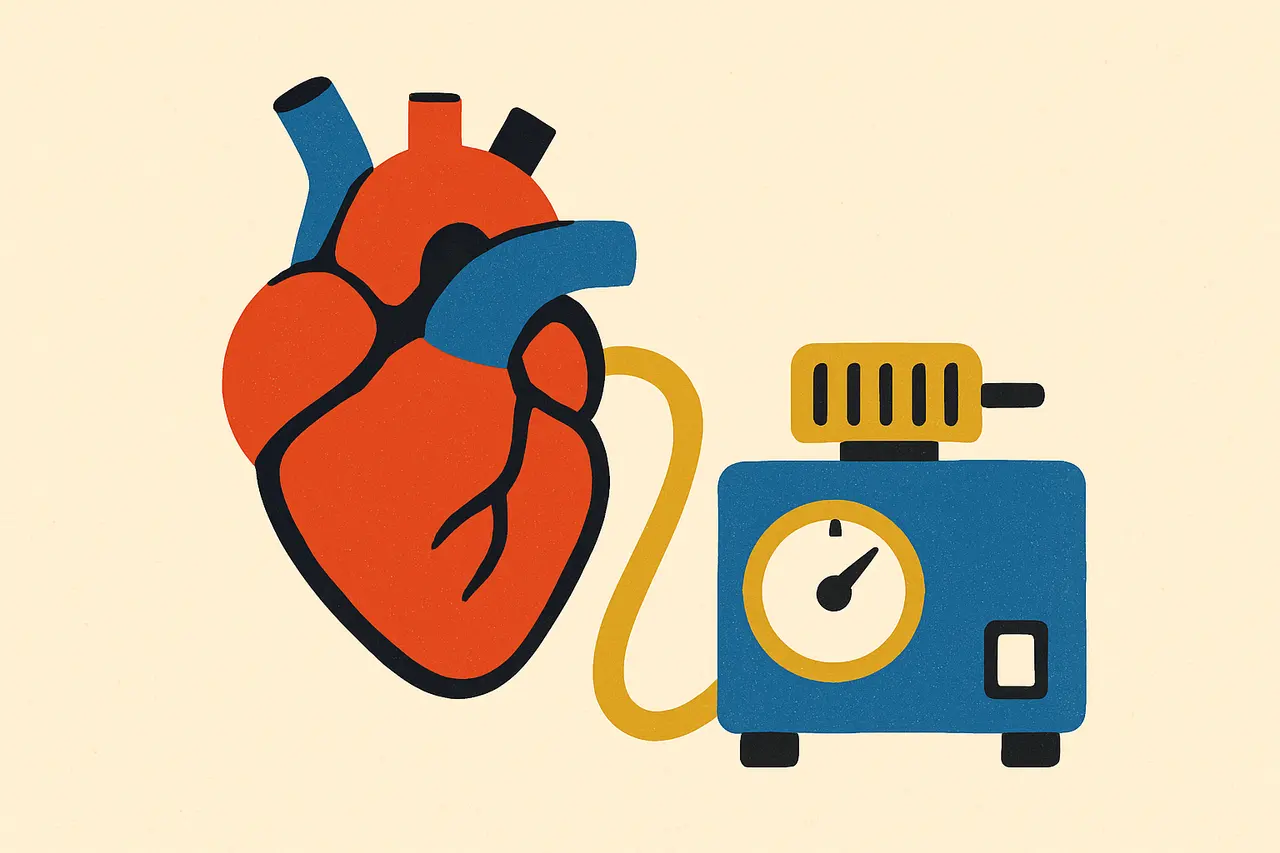
In 1982 a dying dentist received the first artificial heart meant to stay for good. He lived 112 days; its descendant is still used.
Barney Clark, a 61-year-old dentist with end-stage cardiomyopathy, became the first person to receive a permanent total artificial heart on 2 December 1982, when surgeon William DeVries implanted a Jarvik-7 at the University of Utah. He lived 112 days.
Clark is often described, even in archive records, as the first artificial-heart patient, but he wasn’t. In 1969 Denton Cooley’s team in Texas implanted a total artificial heart in a 47-year-old man, who lived on it for 64 hours until a donor heart was found and died soon after the transplant. That device was a stopgap. Clark was too sick to qualify for a donor heart, so his was meant to stay for good: first permanent, not first artificial.
The operation ran from near midnight until about 6 a.m., after a winter storm forced the surgeons to sleep at the hospital, and more than 70 reporters camped out for months. The Jarvik-7 was powered by a washing-machine-sized air compressor connected through his chest wall, so Clark never left hospital.
He suffered infection, seizures, strokes and a broken valve that had to be replaced, and died in March 1983 of complications from antibiotic-associated colitis. Before his death he said he felt the surgery had been worthwhile.
What came next shaped the field. DeVries moved to the Humana Heart Institute in Louisville, where William Schroeder lived 620 days on a Jarvik-7 before dying in 1986. By the late 1980s more than 70 Jarvik-7s had been implanted, but as bridges to transplant rather than permanent replacements. The design lived on: renamed CardioWest in 1991, it won FDA approval as a bridge to transplant in 2004 and became the SynCardia heart, which since 2010 can run from a portable driver so patients can leave hospital.
Sources & references
4 referencesWell-established. Corroborated by 4 independent sources.