The First Nuclear Chain Reaction Happened Under a Football Stadium
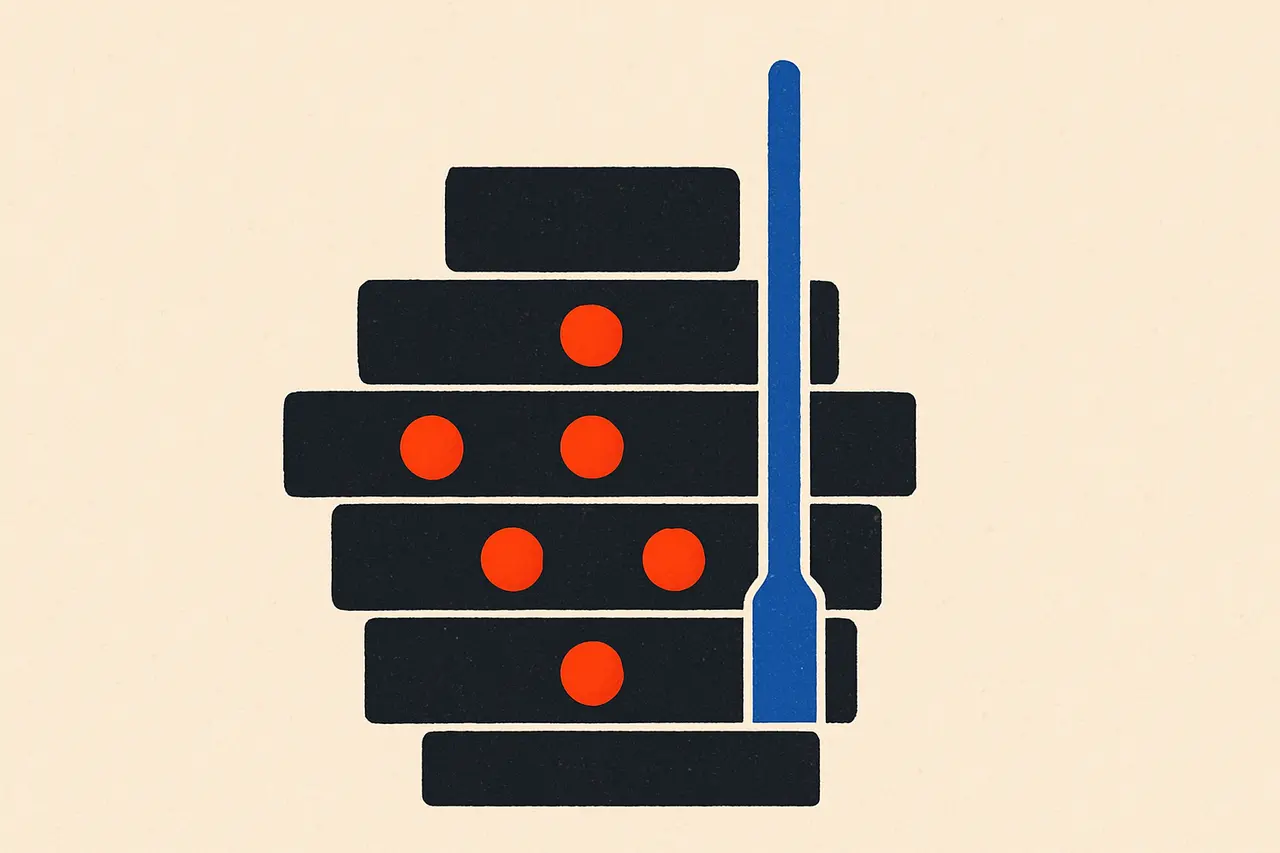
In a squash court beneath Chicago's Stagg Field, humanity first tamed the atom.
On 2 December 1942, on a squash court under the stands of the University of Chicago’s abandoned Stagg Field, physicist Enrico Fermi and his team achieved the first controlled, self-sustaining nuclear chain reaction.
Their reactor, Chicago Pile-1, was a 20-foot heap of about 400 tons of graphite bricks studded with roughly 6 tons of uranium metal and 34 tons of uranium oxide. When a stray neutron splits a uranium nucleus, it releases more neutrons; the graphite slowed them so they could trigger further splits, building a cascade. Cadmium control rods soaked up neutrons to throttle the reaction.
This was the secret Manhattan Project, and the stakes were terrifying — a runaway pile in a populated city. Fermi inched forward, pulling a rod a few inches at a time and checking his instruments against prediction at every step. A “suicide squad” stood on a platform above with buckets of cadmium-salt solution to douse the pile if it ran away, while physicist Norman Hilberry waited with an axe, ready to chop the rope holding a backup safety rod — the original “scram.”
At 3:25 p.m., Fermi announced the reaction was self-sustaining.
The pile produced only about half a watt, barely enough for a small bulb, but it proved the atom’s energy could be released on demand. The news went out by coded phone: “The Italian navigator has landed in the New World… the natives were friendly.” The nuclear age had begun.
Sources & references
2 referencesWell-established. Corroborated by 2 independent sources.