Jamestown colonists go ashore and begin building in Virginia
On this day · 14 May 1607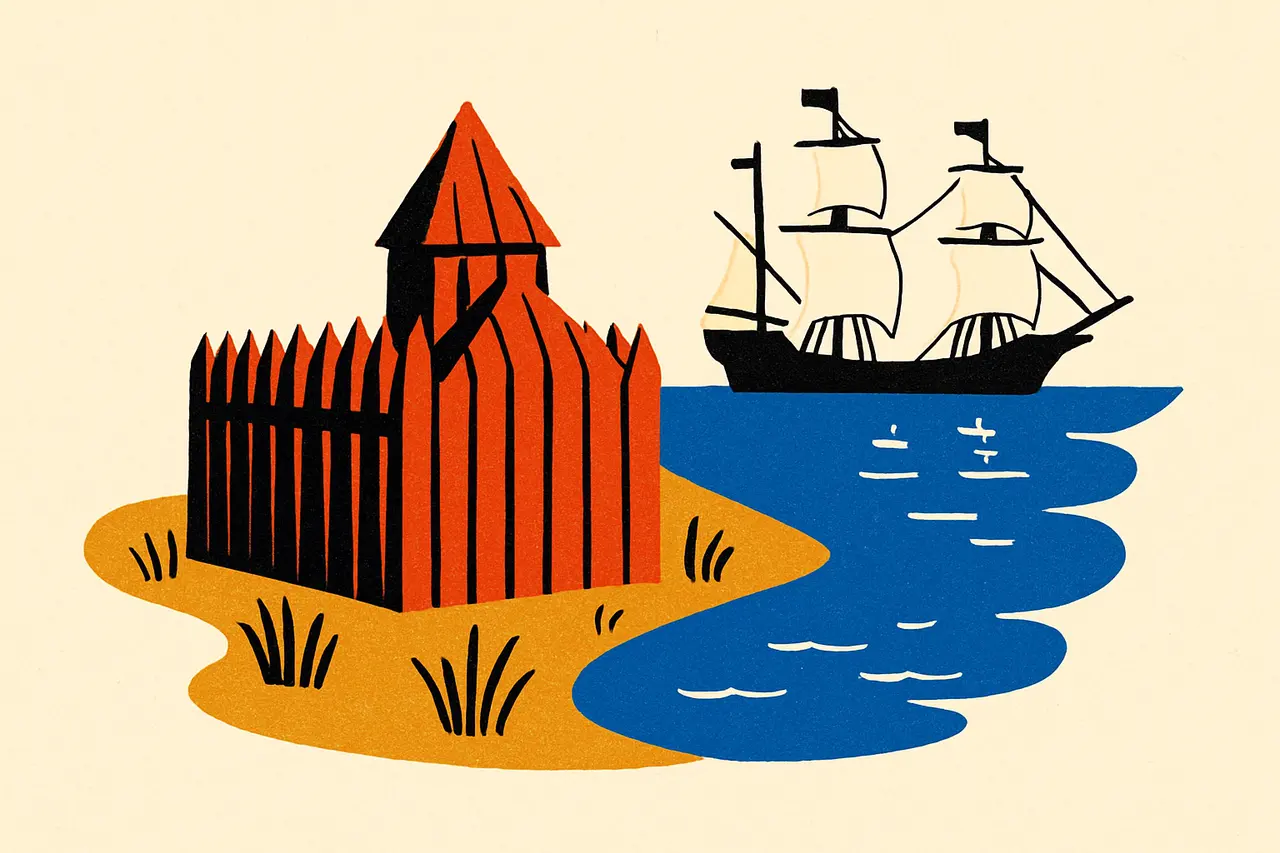
About a hundred English settlers waded onto a marshy island and started the first permanent English foothold in North America.
On May 14, 1607, roughly one hundred English settlers of the Virginia Company went ashore on a low, swampy peninsula about sixty miles up the James River and set to work. They had picked the spot the day before, partly because the deep water let them moor ships to the trees, and partly because the site seemed defensible.
They named it Jamestown for King James I and immediately began felling timber to “beare and plant palisadoes”—a triangular wooden fort enclosing a storehouse, a church, and a cluster of houses. Within days, Powhatan warriors tested the newcomers’ defenses.
It became the first permanent English settlement in North America.
Survival was brutal. Disease, hunger, brackish water, and conflict killed most of the early arrivals, and the colony nearly collapsed during the 1609–1610 “Starving Time.” Yet Jamestown endured, seeding the Virginia colony and, eventually, English America.
Sources & references
2 referencesWell-established. Corroborated by 2 independent sources.