Skylab launched in 1973 and was crippled within 63 seconds
On this day · 14 May 1973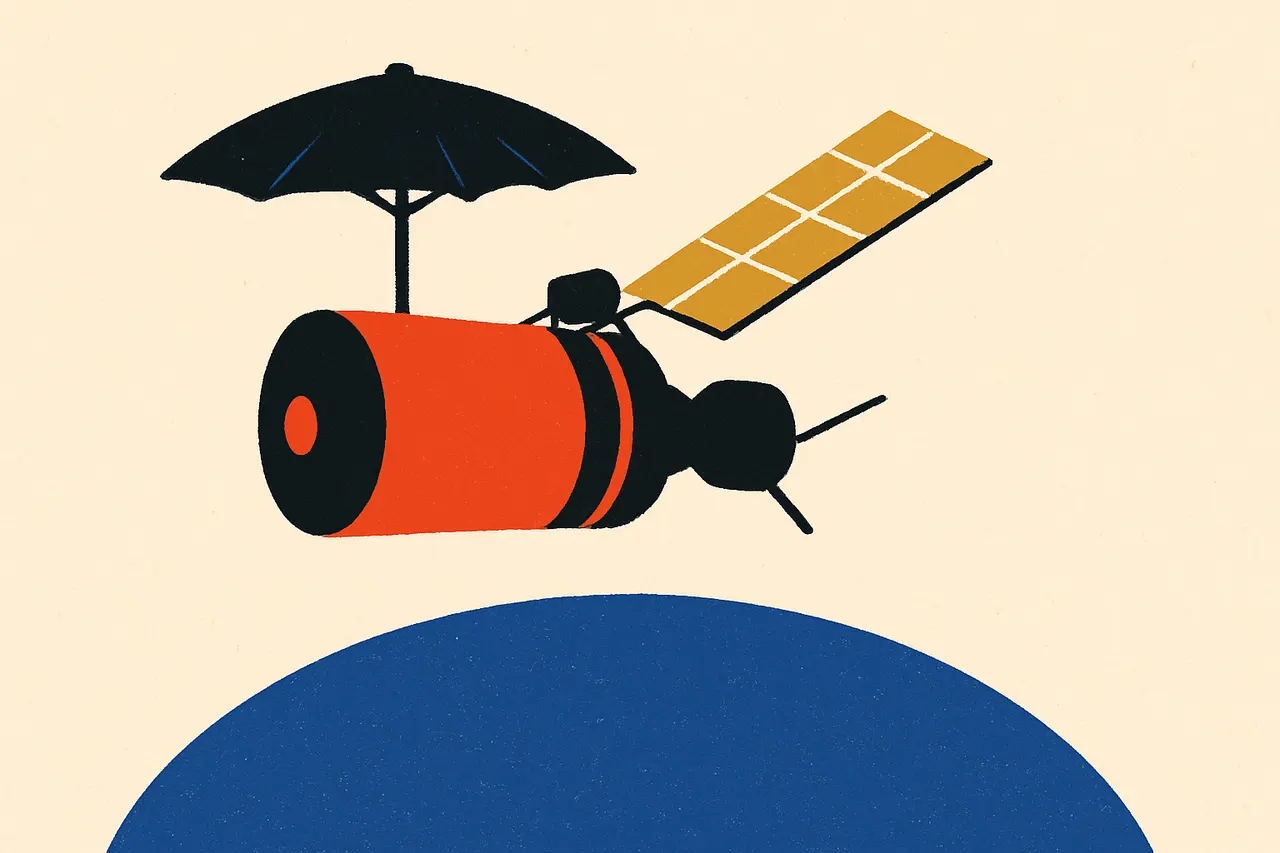
America's first space station rode the last Saturn V to orbit in May 1973, losing its sunshield and a solar wing on the way up.
Skylab, America’s first space station, launched on May 14, 1973, on the last Saturn V ever flown, and was badly damaged before it reached orbit. About 63 seconds after liftoff from Pad 39A, two seconds after passing the sound barrier, air pressure tore off its micrometeoroid shield, which doubled as a sunshade, and loosened both main solar arrays.
Nobody on the ground saw it happen: the rocket had just climbed into a cloud deck. Flight controllers in Houston learned of the trouble from telemetry, and NASA’s later review found the launch had come closer to disaster than anyone realised. Debris from the shield damaged the charges meant to drop the ring between the first and second stages, so the second stage fired into a partly enclosed space and temperatures around its engines climbed to near-catastrophic levels. At 593 seconds, separation rockets then ripped one damaged solar wing away entirely.
Skylab reached orbit generating just 25 watts from its main arrays and heating up steadily. The first crew, due 24 hours after launch, was held back until May 25 while engineers devised a fix; Pete Conrad, Paul Weitz and Joe Kerwin then rigged a parasol sunshade and freed the jammed wing. Three crews lived aboard in all.
How Skylab ended
- Feb 8, 1974: the last crew left, after boosting Skylab’s orbit; it was expected to stay up until March 1983.
- 1977: a solar cycle that grew into the second most active in a century had swelled the upper atmosphere, and revised forecasts now put reentry as early as mid-1979. NASA planned to send a space shuttle to boost or steer it down, but shuttle delays made that impossible.
- July 11, 1979: Skylab reentered, scattering debris over the Indian Ocean and Australia. At 169,000 pounds it was the heaviest spacecraft to reenter up to that time.
Sources & references
5 referencesWell-established. Corroborated by 3 independent sources.