Luna 3 took the first photos of the Moon's far side in 1959
On this day · 7 October 1959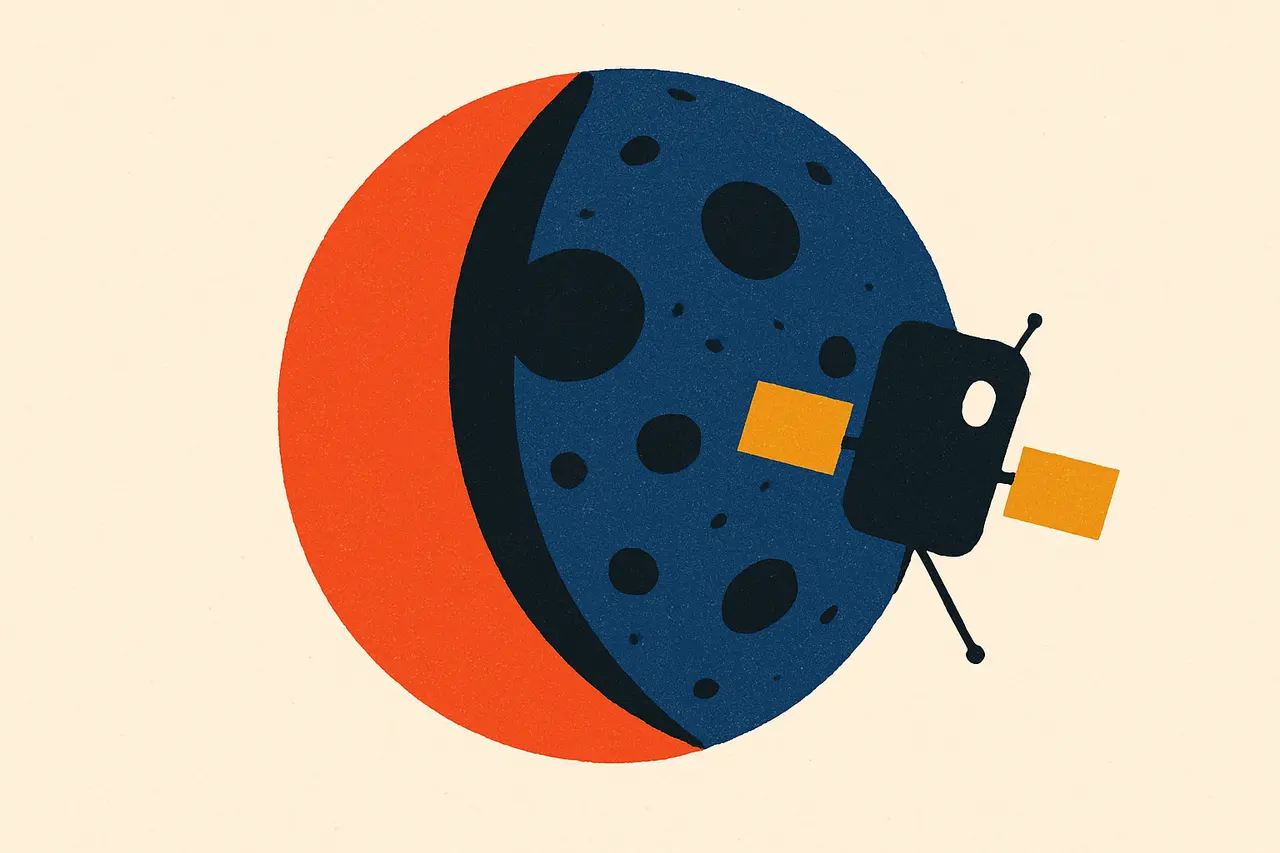
The Soviet probe looked back at a sunlit far side on October 7, 1959; no spacecraft landed there for another 59 years.
The Soviet probe Luna 3 took the first photographs of the far side of the Moon at 03:30 UT on October 7, 1959, from about 63,500 km (39,457 miles) away, and in all shot 29 pictures covering roughly 70% of the hemisphere that never faces Earth.
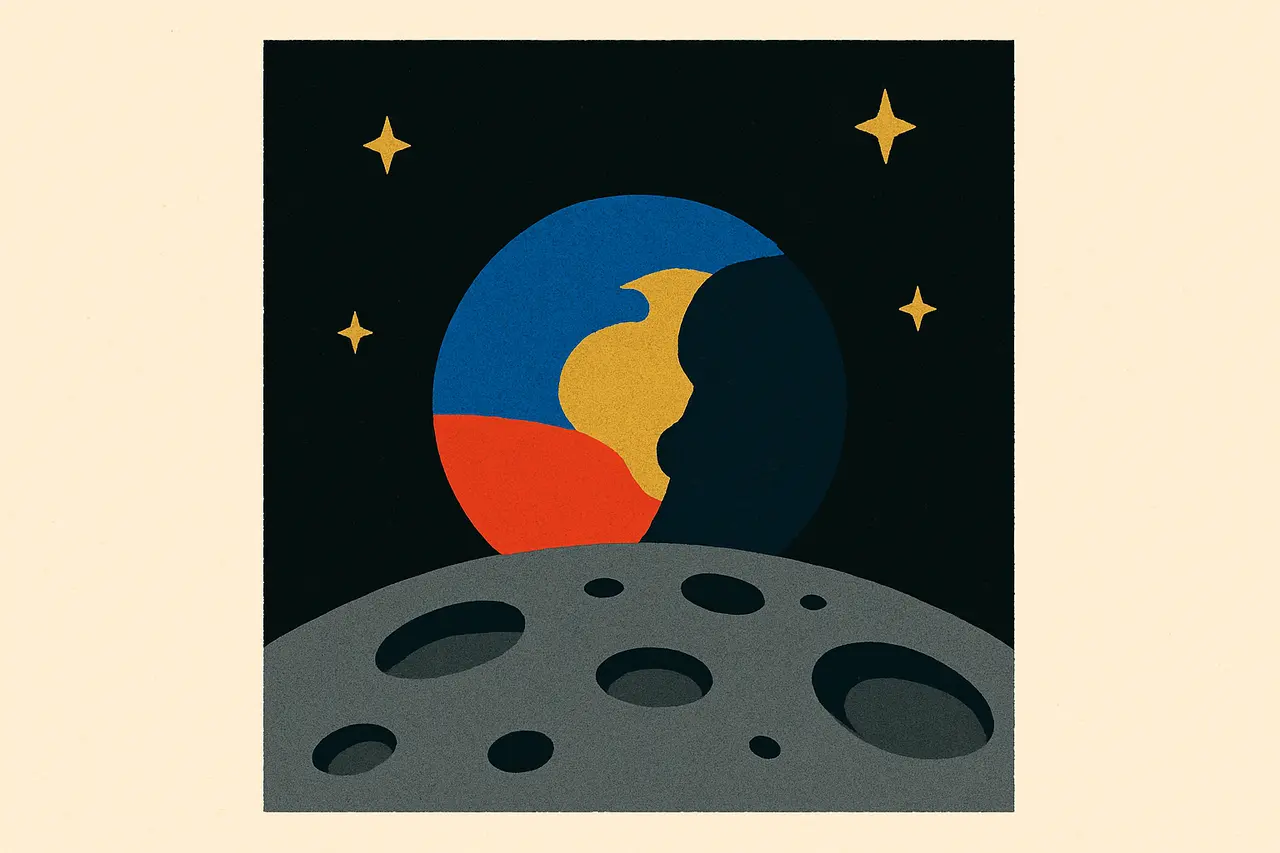
The far side is often called the “dark side,” but it is not permanently dark; it is only permanently hidden from Earth. Luna 3 had already swung past the Moon and, in NASA’s words, looked back at the sunlit far side. The very first frame, centred near 20°N, 105°E, shows the dark patch of Mare Smythii and the bright crater Giordano Bruno.
The Soviets had tried twice before: Luna 1 missed the Moon entirely and Luna 2 crashed into it. Dates for the mission then vary between sources for a simple reason:
- October 4, 1959: Luna 3 launched, two years to the day after Sputnik 1.
- October 6: NASA’s table of lunar missions lists its encounter with the Moon.
- October 7: the photographs were taken, after it had rounded the Moon.
The noisy, low-resolution images were sent home later, as Luna 3’s orbit carried it back toward Earth, yet many features could be recognised. They showed far fewer of the dark lava plains, or maria, that dominate the familiar face. Being first let the Soviets name what they had seen, which is why the prominent crater Tsiolkovsky honours the Russian rocketry pioneer.
No spacecraft landed on the far side for almost six decades after that:
- January 3, 2019: China’s Chang’e 4 made the first far-side landing, relaying its signals home through the Queqiao satellite.
- 2024: Chang’e 6 brought back the first samples from the far side.
Sources & references
4 referencesWell-established. Corroborated by 3 independent sources.