Claudette Colvin refused her bus seat 9 months before Parks
On this day · 2 March 1955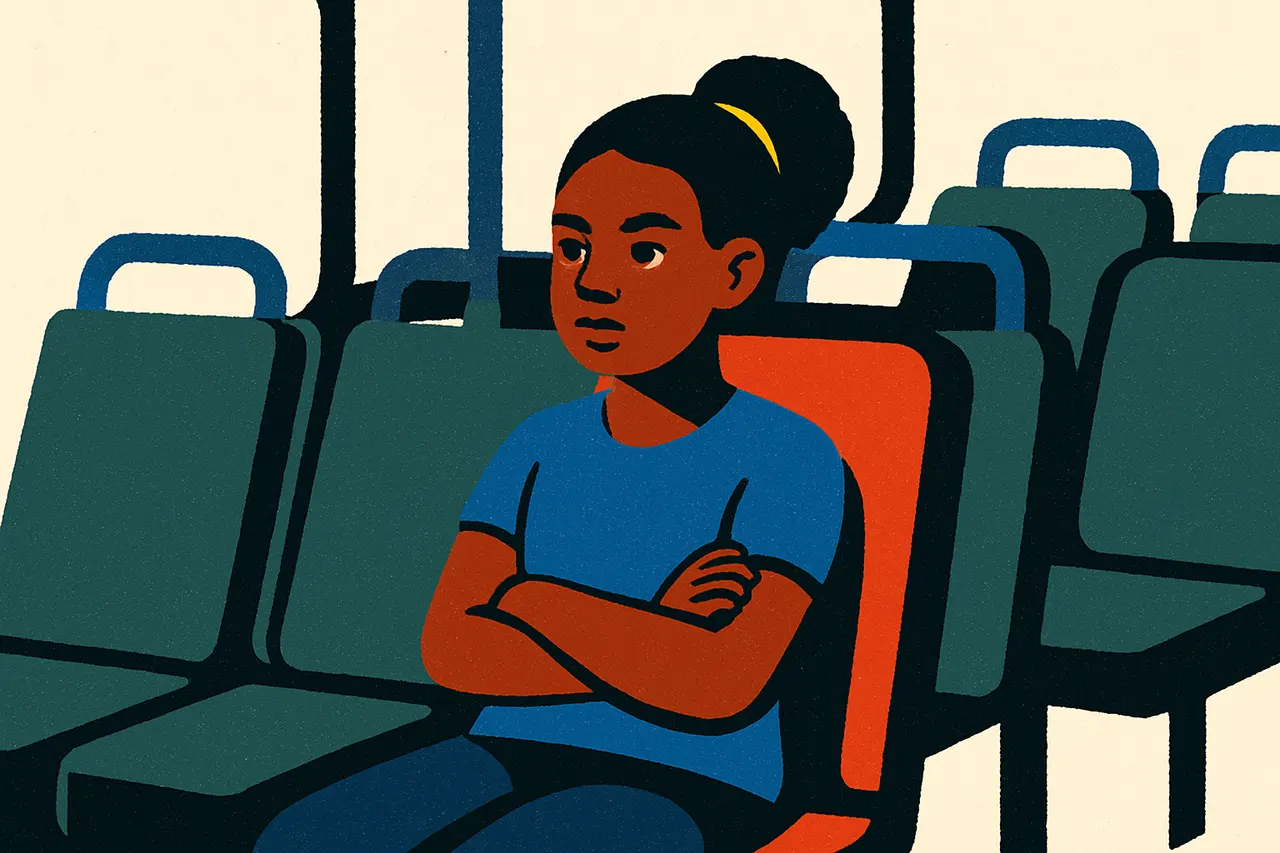
Arrested at 15 in Montgomery in March 1955, Colvin became a plaintiff in the case that ended bus segregation, then waited 66 years to clear her name.
On March 2, 1955, Claudette Colvin, a 15-year-old student, refused a Montgomery, Alabama, bus driver’s order to give up her seat to a white passenger, nine months before Rosa Parks did the same. Two officers dragged her off the bus. She was charged with violating the segregation law, disturbing the peace and assaulting the officers, even though she had gone limp.
Most retellings stop there. What happened next is the less familiar part:
- 1955: A juvenile court convicted her on all counts, made her a ward of the state and put her on indefinite probation “pending good behavior.” The arresting officer told the judge she had insisted she was “just as good as white.”
- 1 February 1956: Lawyers Fred Gray and Charles Langford filed Browder v. Gayle for four women arrested in 1955 for keeping their seats: Colvin, Aurelia Browder, Mary Louise Smith and Susie McDonald. Parks was not a plaintiff.
- 1956: A three-judge federal court ruled bus segregation unconstitutional in June; the Supreme Court upheld the ruling on 13 November, and Montgomery’s buses desegregated on 21 December.
- December 2021: At 82, she had her juvenile record expunged. She had never received official notice that her probation was over.
- January 2026: She died in Texas, aged 86.
Why did Parks, not Colvin, become the face of the boycott? Leaders weighed several things: Colvin’s age, her poverty and darker complexion, her pregnancy a few months after the arrest, and the fact that Parks was already a respected figure in Black political circles. Colvin moved to New York soon afterwards and stayed largely silent for decades, while Rosa Parks’s December 1955 arrest launched the boycott.
She was still the star witness in Browder. Her own summary:
“When it comes to justice, there is no easy way to get it. You can’t sugarcoat it.” — Claudette Colvin
Sources & references
5 referencesWell-established. Corroborated by 4 independent sources.