What Columbus got for returning to Spain in March 1493
On this day · 15 March 1493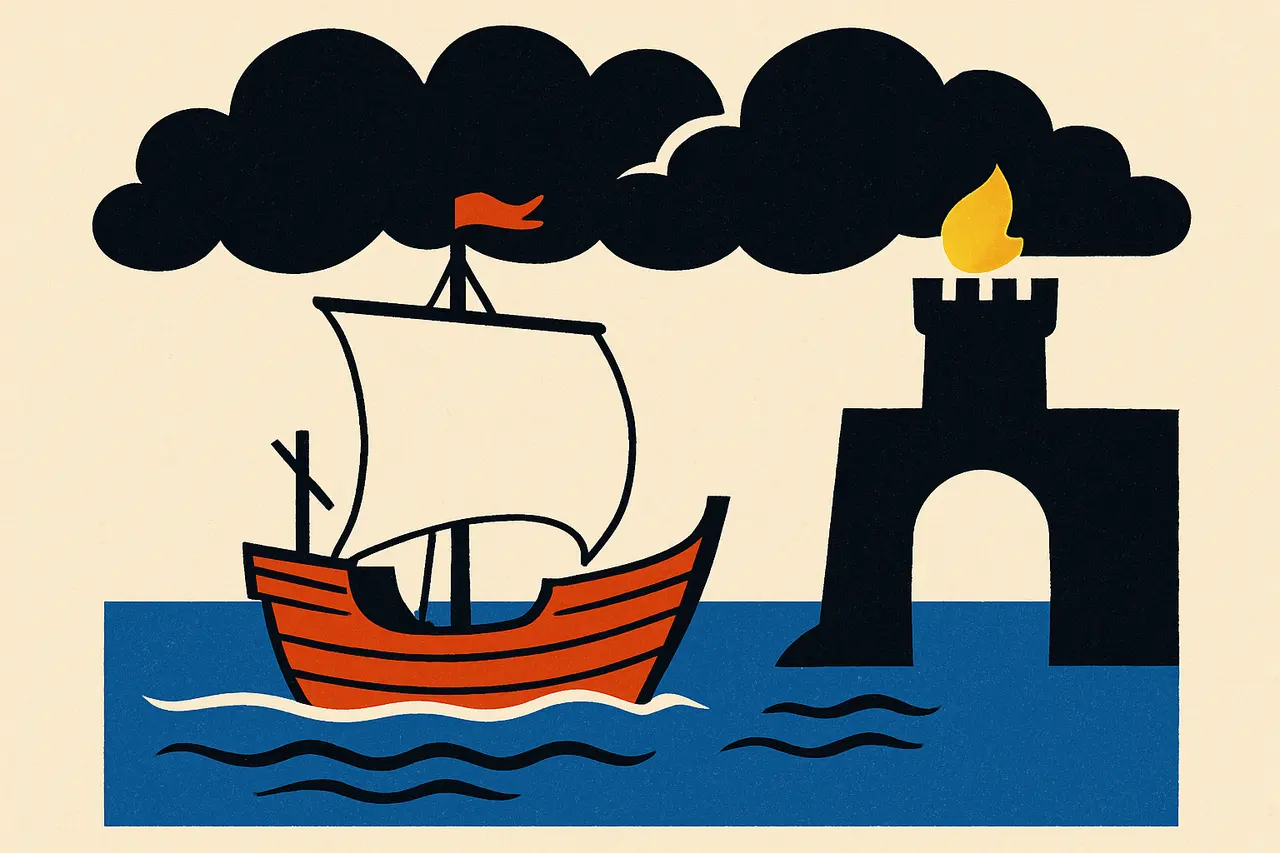
Columbus reached Palos in mid-March 1493 with parrots, gold and seven captive Taíno. Within ten weeks he had a pope's bull and a coat of arms.
Christopher Columbus arrived back at Palos, the port he had left on 3 August 1492, on 15 March 1493, after two severe storms on the homeward crossing forced stops in the Azores and at Lisbon. Only two of his three ships returned. The Santa María had sunk off Hispaniola on Christmas Eve, and the crew he could not carry home stayed behind at a trading post named Navidad.
The Niña and Pinta had left the Caribbean on 16 January. Columbus brought green parrots in wicker cages, small amounts of gold and seven captive Taíno, all meant as gifts for Ferdinand and Isabella. He had already sent the monarchs a letter from Lisbon announcing his discovery of the “Indies,” and from Palos he was called to the court at Barcelona, where he was warmly received. He still believed he had found a route to Asia.
The voyage was not the first round trip across the Atlantic. Norse sailors had crossed to North America and back about five centuries earlier. What made this one different was the reaction it set off.
What the homecoming bought him
Before he sailed, the monarchs had agreed to his terms if he succeeded. He would be knighted, made Admiral of the Ocean Sea and viceroy of any new lands, and given 10 percent of any new wealth. Within weeks of his return, the paperwork arrived:
- 4 May 1493: Pope Alexander VI issued the bull Inter caetera, drawing a line of demarcation between future Spanish and Portuguese exploration. The line was soon renegotiated in the Treaty of Tordesillas.
- 20 May 1493: Letters patent granted Columbus a coat of arms combining the royal castle and lion of Castile and León with islands in a wavy sea.
News of his discovery soon spread across Europe. He later added a continent and five anchors to the arms on his own authority.
Sources & references
6 referencesWell-established. Corroborated by 4 independent sources.