Enemy soldiers stopped fighting to share Christmas in 1914
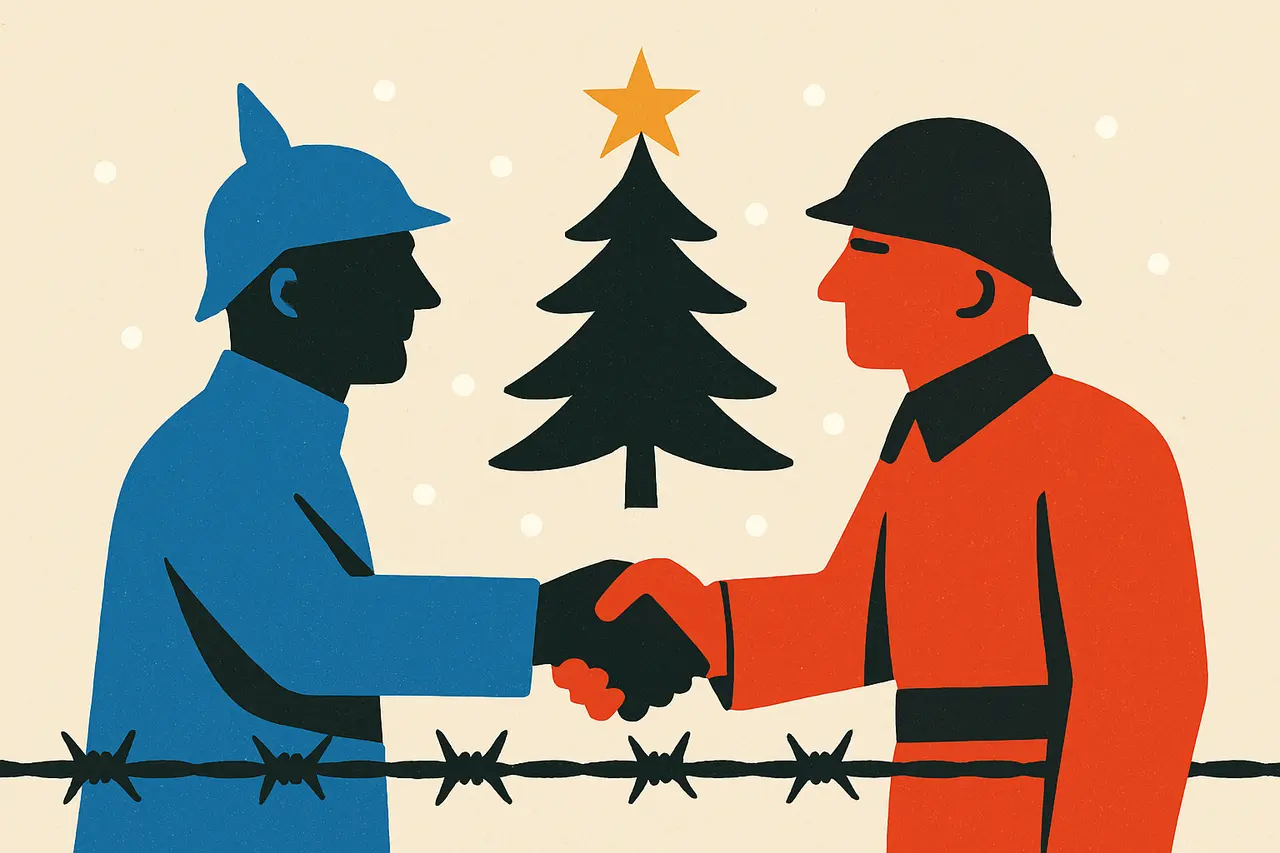
On the first Christmas of the First World War, British and German troops climbed out of their trenches to meet in no man's land.
By late December 1914, the Western Front had frozen into lines of mud-filled trenches. On Christmas Eve, men of the British Expeditionary Force heard German soldiers across the wire singing carols, and saw small fir trees and lanterns glowing above the enemy parapet.
The next day, unofficial ceasefires broke out along parts of the front. Soldiers ventured into no man’s land to exchange food, tobacco, cigarettes, buttons and caps. Both sides used the lull to recover and bury their dead. Impromptu games of football even started up — though contemporary photographs show handshakes and group poses rather than any organised match.
Many junior officers tolerated the truce; high command on both sides issued strict orders against fraternisation.
The truce was never a single coordinated event, and fighting continued elsewhere. In some sectors it lasted days; in most it faded by the new year. Nothing like it recurred at scale — but for a few hours, ordinary men chose to treat the enemy as human.
Sources & references
2 referencesWell-established. Corroborated by 2 independent sources.