Charlemagne was crowned emperor in 800, but not 'Holy Roman'
On this day · 25 December 800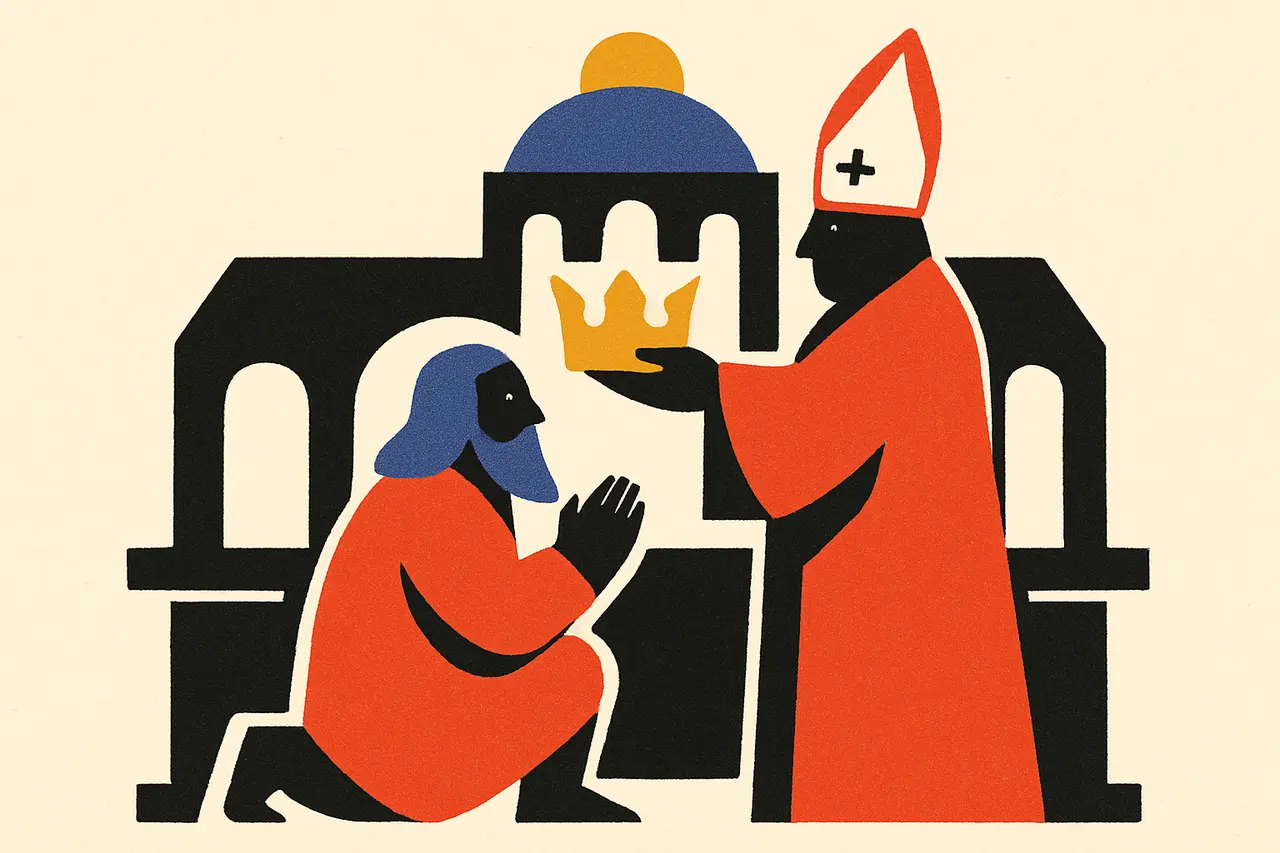
Pope Leo III crowned the Frankish king Emperor of the Romans on Christmas Day 800. Byzantium took twelve years to accept it.
Charlemagne, king of the Franks, was crowned emperor by Pope Leo III at Christmas Mass in St Peter’s Basilica, Rome, on 25 December 800, and hailed Imperator Romanorum, “Emperor of the Romans”. He was the first emperor in the West since the last Western Roman emperor was deposed in 476. Nobody yet called his realm the Holy Roman Empire.
Why did a pope crown a Frankish king?
Because Leo owed him. In 799 a Roman faction assaulted the pope; one modern account says they tried to put out his eyes and tear out his tongue, while Einhard, Charlemagne’s courtier and biographer, claims they actually did both. Leo appealed to the king, who came to Rome in November 800 to settle the affair, and on 23 December the pope swore an oath of innocence. Two days later came the crown.
Einhard insists the king was ambushed by the honour: he would not have entered the church that day, “although it was a great feast-day”, had he foreseen the pope’s plan. Whether that was real reluctance or polished modesty, the precedent of a pope conferring the imperial title outlived both men.
Didn’t Rome already have an emperor?
Constantinople thought so. The Western case for a vacant throne was that it was occupied by Empress Irene, and many, including the pope, would not accept a woman as a legitimate ruler. Einhard admits the eastern emperors “took this step very ill”. Recognition came only in 812, when envoys of Michael I saluted Charles as emperor at Aachen; from then on, in theory one Roman Empire had two Roman emperors.
Nor did the title run unbroken to 1806. After Charlemagne’s heirs faded it lay dormant from 924 to 962, until Otto I was crowned and styled himself Charlemagne’s successor. The later Holy Roman Empire descends from that revival. A thousand years on, Napoleon borrowed the imagery when he crowned himself Emperor of the French with a pope looking on.
Sources & references
3 referencesWell-established. Corroborated by 3 independent sources.