Ceres: the first asteroid, found on New Year's Day 1801
On this day · 1 January 1801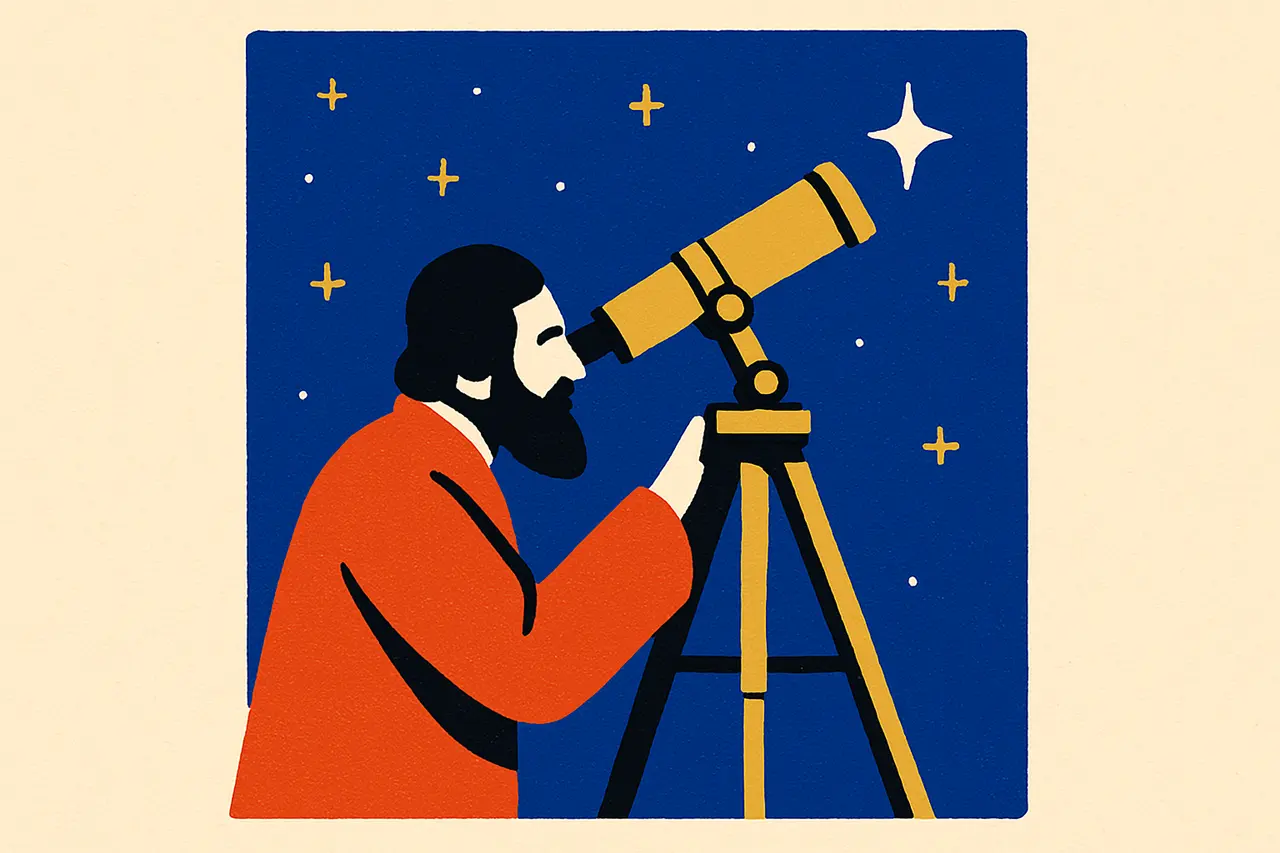
Giuseppe Piazzi found Ceres on 1 January 1801, lost it in the Sun's glare within weeks, and needed a young Gauss to find it again.
Ceres, the first asteroid ever discovered, was found on 1 January 1801 by Giuseppe Piazzi at the Palermo Observatory in Sicily, while he was measuring star positions for a catalogue; since 2006 it has been classed as a dwarf planet.
Piazzi was working with a precise Ramsden circle when one faint “star” turned up in a slightly different place on later nights. His assistant, Niccolò Cacciatore, later recalled him exclaiming that they had found a planet while they thought they were observing a fixed star. In public Piazzi was more cautious: his notice dated 15 January announced “a new comet”, and a misprint in its star reference made the object harder for others to locate.
The find also beat an organised hunt. In September 1800, astronomers had set up a society of 24 observers, nicknamed the Celestial Police, to search the zodiac for a missing planet between Mars and Jupiter. Piazzi was on their list, but found Ceres before his invitation had been sent.
Then the new world was nearly lost. Piazzi tracked Ceres for 41 days, during which it moved only about three degrees across the sky, before it slipped into the Sun’s glare. Other astronomers’ predictions of where it would reappear failed, and doubts grew; the French astronomer Lalande wrote that he did not believe in the planet. Carl Friedrich Gauss then devised a new way to compute an orbit, using just 3 of Piazzi’s 19 observations, and in December 1801 Franz Xaver von Zach found Ceres very close to Gauss’s predicted position.
Piazzi named it after Ceres, the Roman harvest goddess linked with Sicily, adding Ferdinandea for King Ferdinand; the royal half was soon dropped. Ceres is the giant of the asteroid belt, holding about 25% of its total mass, yet Pluto is still 14 times more massive. In 2015, NASA’s Dawn made it the first dwarf planet visited by a spacecraft.
Sources & references
4 referencesWell-established. Corroborated by 3 independent sources.