The euro launched as an electronic currency for 11 nations
On this day · 1 January 1999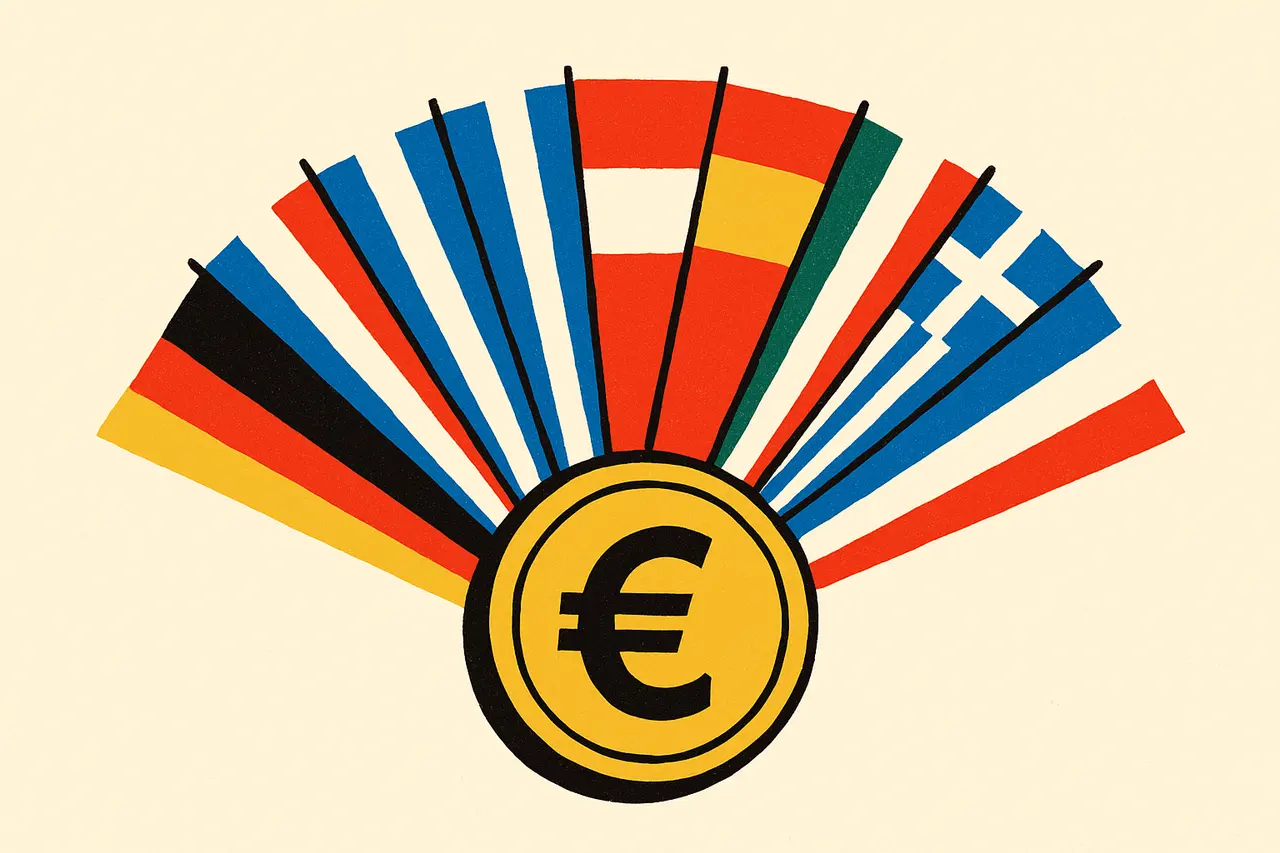
Eleven economies pooled their money under one currency that, for three years, you could not actually hold in your hand.
On January 1, 1999, 11 European Union countries locked their exchange rates, handed monetary policy to the European Central Bank, and launched a shared currency on world markets: the euro. The founding members were Austria, Belgium, Finland, France, Germany, Ireland, Italy, Luxembourg, the Netherlands, Portugal, and Spain.
For the first three years the euro was, in effect, invisible. It existed only as an accounting and electronic currency — used for bank transfers, salaries, debts, and securities — while people kept paying for groceries in francs, marks, and lire. The familiar notes and coins did not arrive until January 1, 2002, in what became the largest cash changeover in history.
The groundwork stretched back years, through the 1992 Maastricht Treaty and a decade of convergence on debt and inflation. The result was an unusual experiment: a single money for many sovereign states, born quietly on a balance sheet long before anyone could jingle it in a pocket.
Sources & references
2 referencesWell-established. Corroborated by 2 independent sources.