Pluto became a dwarf planet in 2006 for failing one test
On this day · 24 August 2006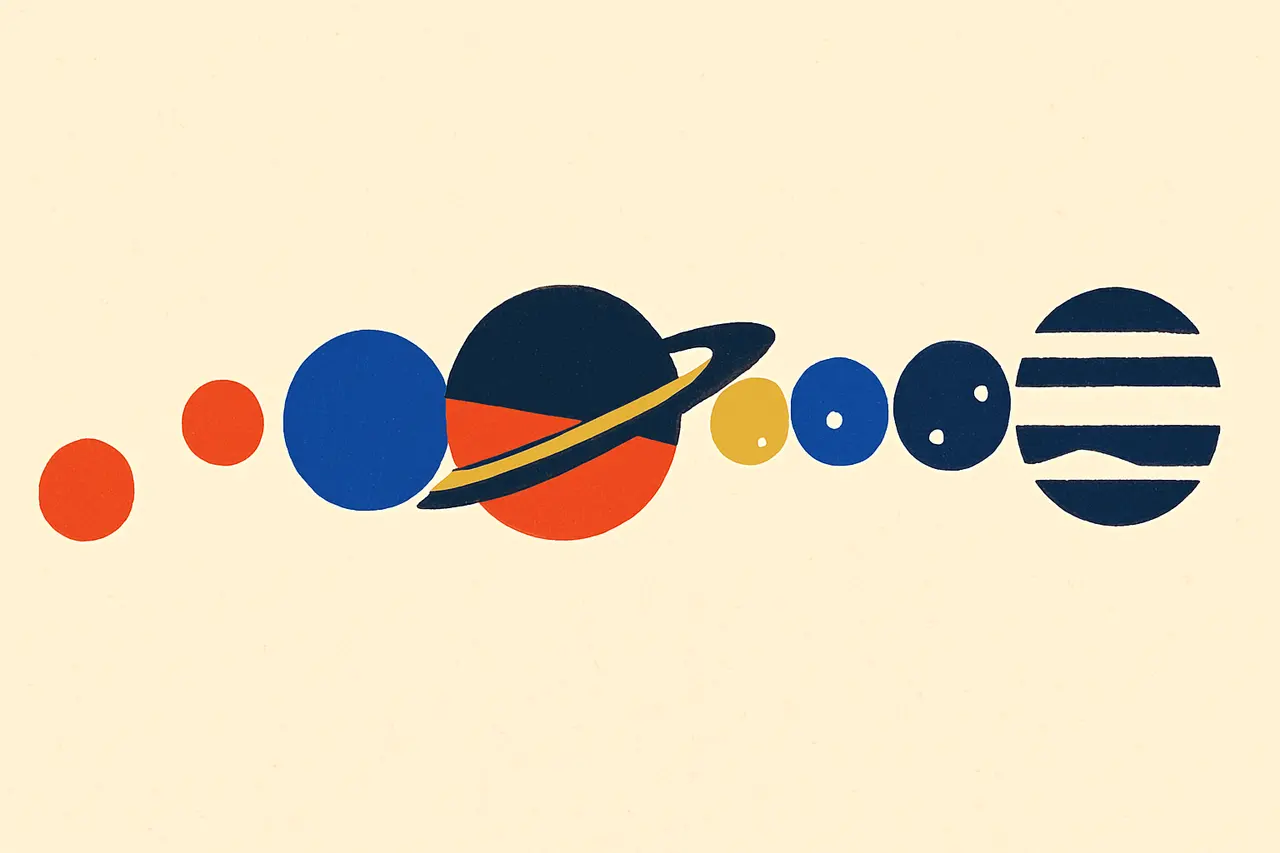
Pluto failed one test, clearing its orbit. Days earlier, the IAU's own draft would have kept it as a planet in a Solar System of 12.
Pluto was reclassified as a dwarf planet on 24 August 2006, when the International Astronomical Union, meeting in Prague, defined a planet as a body that orbits the Sun, is massive enough to pull itself nearly round, and has cleared the neighbourhood around its orbit. Pluto passes the first two tests and fails the third.
Pluto was not demoted for missing a size cutoff: it is round, and Lowell Observatory notes that it is the largest known dwarf planet. It lost planet status because it lacks the gravitational dominance to clear its zone of the Kuiper Belt, which it shares with many other bodies; as NASA puts it, other objects might cross its orbit.
Eight days earlier, the IAU had proposed close to the opposite. Its draft definition, released on 16 August 2006, kept Pluto as a planet and promoted three more: the asteroid Ceres, Pluto’s moon Charon, and the newly found 2003 UB313, later named Eris. That would have made 12 planets, “with more to come”. The seven-member committee behind it had struggled to agree.
“But by the end of a long day, the miracle had happened: we had reached a unanimous agreement.” (Owen Gingerich, chair of the IAU Planet Definition Committee)
The General Assembly dropped that draft in favour of the stricter cleared-orbit rule. The planet definition was not formally counted, but the IAU reported it passed with a great majority. The resolution making Pluto the prototype of a new class of objects beyond Neptune passed 237 to 157, with 17 abstentions, while a proposal to call such bodies “plutonian objects” failed 183 to 186.
The list of planets dropped from nine to eight. In June 2008 the IAU chose plutoid as the name for Pluto-like dwarf planets beyond Neptune. Five dwarf planets are recognised today: Pluto, Eris, Ceres, Makemake and Haumea. Lowell Observatory notes that Pluto’s planetary status remains a matter of debate.
Sources & references
5 referencesWell-established. Corroborated by 3 independent sources.