Almonds need a near-nationwide migration of bees
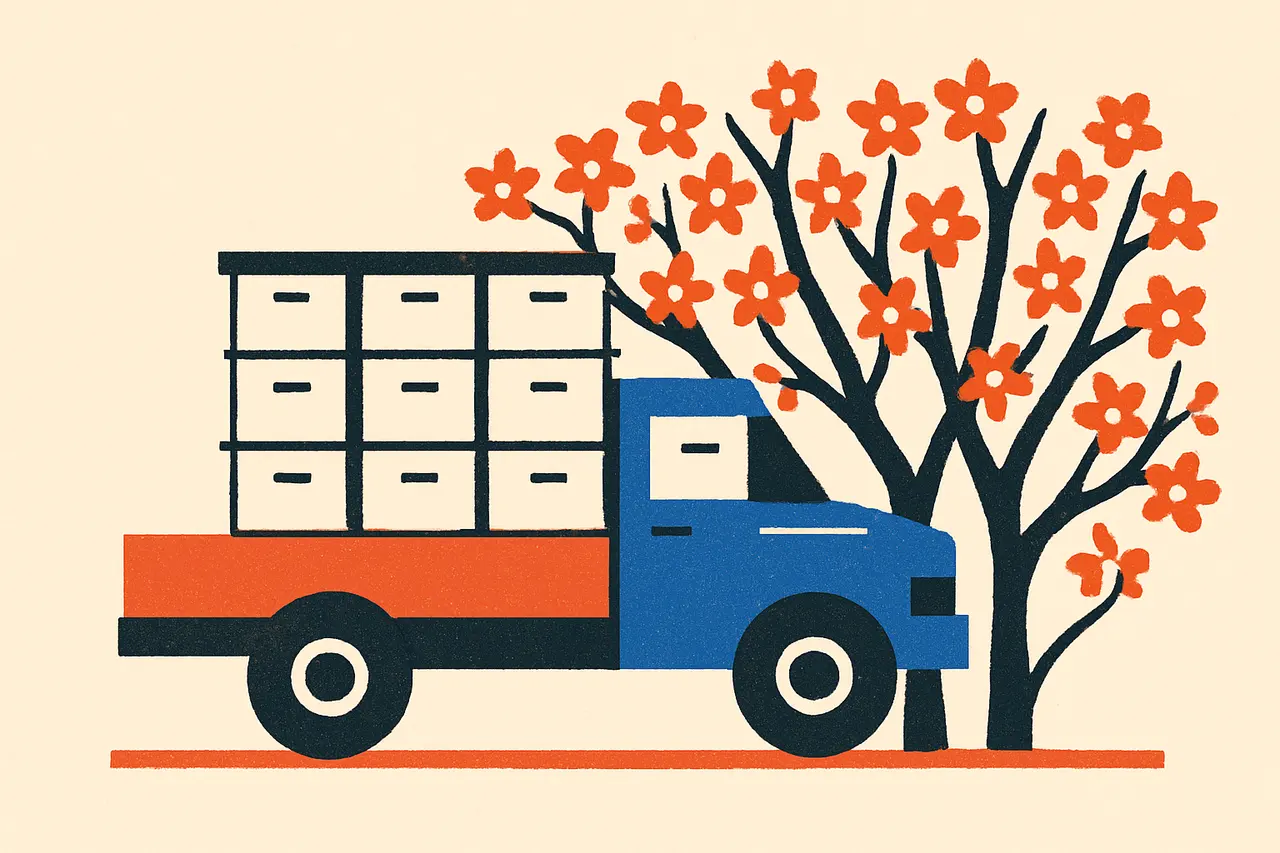
Each winter, hundreds of thousands of bee colonies are loaded onto trucks and hauled across the country to pollinate California's almonds.
California grows roughly 80 percent of the world’s almonds, and every blossom needs a bee. At two colonies per acre across about 1.2 million acres, the bloom demands close to 2 million honey bee colonies in a few short weeks of late winter — far more than the state’s own hives can supply.
So the bees come to the almonds. According to the USDA’s Economic Research Service, an estimated 384,600 colonies were trucked into California from the Northern Great Plains alone during one 2017–2018 season. Commercial beekeepers routinely move hives more than 1,000 miles, and some hauls top 2,000 miles, in what amounts to the largest managed pollination event on Earth.
The almond crop runs on a fleet of flatbed trucks stacked with sleeping hives.
The logistics are staggering: colonies are loaded at night while bees are inside, driven for days, and unloaded among the orchards just as the trees flower. Once the petals fall, the trucks roll out again, carrying the bees toward the next crop in their year-round migratory circuit.
Sources & references
2 referencesWell-established. Corroborated by 2 independent sources.