Alexander Selkirk was rescued in 1709 after four years alone
On this day · 2 February 1709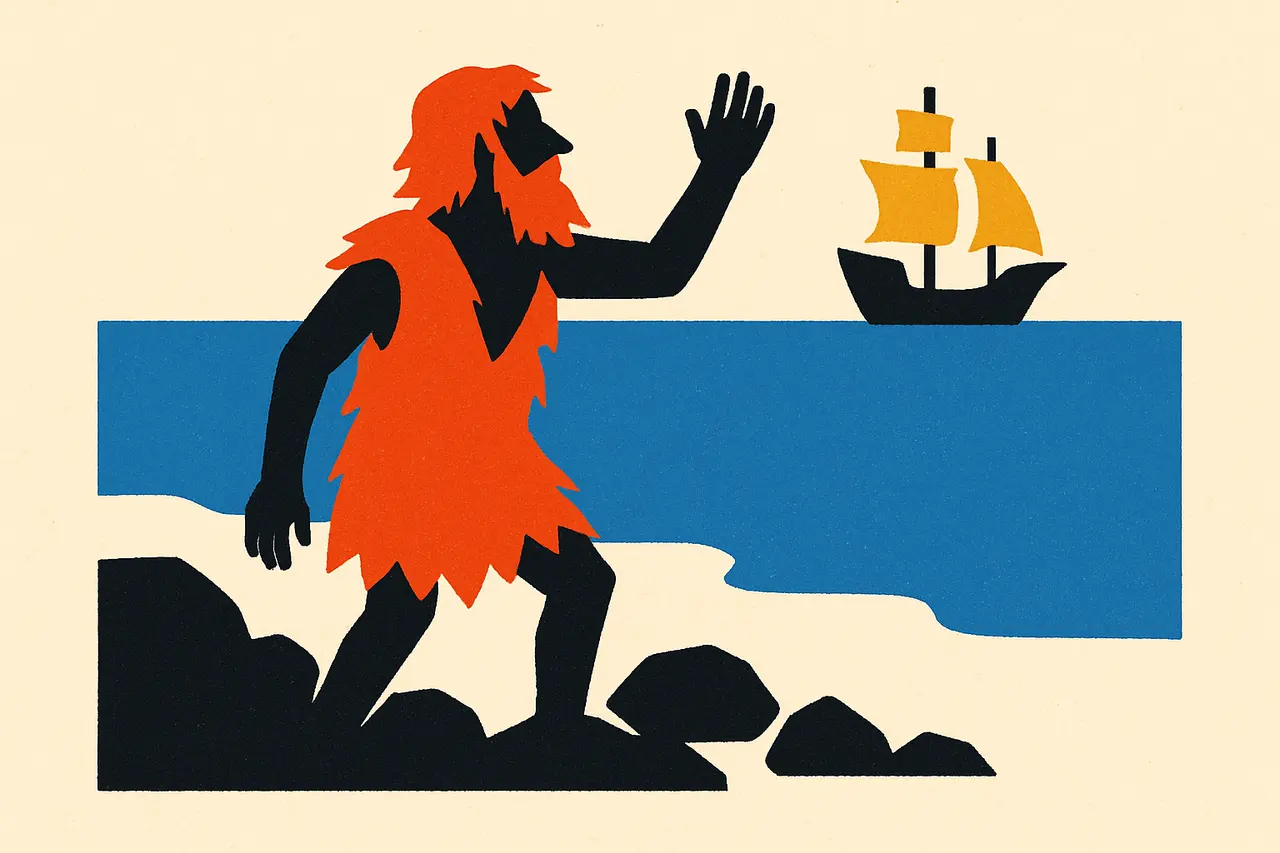
The real-life Robinson Crusoe chose to be marooned, outlived the ship he refused to sail on, and left archaeologists a clue.
Scottish sailor Alexander Selkirk was rescued on 2 February 1709 from an island in Chile’s Juan Fernández group after four years and four months alone, a real castaway widely seen as a model for Daniel Defoe’s 1719 novel Robinson Crusoe.
He was not shipwrecked. Selkirk was serving on the privateer Cinque Ports, part of an expedition under William Dampier, and in October 1704 he chose to stay ashore rather than continue in a ship that had been at sea for a year and four months without a proper refit and was leaking badly. His judgement was sound: according to Royal Museums Greenwich, the Cinque Ports was later abandoned, and its 18 surviving crew reached South America only to be imprisoned by the Spanish.
On the island he ate goats, turtles, sea lions, seafood, cabbage and turnips, made knives from old iron hoops and clothes from goatskin, and trained feral cats to keep rats from gnawing his feet while he slept. His rescuer, privateer captain Woodes Rogers of the Duke, noted how he passed the time:
“…to divert himself would now and then sing and dance with them and his Cats.” — Woodes Rogers, 1712
By coincidence Dampier was aboard the Duke too, and recommended his old crewman as a mate.
How we know where he lived
A team led by Japanese explorer Daisuke Takahashi, with David Caldwell of National Museums Scotland, excavated at Aguas Buenas on what is now called Robinson Crusoe Island. Postholes suggested two shelters beside a freshwater stream, with a view over the harbour for watching approaching ships. The key find was a copper-alloy fragment of navigational dividers, an instrument only a ship’s master or navigator would have carried; Rogers had listed mathematical instruments among Selkirk’s few possessions. The work was published in Post-Medieval Archaeology in 2007.
Selkirk went back to sea. He died of yellow fever aboard HMS Weymouth off West Africa in 1721, two years after Robinson Crusoe was published, and was buried at sea.
Sources & references
3 referencesWell-established. Corroborated by 3 independent sources.