Lincoln won in 1860 with 40% — and the split field didn't matter
On this day · 6 November 1860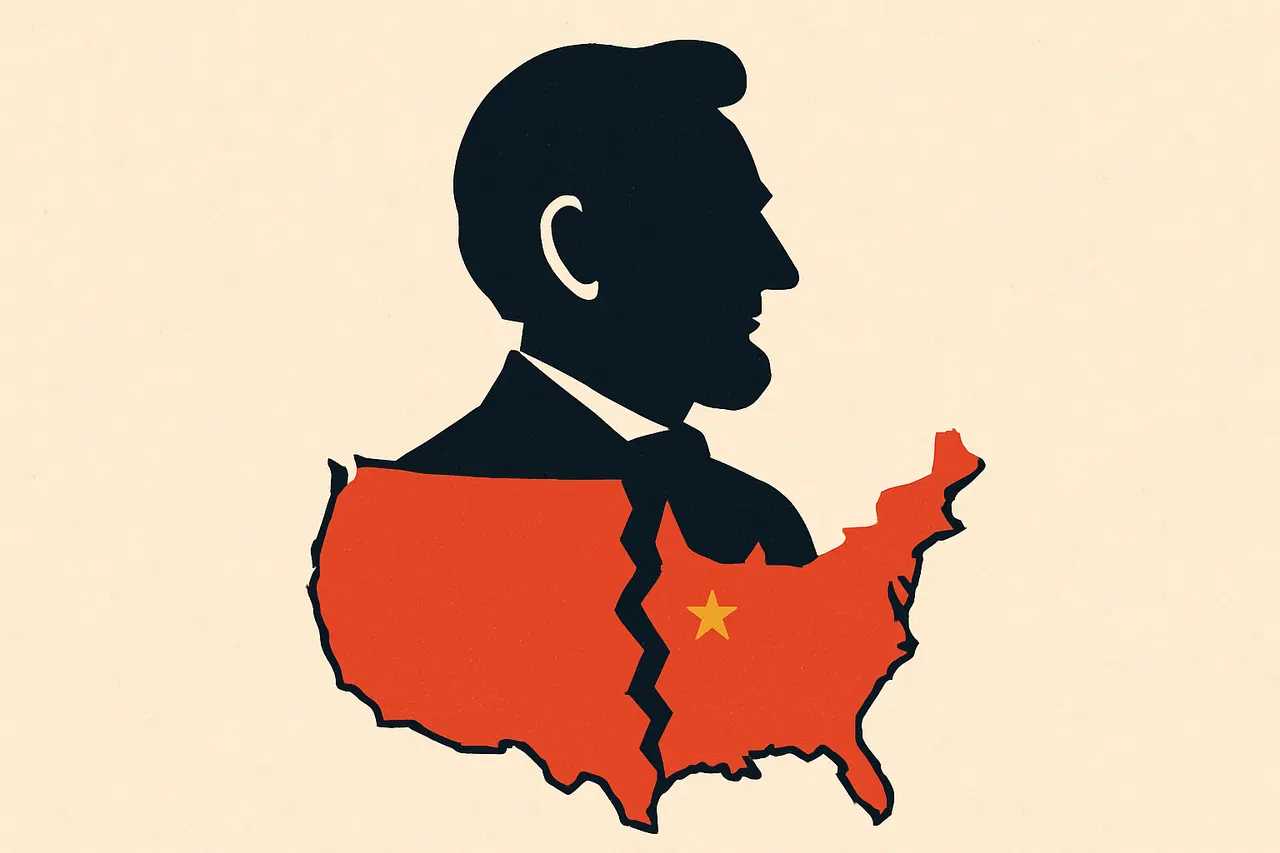
Abraham Lincoln took the White House with under 40% of the vote, but he would have won even if his three rivals had united.
Abraham Lincoln won the US presidential election of 6 November 1860 with just under 40% of the popular vote but 180 electoral votes, a majority he would have kept even if his three opponents had pooled their support.
That corrects a common assumption: that the Democrats’ split into a northern wing behind Stephen Douglas and a southern wing behind John Breckinridge, with John Bell running for the Constitutional Union party, handed Lincoln the presidency. Historians at Dickinson College’s House Divided project point out that Lincoln carried every free state except New Jersey, which divided its electors between him and Douglas. Because the free states held most of the electoral votes, even a single combined opposition ticket would still have lost. The National Constitution Center’s count was 180 for Lincoln against 133 for all his rivals together.
The map was lopsided in a way no modern candidate could survive. According to the National Park Service, Lincoln won only two counties in the entire South, while turnout reached 81% of eligible voters. Southern weight in the Electoral College was itself inflated by the Constitution’s three-fifths clause, which counted enslaved people toward each state’s electors.
The Deep South did not wait for him to take office:
- 20 December 1860: South Carolina secedes, the first state to leave the Union.
- 9–11 January 1861: Mississippi, Florida and Alabama follow.
- 19–26 January 1861: Georgia and Louisiana go.
- 1 February 1861: Texas makes seven.
- 4 February 1861: delegates from the seven states meet in Montgomery, Alabama, to form the Confederate States of America.
There were fears the departing states would boycott the Electoral College, but they took part, and Congress certified Lincoln’s win in February 1861. He was sworn in on 4 March; five weeks later the attack on Fort Sumter opened the Civil War.
Sources & references
4 referencesWell-established. Corroborated by 3 independent sources.