The Hawker Hurricane took to the air for the first time
On this day · 6 November 1935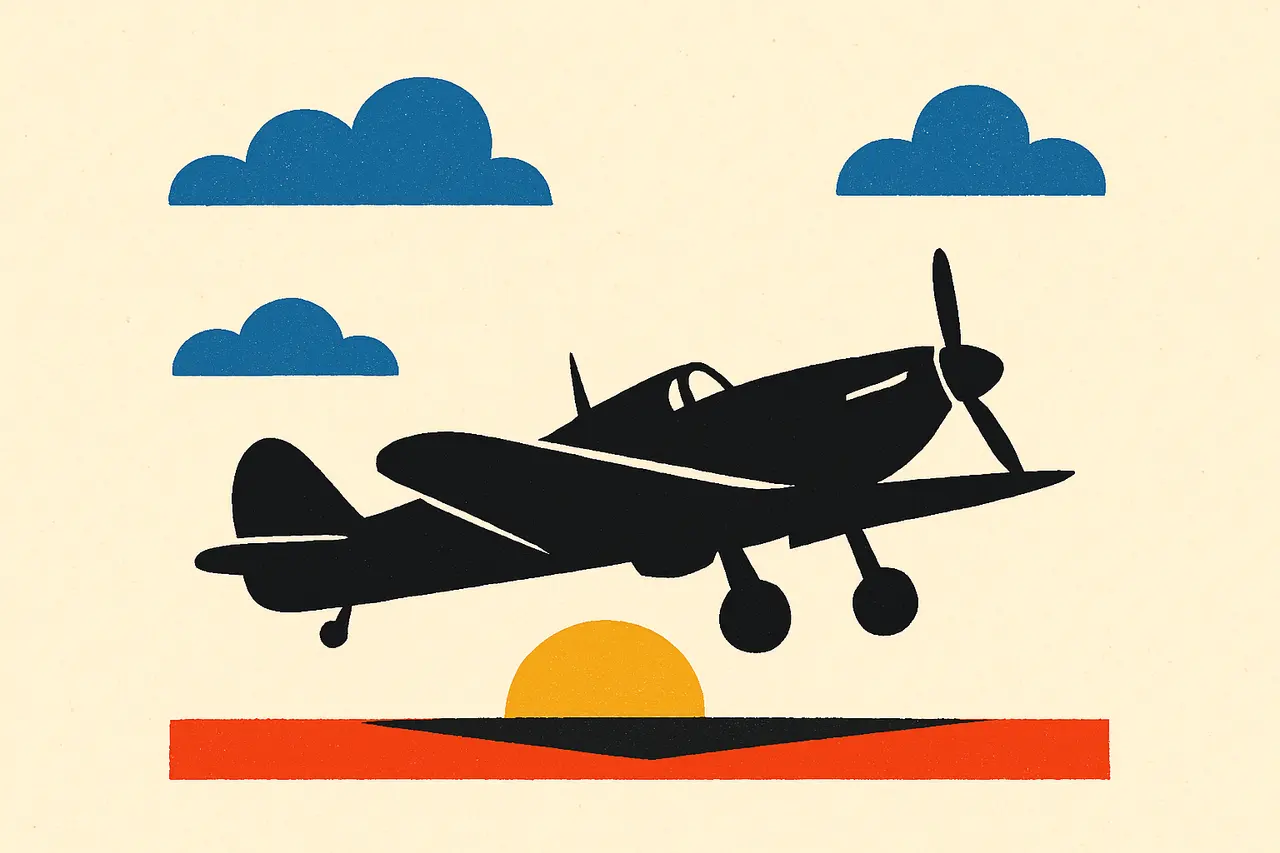
On a November morning in 1935, a stubby monoplane prototype lifted off Brooklands and quietly previewed the Battle of Britain.
On 6 November 1935, the prototype K5083 lifted off the grass at Brooklands Aerodrome in Surrey, with Hawker’s chief test pilot, Flight Lieutenant P. W. S. “George” Bulman, at the controls. Despite early engine trouble, the new monoplane showed obvious promise.
Early trials clocked a top speed near 315 mph at altitude, comfortably beating the Royal Air Force requirement. The design fused an old-school tubular frame with a modern enclosed cockpit, retractable undercarriage, and eight machine guns.
Unglamorous beside the Spitfire, it did most of the fighting that mattered.
When the Battle of Britain raged between July and October 1940, Hurricanes outnumbered Spitfires in RAF Fighter Command and shot down more German aircraft than every other defense combined. The plane that began as a hand-built one-off ended up carrying the heaviest load of Britain’s air defense.
Sources & references
2 referencesWell-established. Corroborated by 2 independent sources.