Atlantis docked with Mir in 1995 on a port designed for Buran
On this day · 29 June 1995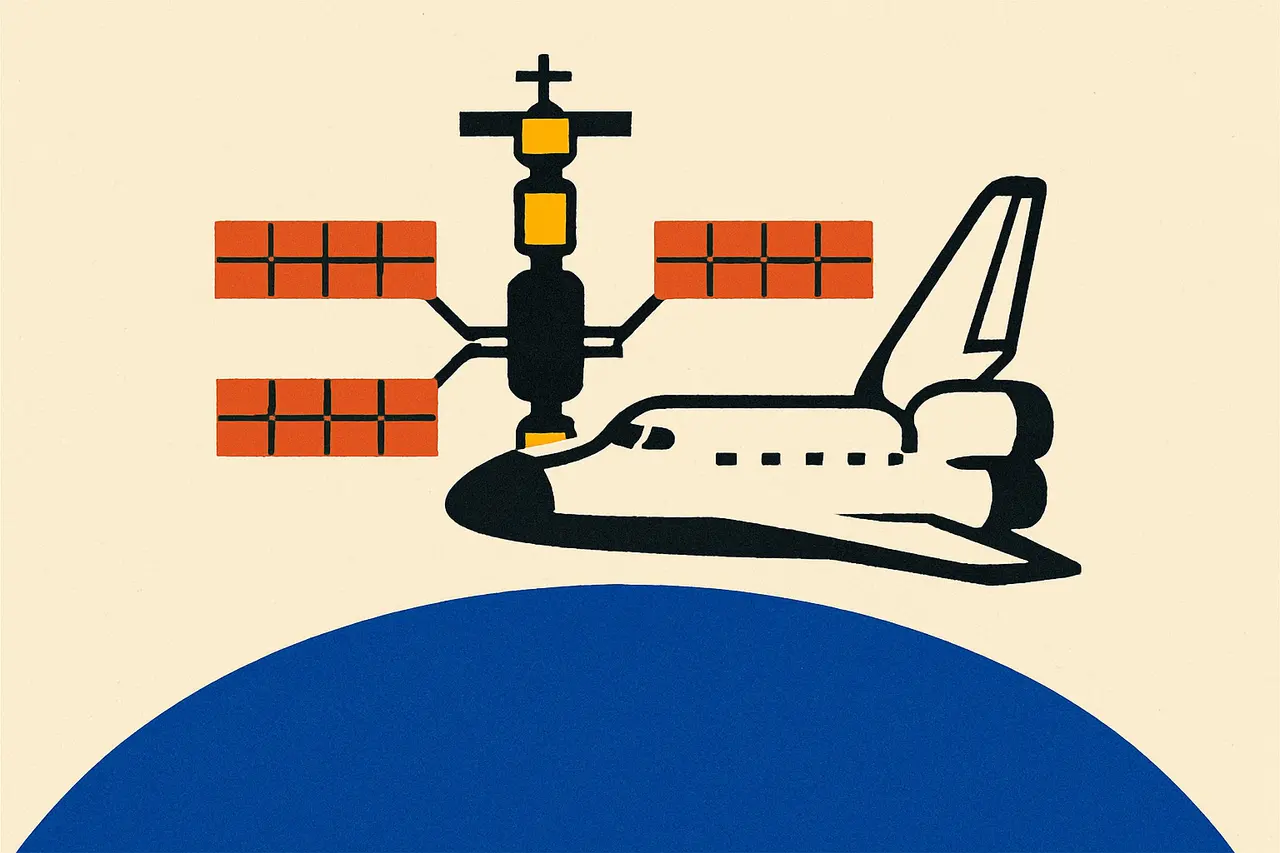
The first shuttle–Mir docking, on June 29, 1995, used Soviet hardware descended from Apollo-Soyuz and made the heaviest spacecraft yet flown.
The Space Shuttle Atlantis docked with the Russian space station Mir on June 29, 1995, on mission STS-71: the first time a shuttle had linked up with a space station.
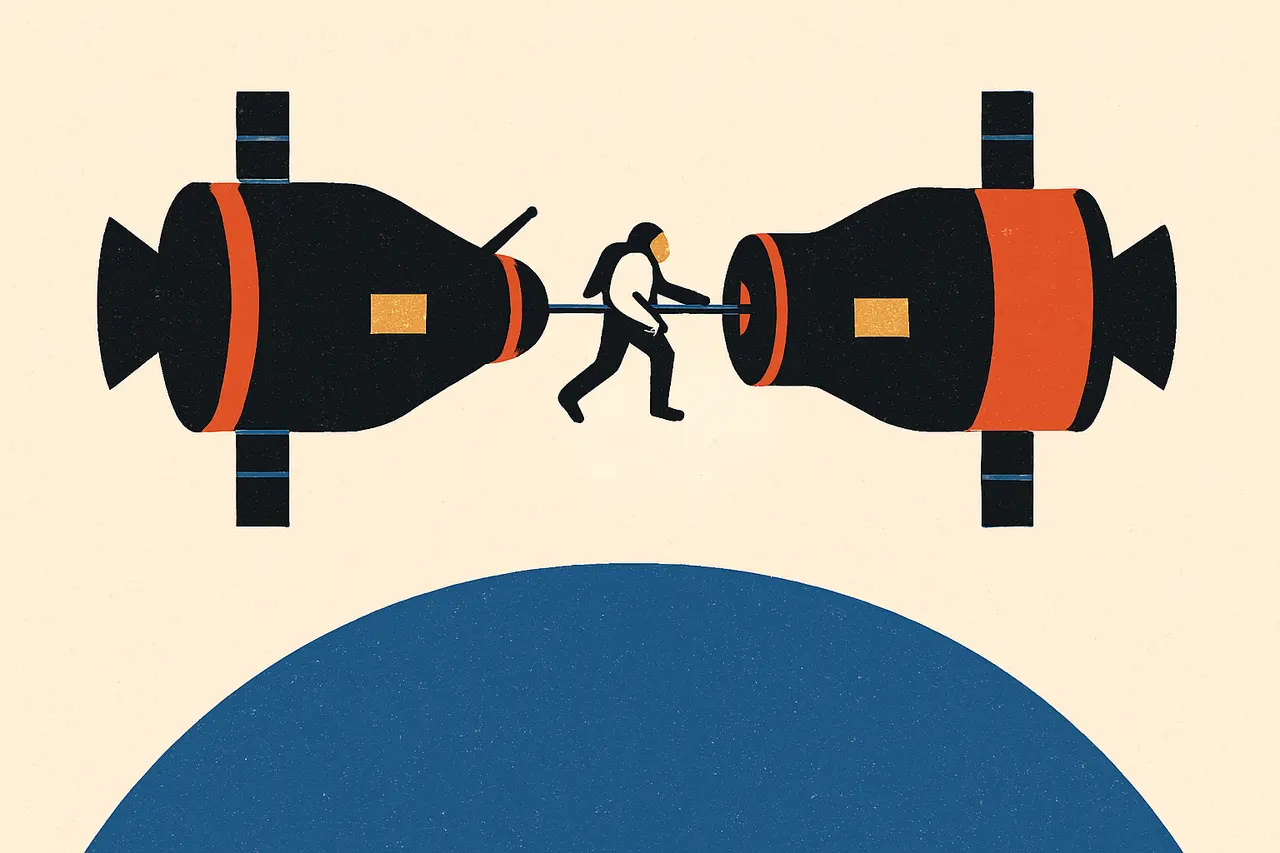
It was not, however, the first American–Russian docking. That came 20 years earlier, when Apollo and Soyuz met in 1975, and the hardware connected the two eras. Russian engineers at NPO-Energia had built the APAS-75 docking ring for Apollo-Soyuz. Mir’s Kristall module carried an updated APAS-89, originally designed for the Soviet Buran shuttle, and Energia built an APAS-95 that was shipped to California and fitted to Atlantis. The shuttle went on using that design to dock with the International Space Station.
The docking itself was a study in gentleness. Atlantis came up from directly below on an R-bar approach, letting orbital mechanics brake it and saving jet firings. Commander Robert “Hoot” Gibson, at the controls on the aft flight deck, brought it in to touch at about 0.107 feet per second, with less than an inch of sideways misalignment. NASA’s two accounts put the altitude at 216 nautical miles and 250 miles: the same height, in nautical and statute miles, above the Lake Baikal region.
Joined, the two craft weighed almost half a million pounds (about 225 tons), the largest spacecraft then in orbit. When the hatches opened, Gibson and Mir commander Vladimir Dezhurov shook hands, and the welcome ceremony marked the first time 10 people had been aboard a single spacecraft.
The mission also swapped Mir’s crew. Atlantis delivered cosmonauts Anatoly Solovyev and Nikolai Budarin to stay as the Mir-19 crew, while astronaut Norman Thagard and his two Russian crewmates rode home after 115 days in space, lying in recumbent seats to ease re-entry. Eight more shuttle dockings followed, rehearsing the work of building the ISS.
Sources & references
3 referencesWell-established. Corroborated by 2 independent sources.