Juno launched in 2011 and took five years to reach Jupiter
On this day · 5 August 2011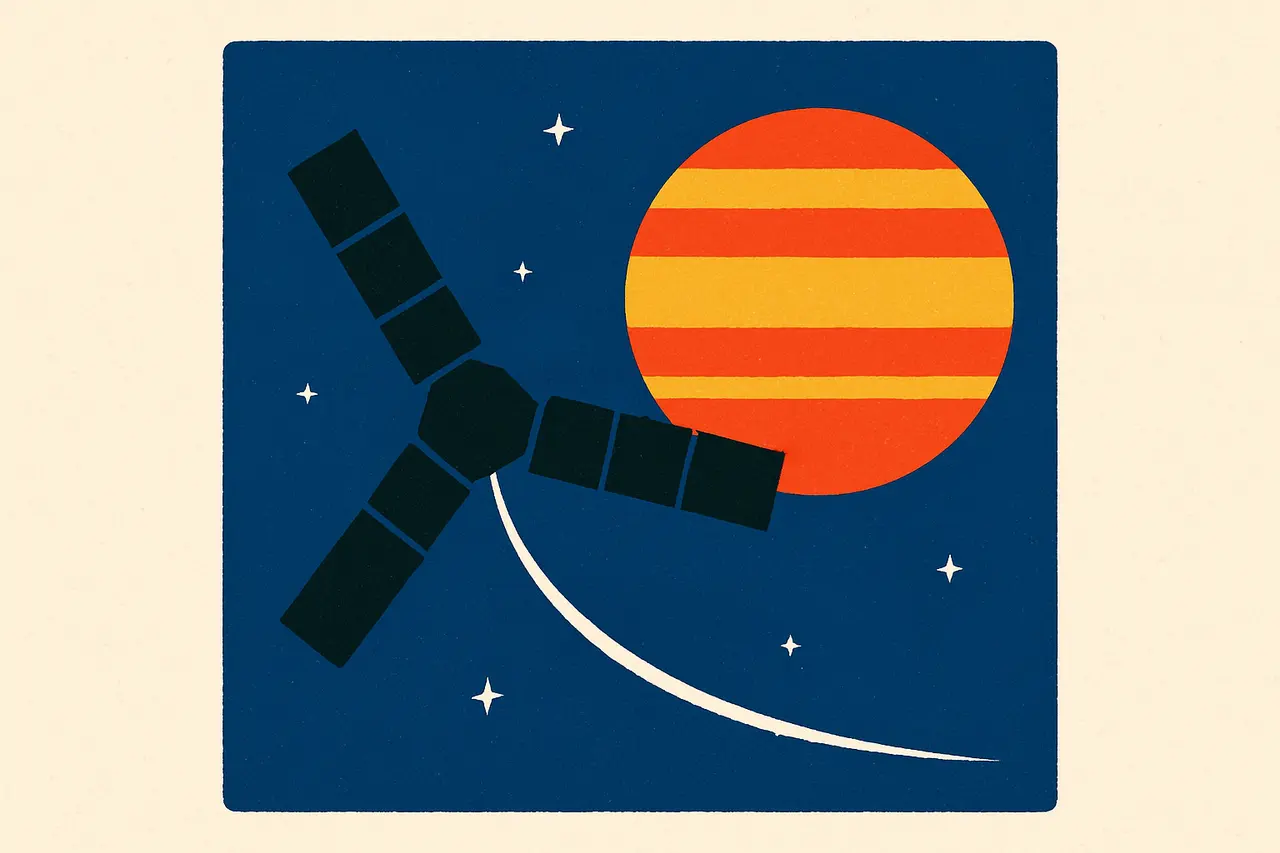
NASA's solar-powered Juno left Earth on 5 August 2011 and swung back past Earth for speed before reaching Jupiter in July 2016.
NASA’s Juno spacecraft launched on August 5, 2011, on an Atlas V 551 rocket from Cape Canaveral and reached Jupiter on July 4, 2016, after a five-year journey of about 1.7 billion miles.
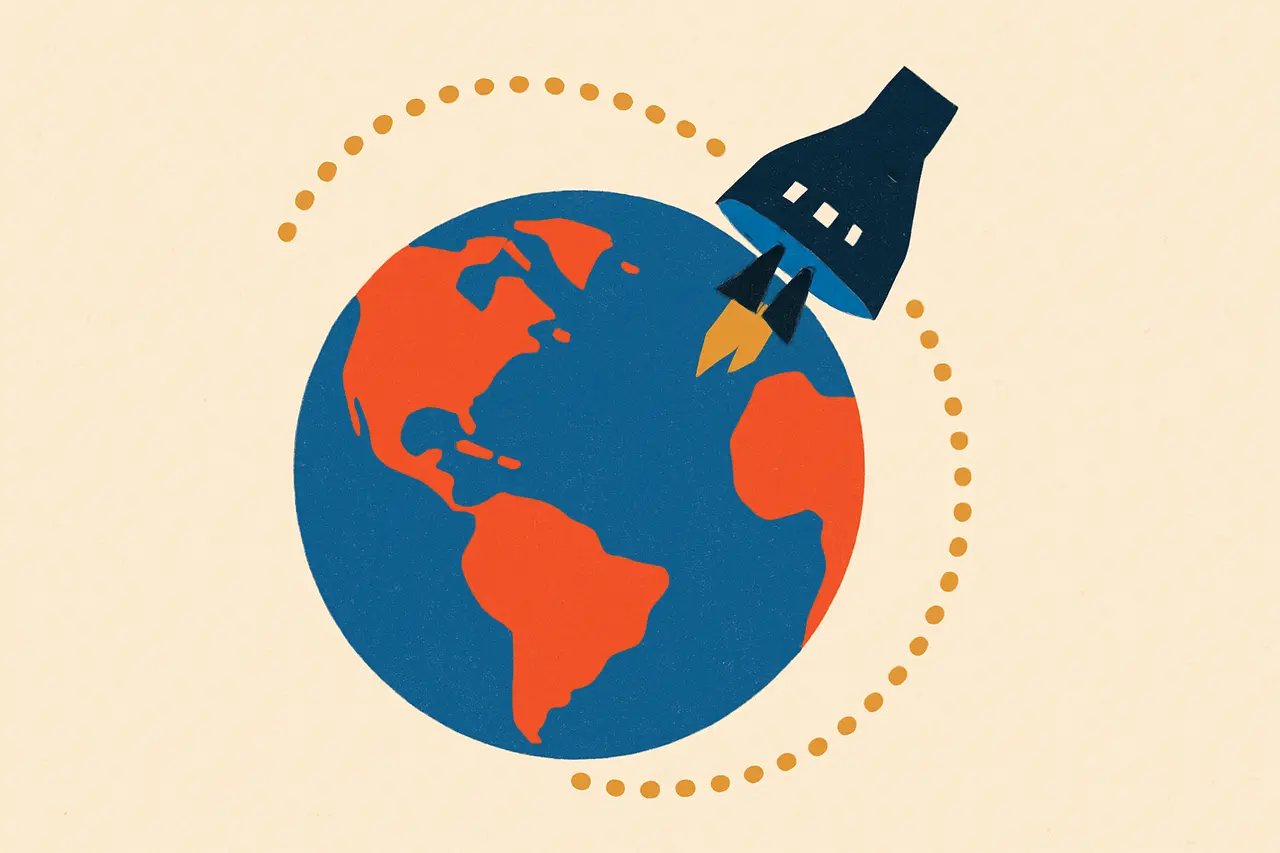
It took five years because Juno did not fly straight to Jupiter. After two deep-space engine burns in 2012, it looped back toward the inner solar system and on October 9, 2013 passed within 345 miles of Earth, off the coast of South Africa. That flyby raised its speed from about 78,000 to 93,000 mph, enough to carry it the rest of the way. It crossed into Jupiter’s gravitational sphere of influence in May 2016 and fired its main engine for 35 minutes to enter orbit.
Juno is the first NASA spacecraft designed to run on solar power that far from the Sun; earlier Jupiter visitors relied on nuclear power. Jupiter receives only 4% as much sunlight as Earth, so each of Juno’s three arrays reaches about 29.5 feet, making the craft more than 66 feet across, enough to fill a basketball court.
The plan changed after arrival. Juno’s first loops took 53 days, meant to be shortened to a 14-day science orbit, but an anomaly affecting the main engine in October 2016 ruled out that burn. NASA kept Juno in the long orbit, which meant fewer close passes than planned rather than a lost mission.
Its gravity measurements suggest Jupiter’s core is not small and compact but diluted and fuzzy, mixed with hydrogen and helium. Juno also mapped deep winds and clusters of storms at the poles. Extensions to 2021 and then September 2025 added close flybys of the moons Ganymede, Europa and Io; the Ganymede pass in June 2021, at 645 miles, was the closest any spacecraft had come since Galileo in 2000. Juno carries a plaque with Galileo’s own 1610 notes on Jupiter’s moons and three LEGO figures: Jupiter, Juno and Galileo.
Sources & references
4 referencesWell-established. Corroborated by 4 independent sources.