Why Prince Rupert's drops survive hammers but explode
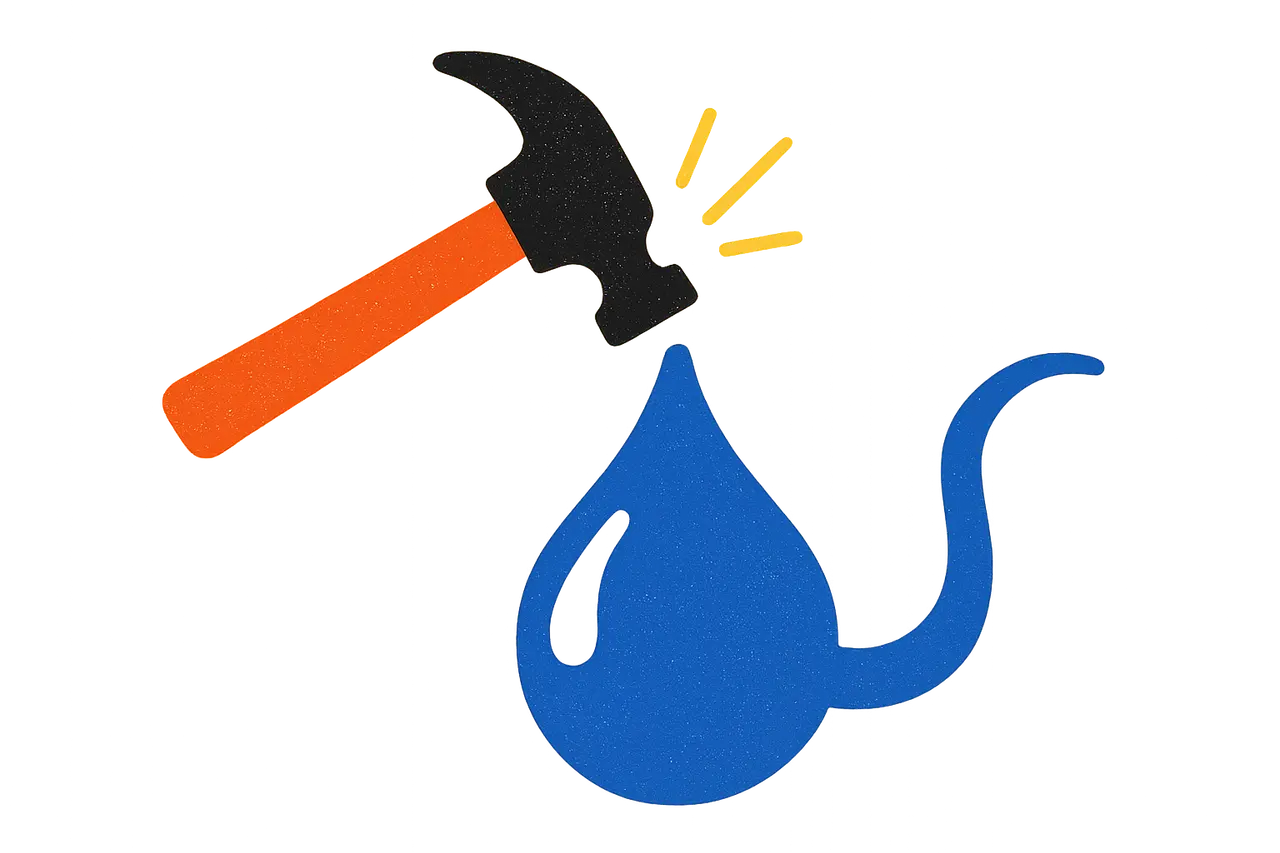
Glass teardrops that shrug off a hammer yet shatter when the tail snaps have puzzled scientists since 1660. Locked-in stress of up to 700 MPa explains both.
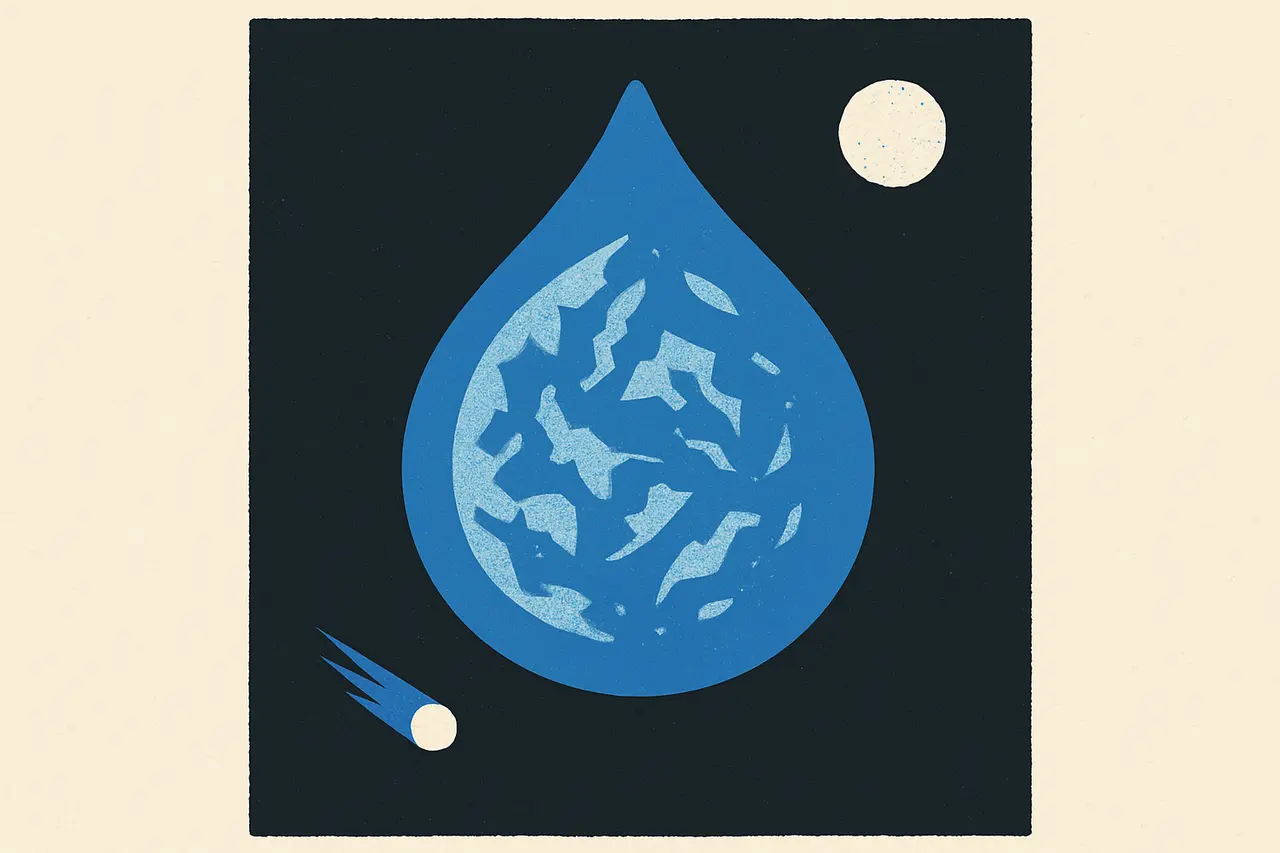
A Prince Rupert’s drop — a tadpole of glass made by dripping molten glass into cold water — survives hammer blows to its head because its surface is locked in compression of 400–700 megapascals, yet snapping its thin tail releases that stress and the whole drop bursts into powder within microseconds.
Despite the name, Prince Rupert of the Rhine did not invent the drops. The Royal Society says they were well known on the Continent by the 1650s as “Dutch tears” (lacrymae Bataviae), probably originating in Mecklenburg. Rupert introduced them to the English court in September 1660; in March 1661 Charles II sent some to the Royal Society, and Sir Robert Moray reported on their properties that August. A full explanation took more than three centuries.
The answer is locked-in stress. As the drop quenches, its surface cools and hardens faster than its interior, leaving the skin squeezed in compression and the core pulling in tension. In 2016, researchers from Tallinn University of Technology, Purdue and the University of Cambridge used integrated photoelasticity to measure surface stresses of 400–700 MPa — about 50 tons per square inch, as strong as some grades of steel — in a layer roughly a tenth of the head’s diameter. Heads withstood squeezing between tungsten-carbide plates at loads up to 15,000 newtons.
Break the tail, though, and a crack reaches the tensioned core. In 1994 Srinivasan Chandrasekar and Munawar Chaudhri filmed drops at about a million frames a second and saw cracks race toward the head at more than 3,000 mph (Purdue’s 2017 account says more than 4,000), splitting repeatedly as they went. That branching cascade is why the drop ends as powder rather than a few shards.
Purdue notes that the quenching process is similar to those used to make shatter-resistant glass like that in today’s phone screens.
Sources & references
4 referencesWell-established. Corroborated by 3 independent sources.