Is spider silk stronger than steel? Only by weight
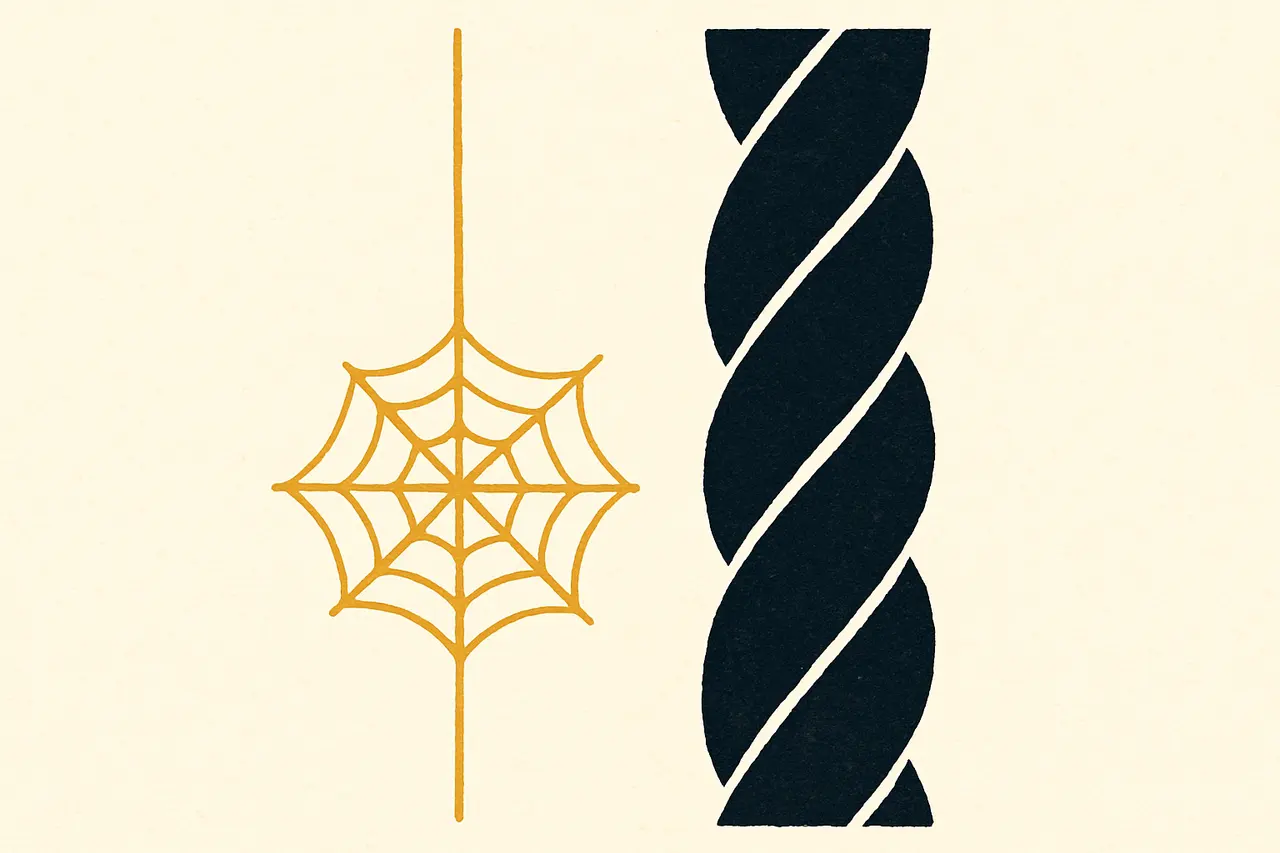
Strand for strand, spider silk is only as strong as middling steel. It wins on weight, and the toughest silk beats Kevlar tenfold.
Spider dragline silk is stronger than steel only weight for weight. Its tensile strength of about 1 gigapascal (GPa) puts it in the middle of the range for steel, but it is almost six times less dense, so its strength-to-weight ratio comes out ahead. As Cambridge engineer Michelle Oyen put it, the bare claim that spider silk is stronger than steel is not true.
The numbers behind the claim
Tensile strength is the largest stress a material can bear before it breaks. Steels range from about 0.2 GPa to nearly 2 GPa, so silk sits mid-table rather than at the top, and it is many times less stiff. Only when you divide strength by density does silk pull ahead, which is why the honest version of the claim carries the words “on a per-weight basis”.
Where silk truly excels is toughness, the total energy a material absorbs before it snaps. Dragline silk is both strong and stretchy: the golden orb-weaver’s extends about 18% before breaking and soaks up around 114 megajoules per cubic metre. That is how a flimsy-looking web stops a flying insect.
The toughest silk known belongs to Darwin’s bark spider of Madagascar, which anchors webs across rivers with bridge lines up to 25 metres long. A 2010 study measured its silk at an average of 350 MJ/m³, with some samples reaching 520: more than twice any silk described before and over 10 times tougher than Kevlar.
Copying the recipe has proved hard. An attempt to harvest silk protein from the milk of genetically modified “spider goats” ended in bankruptcy. In 2018, a Washington University in St. Louis team working with NASA’s Ames Research Center reported microbes engineered to make a giant silk protein of 556 kilodaltons. Fibres spun from it matched natural dragline silk on strength, stiffness, stretch and toughness: the first time microbe-made silk had matched it on all four.
Sources & references
4 referencesWell-established. Corroborated by 4 independent sources.