MacArthur said "I shall return" in Australia, not Corregidor
On this day · 20 October 1944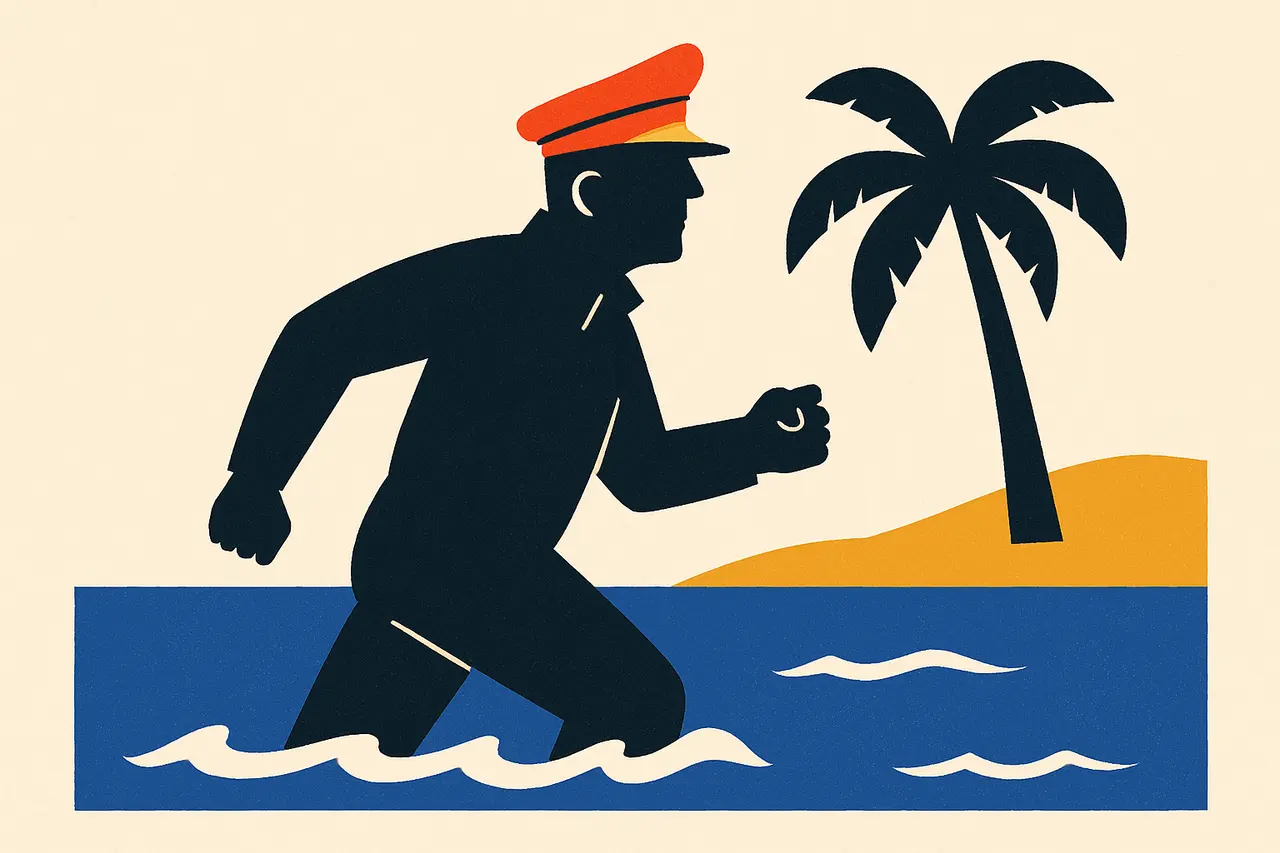
MacArthur waded ashore on Leyte on 20 October 1944 to keep a pledge he first made on a South Australian railway platform in 1942.
General Douglas MacArthur waded ashore on Leyte on 20 October 1944, two and a half years after promising Filipinos “I shall return” — a vow he made not as he fled the Philippines, but on a railway platform in South Australia.
Japan had struck the Philippines hours after the attack on Pearl Harbor, and by early 1942 the American and Filipino garrison was starving on Bataan. Roosevelt ordered MacArthur out. The famous line came later, once he was safely in Australia, and the version recorded by the Australian Embassy in Manila is slightly different from the slogan: “I came through and I shall return.”
From Corregidor to Red Beach
- 11 March 1942: MacArthur, his wife, young son and a few officers slip off Corregidor by PT boat in the dark.
- 20 March 1942: Travelling south from Alice Springs, he steps off a train at Terowie, a small town in South Australia’s mid-north, and tells the crowd and reporters he will return.
- April–May 1942: Bataan falls on 9 April and thousands of its prisoners die on the Bataan Death March; on 6 May General Jonathan Wainwright surrenders the remaining garrison on Corregidor.
- 20 October 1944: A vast fleet lands troops on Leyte against light beach defences. That afternoon MacArthur walks out of a landing craft with President Sergio Osmeña and broadcasts: “People of the Philippines, I have returned!”
- Late October 1944: The Philippine Commonwealth government is formally restored on home soil at Tacloban.
“It took me only 30 or 40 long strides to reach dry land, but that was one of the most meaningful walks I ever took.” — Douglas MacArthur
The naval historian Samuel Eliot Morison called it MacArthur’s day: “He was more than a general; he was a symbol.” The easy landing was a beginning, not an end — it drew the Japanese fleet into the Battle of Leyte Gulf and opened months of brutal fighting. Nor was the return purely American: more than 4,000 Australian servicemen fought in the liberation of the Philippines, and 92 of them were killed.
Sources & references
3 referencesWell-established. Corroborated by 3 independent sources.