This Tiny Animal Stole Genes From Bacteria and Plants
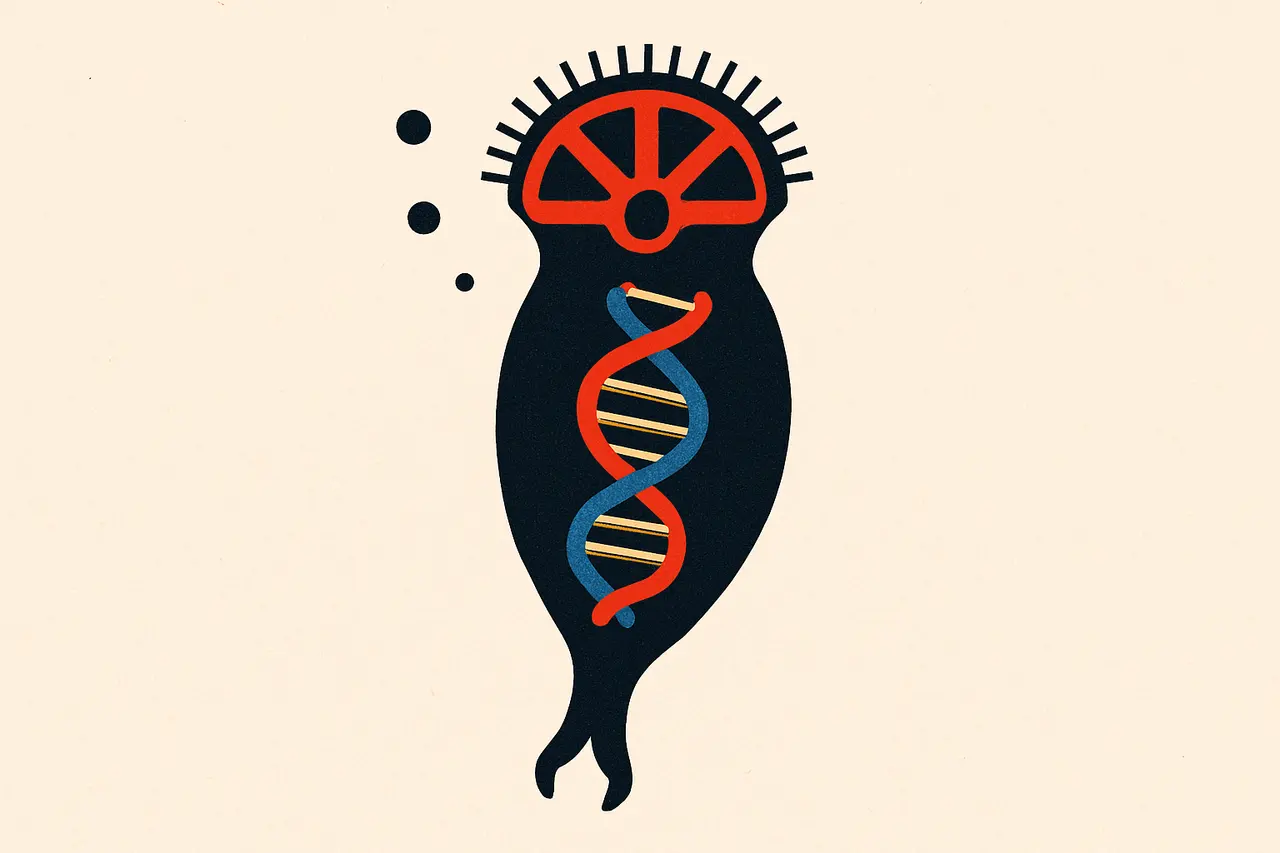
Bdelloid rotifers are microscopic animals whose genomes are stitched together with DNA borrowed from bacteria, fungi and plants.
Bdelloid rotifers are microscopic freshwater animals, barely visible to the naked eye, that have quietly broken one of biology’s tidiest rules. Animals are supposed to inherit their genes only from their parents. Bdelloids did not get that message.
Studies of their genomes find that roughly 8–10% of their active genes are foreign — DNA that originally belonged to bacteria, fungi, plants and other microbes, not to animals at all. That is around an order of magnitude more borrowed DNA than scientists find in a typical animal. The largest share comes from bacteria, with smaller contributions from fungi, protists and plants.
About 10% of a bdelloid’s working genes are not really its own.
These stolen genes are not idle passengers. Many encode enzymes that the rotifers actually use, expanding their biochemistry to break down toxins, make antioxidants, and even fight off fungal infections. Researchers think bdelloids’ habit of repeatedly drying out and rehydrating may shatter and reseal their DNA, letting environmental genes slip in and stick.
Sources & references
2 referencesWell-established. Corroborated by 2 independent sources.