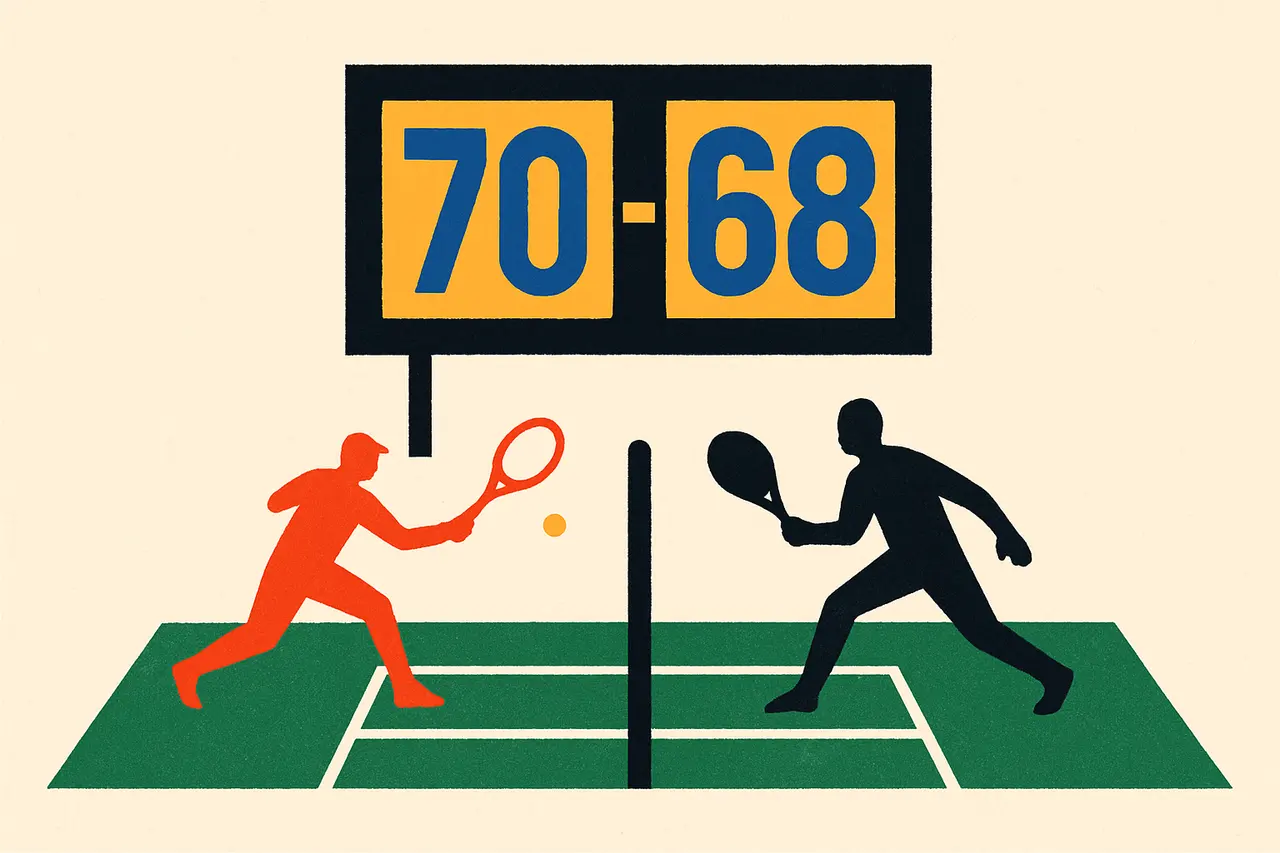
The yellow tennis ball changed color for television

For most of its history the tennis ball was white. Then color TV arrived and the ball simply disappeared.
For most of tennis history, the ball was white. That worked fine for spectators in the stands, but it became a problem the moment matches reached living rooms in color. On early color television the pale ball blurred into white clothing, faded against bright grass, and vanished near the painted court lines. Viewers couldn’t follow the one thing that mattered.
The fix was a brighter, more visible shade. The International Tennis Federation studied the question and, in 1972, formally admitted fluorescent “optic yellow” to the rules after research showed it was the easiest color for home audiences to track on screen. The ITF Rules of Tennis still list only two permitted ball colors today: white or yellow.
Television didn’t just broadcast the sport. It quietly redesigned its most basic piece of equipment.
Adoption was not instant. The US Open embraced yellow balls early in the 1970s, and other tournaments followed. Wimbledon, ever the traditionalist, clung to white for another fourteen years, finally switching to yellow in 1986.
So the color most people now treat as the natural, obvious shade of a tennis ball is really a broadcast-era invention, chosen by camera engineers and rule-makers rather than players. The next time you watch a match, the ball you’re following is yellow for one reason: so you can see it at all.
Sources & references
2 referencesWell-established. Corroborated by 2 independent sources.