A knockout is your brain twisting inside your skull
The classic out-cold knockout isn't about pain. It's a rotational jolt that briefly switches off the brain's consciousness switch.
A clean knockout looks almost magical: one punch, and a conditioned athlete drops instantly, unconscious before they hit the canvas. The mechanism is pure physics meeting neuroscience, and it has little to do with pain.
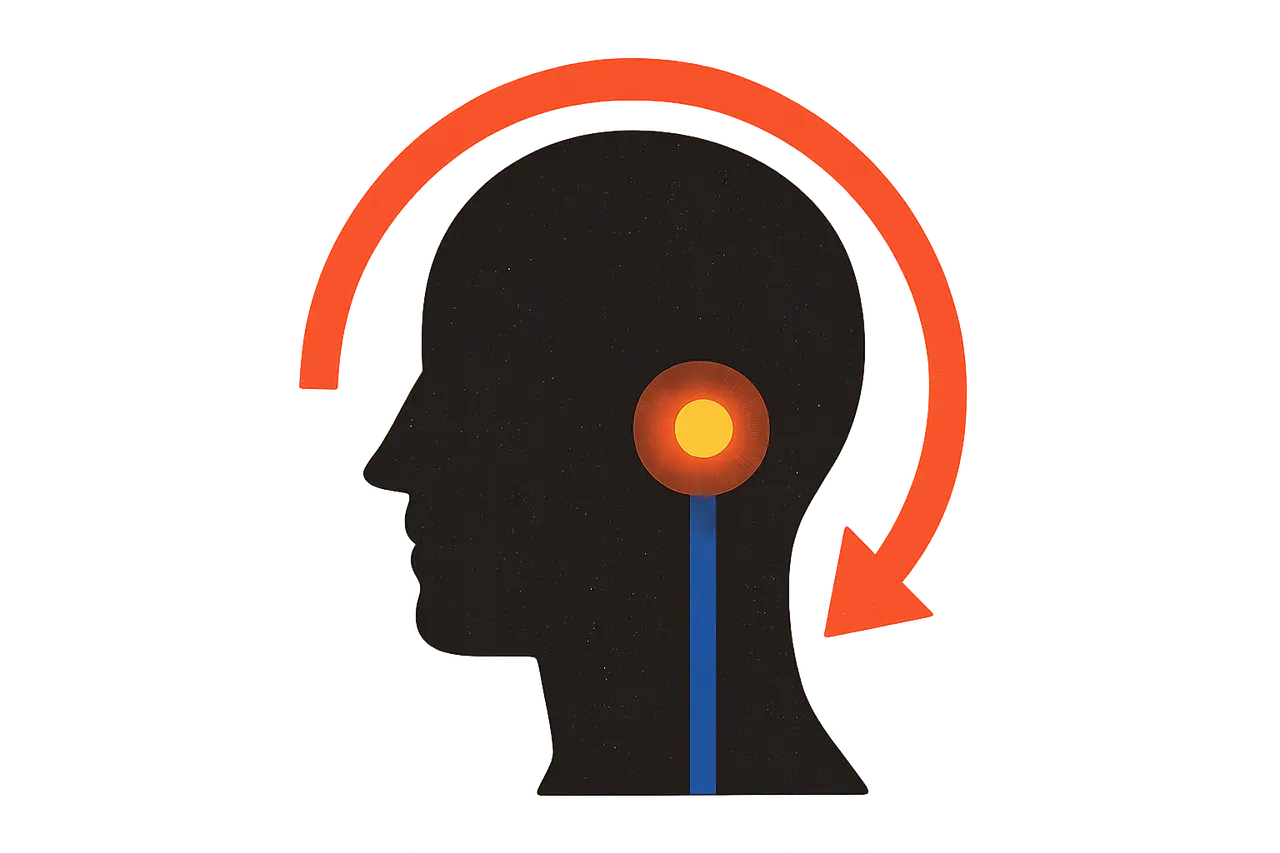
The most reliable knockouts come from blows that rotate the head — a hook to the jaw or a strike to the side of the chin. When the skull whips around, the soft brain inside lags behind due to inertia and then twists. That rotational acceleration generates the vast majority of damaging strain inside brain tissue, shearing and stretching nerve fibers far more violently than a straight-on impact would.
Deep in the brainstem sits the reticular activating system (RAS), the network that keeps you awake and conscious. When the rotational forces reach and disrupt the RAS and its connections to the cortex, that consciousness circuit briefly stops communicating.
The lights don’t dim. The switch flips.
The result is sudden, total loss of consciousness — a knockout is, by clinical definition, a concussion, a mild traumatic brain injury. That’s also why a flush rotational shot drops fighters who can absorb enormous straight punches: it’s not about toughness, but about whether the hit twists the brainstem.
The knockout, in other words, isn’t the body quitting. It’s the brain momentarily losing the thread of consciousness itself.
Sources & references
2 referencesWell-established. Corroborated by 2 independent sources.