At Le Mans, the winner is whoever drives furthest in 24 hours
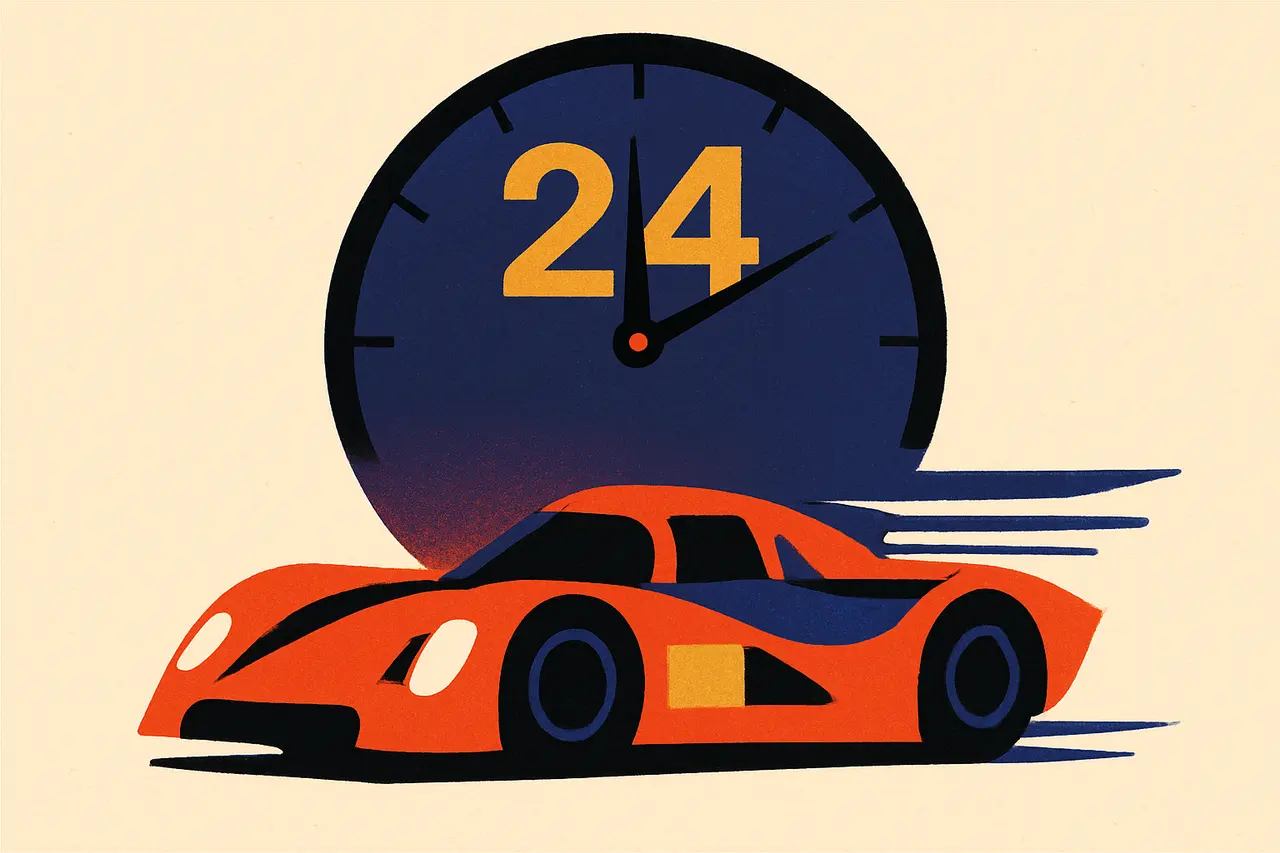
The world's oldest endurance race isn't about lap times - it's about how far you can go before the clock runs out.
The 24 Hours of Le Mans, first run in 1923, is the oldest active endurance race in the world. Unlike most motor races, it isn’t won by completing a set distance - it’s won by covering the greatest distance in 24 hours around a circuit in western France.
The scale has grown enormously. The inaugural winners managed 2,209 km. In 2010, an Audi set the modern record at over 5,400 km (3,360 mi) - roughly six times the length of the Indianapolis 500, or about 18 times a Formula 1 Grand Prix.
A single team covers more ground in one day and night than a full season of F1 racing.
Cars run flat-out through darkness, fog and dawn, shared by rotating drivers, with mechanical reliability as decisive as raw speed. Average winning speeds now exceed 240 km/h (150 mph) sustained over an entire day.
Sources & references
2 referencesWell-established. Corroborated by 2 independent sources.