Wars of the Roses began at St Albans in 1455 with few dead
On this day · 22 May 1455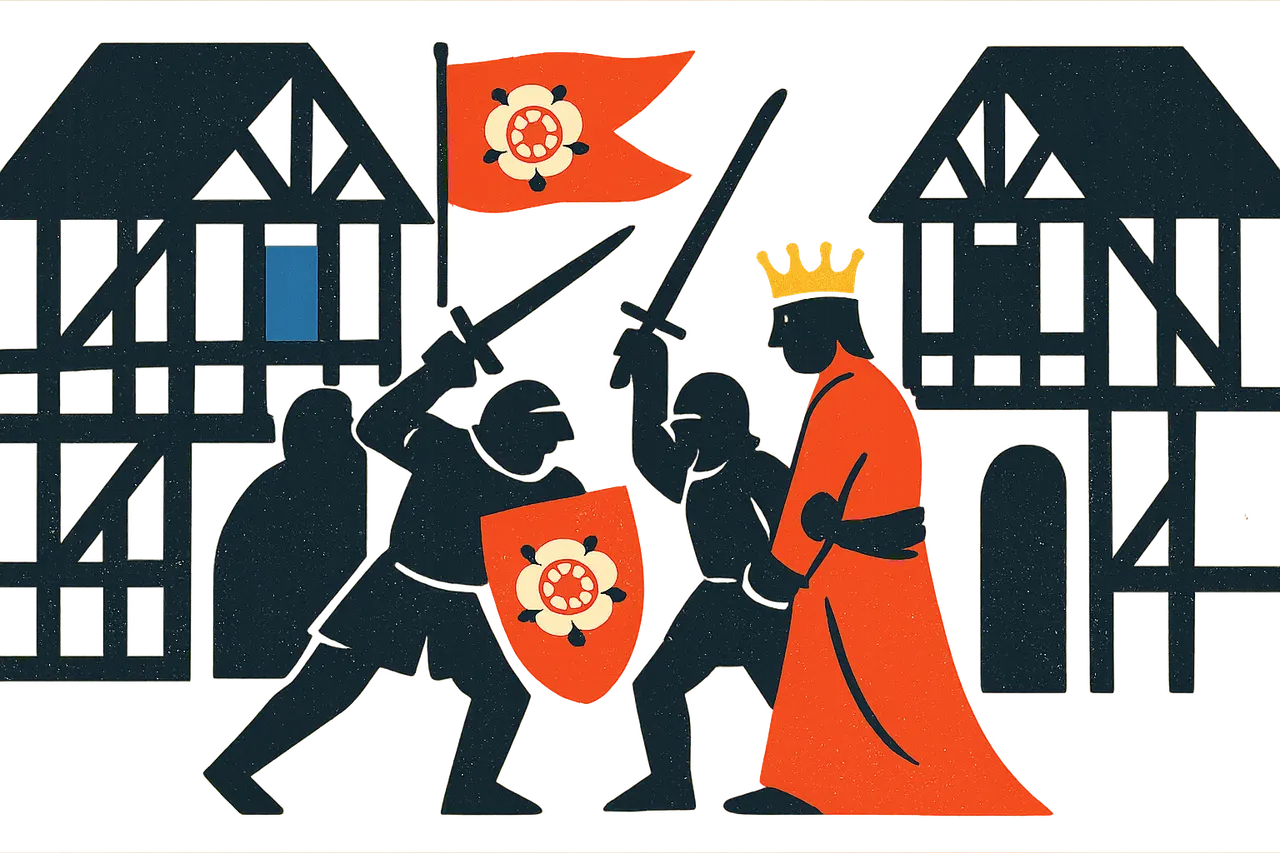
The 1455 street fight that opened the Wars of the Roses killed perhaps 100 to 400 men, but among them were the king's chief minister and two great northern lords.
The Wars of the Roses are traditionally dated from the First Battle of St Albans on 22 May 1455, when Richard, Duke of York, and his Neville allies attacked King Henry VI’s escort in the streets of the Hertfordshire town and killed the king’s chief minister, Edmund Beaufort, Duke of Somerset.
By the standards of later battles it was a small fight, and the surviving accounts do not agree on how small:
| Source | Troops engaged | Dead or casualties | Length |
|---|---|---|---|
| Battlefields Trust | c. 3,000 Yorkists v c. 2,000 Lancastrians | no more than 400 casualties | about an hour |
| St Albans & Herts Architectural & Archaeological Society | 3,000 v 2,000–2,500 | perhaps 100 killed | not given |
| St Albans Museums | 7,000–10,000 in all | about 160 | half an hour |
The higher troop figure is the outlier; the other two put about 5,000 men in the town. Where the accounts agree is on who died. Somerset, the Earl of Northumberland and Lord Clifford were all killed defending the east side of the town, which the society’s president, John Morewood, calls a “suspiciously high proportion of high-status individuals”.
His explanation is a private feud. Most of York’s soldiers belonged to the Neville family, who had spent years fighting Northumberland’s Percy family for control of northern England; in 1453 the Percys had tried to ambush the Earl of Salisbury on his way home from his son’s wedding. Morewood suggests York got his rival and the Nevilles got theirs. Few prisoners were taken.
The king himself was hit by an arrow, perhaps only a scratch from a spent one, and had the wound dressed in a tanner’s workshop on St Peter’s Street before York escorted him to the abbey and took him into his own protection.
The sons of the dead lords waited for revenge. The wars are usually said to have ended at the Battle of Bosworth in 1485, but Morewood traces the feud St Albans opened to Stoke Field in 1487, 32 years after the fighting in the town.
Sources & references
3 referencesWell-established. Corroborated by 3 independent sources.