The mantis shrimp's punch is so fast it boils the water around it
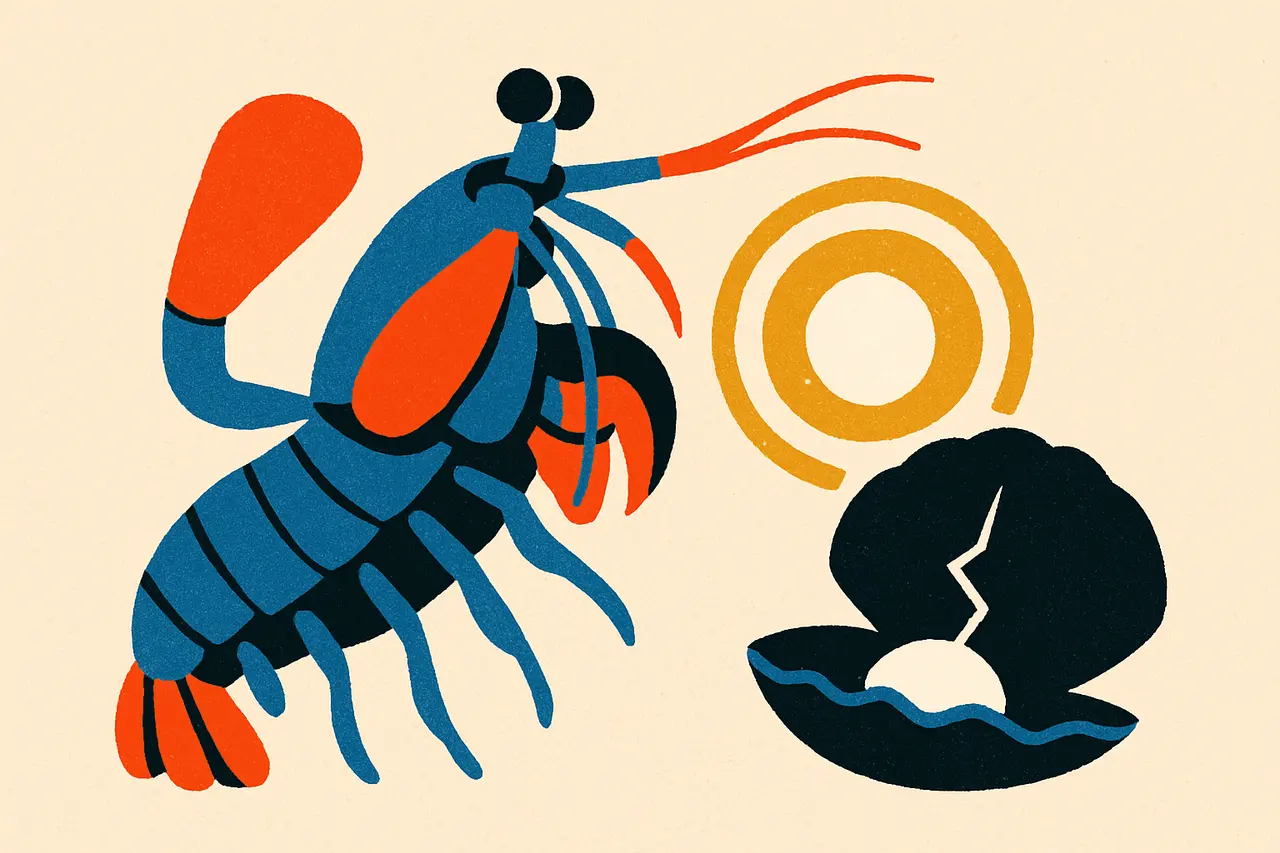
A peacock mantis shrimp's club strikes with the acceleration of a bullet, vaporizing water into bubbles that collapse in a flash of heat and light.
The peacock mantis shrimp (Odontodactylus scyllarus) carries one of the fastest weapons in the animal kingdom. Biologists at the University of California, Berkeley filmed its club striking at up to 23 metres per second from a standstill, with accelerations that rival those of a bullet fired from a gun.
The limb moves so fast that the water can’t keep up. Low pressure behind the club rips the liquid apart into vapour-filled cavitation bubbles. When those bubbles snap shut microseconds later, they unleash a second blast of force — sometimes hitting the prey harder than the club itself.
Each strike lands a one-two punch: the club, then the imploding bubble.
That implosion is violent enough to flash. In the closely related snapping shrimp, scientists measured a brief burst of light as the bubble collapses, evidence of temperatures of at least 5,000 K — comparable to the surface of the Sun — flickering for an instant inside a pocket of seawater.
Sources & references
3 referencesWell-established. Corroborated by 2 independent sources.