The mimic octopus impersonates other sea creatures on demand
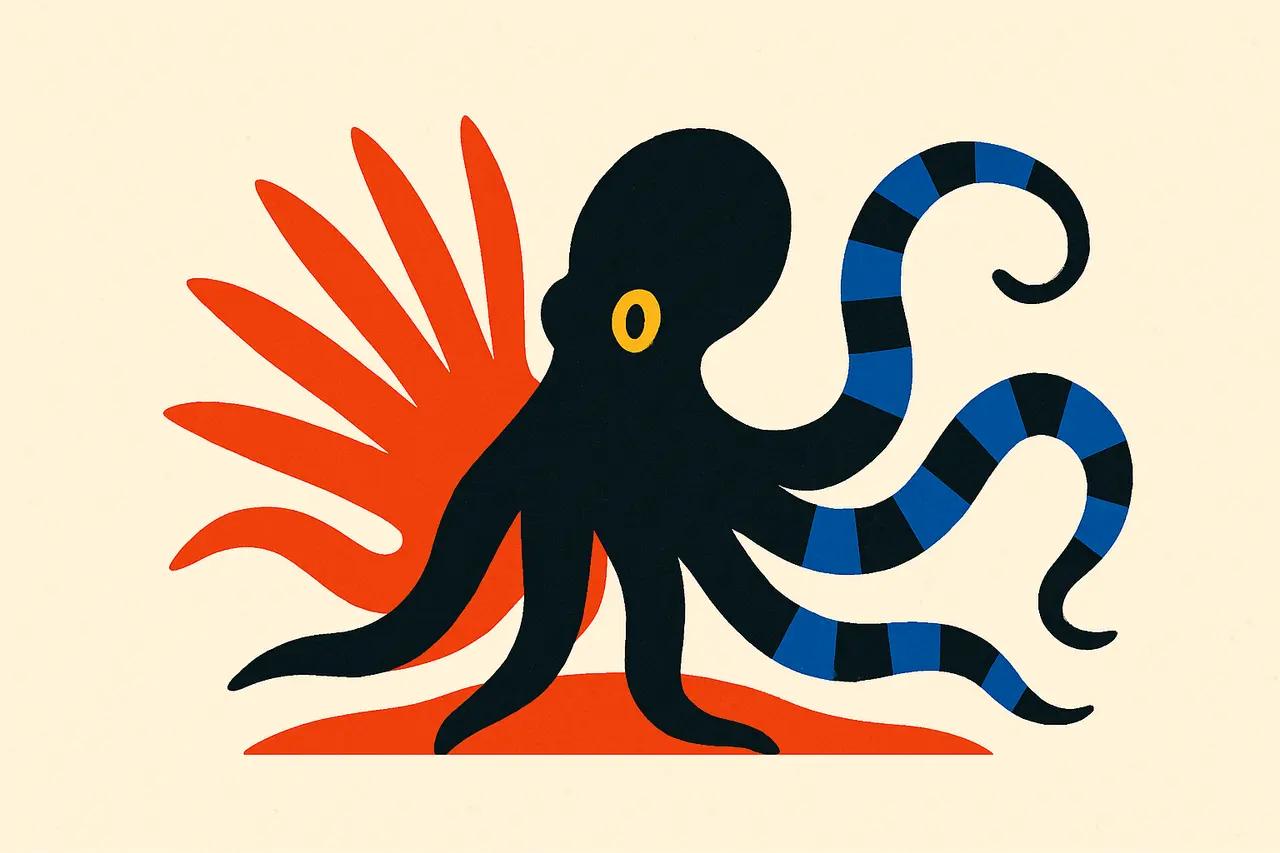
It doesn't just change colour — it changes shape and behaviour to pose as something dangerous.
Most octopuses hide by blending into the background. The mimic octopus (Thaumoctopus mimicus) does the opposite: it pretends to be a different, more dangerous animal entirely.
Living over open sand in the Indo-Pacific — where there’s nowhere to hide — it reshapes its soft body and changes its movement to impersonate at least 15 species. Spreading its arms into venomous spines, it becomes a lionfish; flattening into a leaf-shape, a toxic flatfish; tucking six arms away and banding the other two, a venomous sea snake.
What looks like raw intelligence is partly clever choice. Observers have watched the octopus pick its disguise to suit the threat — for example, posing as a sea snake, a known predator of damselfish, when harassed by damselfish.
The species was only formally described in 2005, after being spotted off Sulawesi, Indonesia, in 1998.
Sources & references
2 referencesWell-established. Corroborated by 2 independent sources.