The javelin was redesigned because throwers got too good
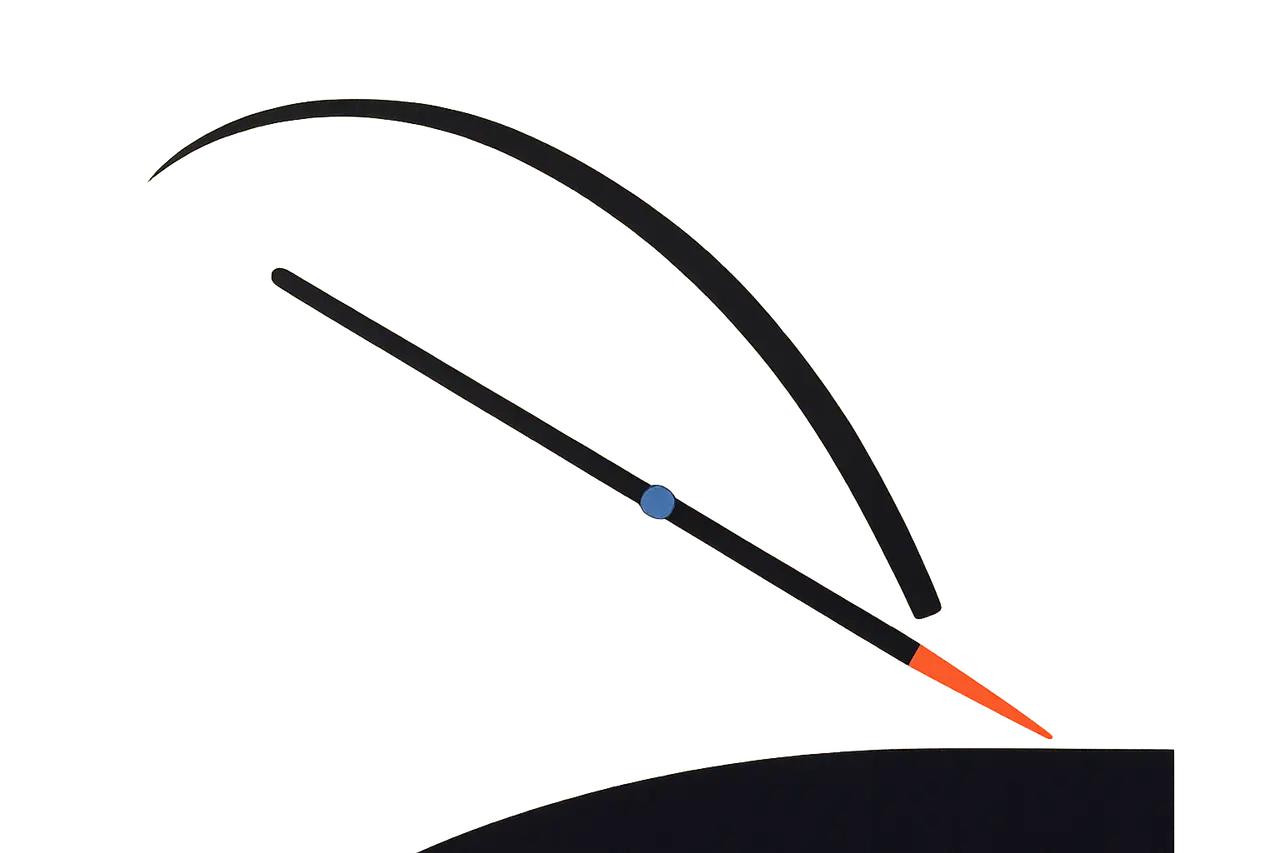
When a throw cleared 104 meters and javelins kept landing flat, officials moved the spear's balance point and reset the record books.
In 1984, East Germany’s Uwe Hohn became the first person ever to throw a javelin past 100 meters, sending it an astonishing 104.80 m — nearly the full length of a soccer pitch. Throws like his were starting to threaten the far end of stadium infields, and there was a quieter problem too: the modern aerodynamic javelin was floating and landing flat, tail-first or sideways, making it almost impossible for officials to judge a clean mark.
So the sport’s governing body, World Athletics, didn’t tighten a rule about the athletes. It redesigned the implement. For the men’s javelin in 1986, the center of gravity was shifted about 4 centimeters forward (the women’s followed in 1999).
Move the balance point forward, and physics does the rest: the nose drops sooner.
That small change makes the spear pitch down earlier in flight, guaranteeing tip-first landings and cutting distances by roughly 10 percent. Suddenly throws were shorter, clearly markable, and safely contained.
There was one catch. The new javelin was effectively a different object, so the old marks no longer applied. Hohn’s 104.80 m was frozen as an “eternal record” that can never be beaten under the current rules. The men’s record with the redesigned javelin still sits below 100 meters — proof that the engineers shortened the sport on purpose.
Sources & references
2 referencesWell-established. Corroborated by 2 independent sources.