The Amritsar massacre killed at least 379 — likely far more
On this day · 13 April 1919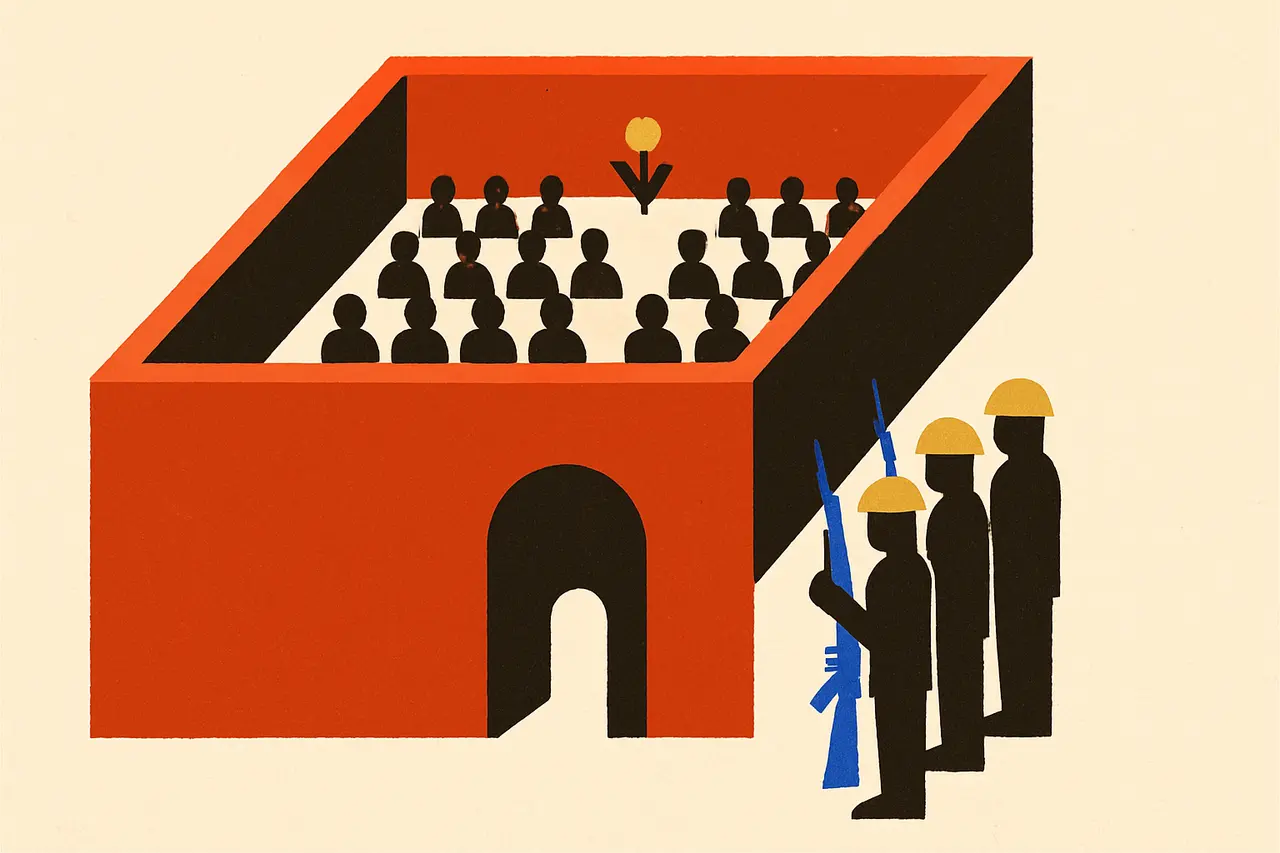
On 13 April 1919 Dyer's troops fired 1,650 rounds into a walled garden in Amritsar. Even now, nobody knows exactly how many died.
The Jallianwala Bagh massacre took place in Amritsar, Punjab, on 13 April 1919, when troops under Brigadier-General Reginald Dyer fired without warning on thousands of unarmed people in a walled garden, killing at least 379 by the official count and wounding about 1,200. The true toll was almost certainly higher.
Many in the crowd were there for the Baisakhi festival; others had come to a banned political meeting called in protest at the repressive Rowlatt Acts, which let the authorities imprison Indians without trial. Dyer brought about 50 riflemen in through the narrow main entrance and fired 1,650 rounds, stopping only when ammunition ran low.
The garden is often described as having a single exit. That overstates it: Churchill told the Commons the crowd was trapped “with hardly any exits”, and even Dyer’s defenders conceded the only way out was through gardens and over walls. The point stands — almost no one could escape.
| Estimate | Killed |
|---|---|
| Early British official figure | 291 |
| Official report (cited by Churchill, 1920) | 379 |
| Indian National Congress inquiry | about 1,000 |
A century on, historians writing for Ohio State University’s Origins still describe the numbers of dead and wounded as “still unknown”; the official figure is a floor, not a count.
“It is an extraordinary event, a monstrous event, an event which stands in singular and sinister isolation.” — Winston Churchill, House of Commons, 8 July 1920
Churchill, then War Secretary, was defending Dyer’s removal; the Hunter inquiry and the Commons backed his dismissal, but the House of Lords was more lenient, and his admirers hailed Dyer as the man who saved India. The massacre radicalised nationalists such as the Nehrus and fuelled Gandhi’s independence movement. On 13 March 1940 Udham Singh shot dead Michael O’Dwyer, Punjab’s lieutenant governor in 1919, at a meeting in London, and was hanged at Pentonville that July.
Sources & references
4 referencesWell-established. Corroborated by 4 independent sources.