The Boston Massacre inflamed colonial anger
On this day · 5 March 1770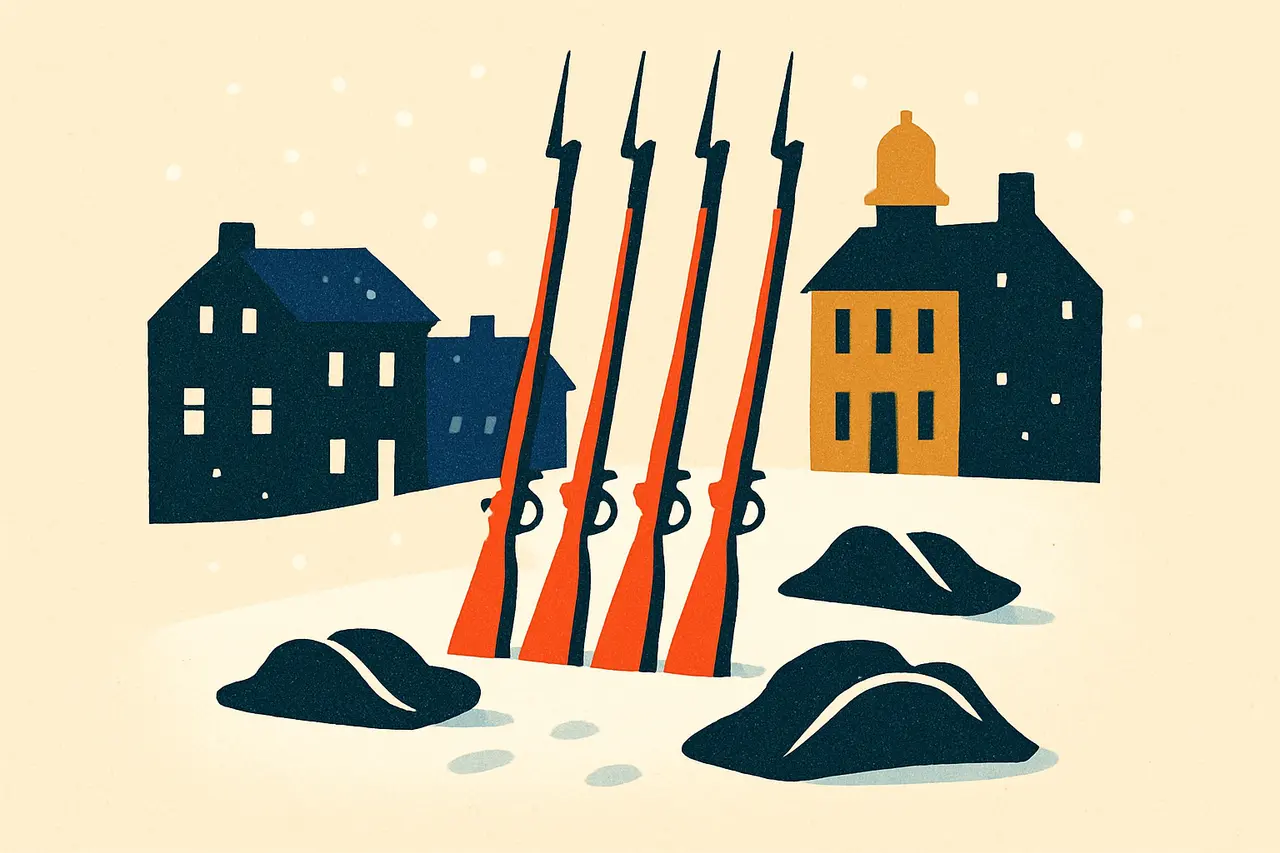
A scuffle over an unpaid bill ended with five colonists dead and a propaganda weapon handed to the revolution.
On the evening of March 5, 1770, a crowd of Bostonians gathered around a lone British sentry outside the Custom House on King Street, taunting him over an unpaid barber’s bill. As the mob swelled and pelted the soldiers with snowballs, ice, and insults, the redcoats opened fire.
When the smoke cleared, five colonists were dead or dying and six more were wounded. Among the dead was Crispus Attucks, a man of African and Native American descent often counted as the first casualty of the American Revolution. The funeral procession reportedly drew some 10,000 mourners — roughly two-thirds of Boston’s population.
Patriots seized on the killings. Paul Revere’s widely circulated engraving recast a chaotic street fight as a deliberate slaughter, and the phrase “Boston Massacre” stuck.
Ironically, John Adams — a future president — defended the soldiers at trial. Six were acquitted; two were convicted only of manslaughter.
Sources & references
2 referencesWell-established. Corroborated by 2 independent sources.