The Battle of Hastings wasn't fought at Hastings
On this day · 14 October 1066
The 1066 battle took place 7–8 miles inland, at a place now called Battle. Here is how historians know where it was.
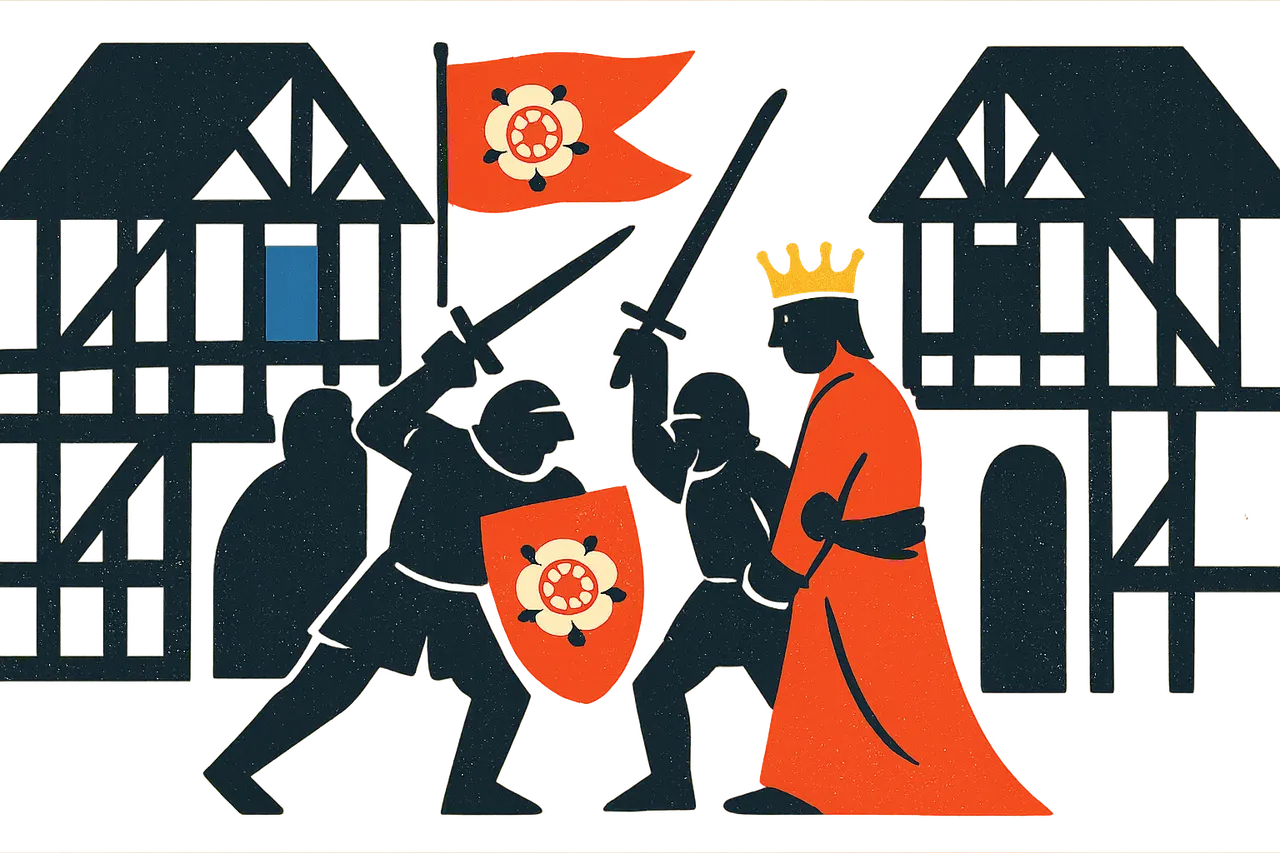
The Battle of Hastings was fought on 14 October 1066 about 7–8 miles inland from Hastings, on the ridge where the town of Battle in East Sussex now stands. It lasted most of the day. By evening King Harold II was dead and William, Duke of Normandy, was on his way to being crowned in Westminster Abbey on 25 December. Modern scholars put each army at 5,000 to 7,000 men.
How do we know where it was fought?
We know mainly because William built an abbey on the site. Some writers have argued for Crowhurst, about three miles south, or Caldbec Hill, a mile north. They say the monks of Battle Abbey invented the link in a chronicle written a century later. The monks did forge charters, but English Heritage concludes that this tradition is far older than their chronicle. The Anglo-Saxon Chronicle’s obituary of William, apparently written by a man who knew his court, says:
“On that same spot where God granted him that he should gain England, he reared a mighty minster.”
William made the monks put the high altar where Harold was believed to have fallen, even though the site was a narrow, waterless ridge. No artefacts from the battle have been found. Acidic clay and centuries of terracing for the abbey have probably destroyed them.
Did Harold’s army really march 200 miles in a week?
Possibly not as one body. After beating the Norwegians at Stamford Bridge on 25 September, Harold went south via London. English Heritage notes that no contemporary source mentions the famous “long march”. Perhaps only Harold’s mounted household made the fast ride, or he moved men by ship, as the historian Tom Licence has suggested. He paused in London to gather fresh troops.
Even Harold’s death is less certain than the famous picture suggests. The Bayeux Tapestry shows him wounded in the face by an arrow, but English Heritage’s own account says only that he was killed in the last attack. Like Agincourt, Hastings is remembered through a few famous scenes that the evidence only partly supports.
Sources & references
5 referencesWell-established. Corroborated by 3 independent sources.