Antietam was the bloodiest one-day battle in U.S. history
On this day · 17 September 1862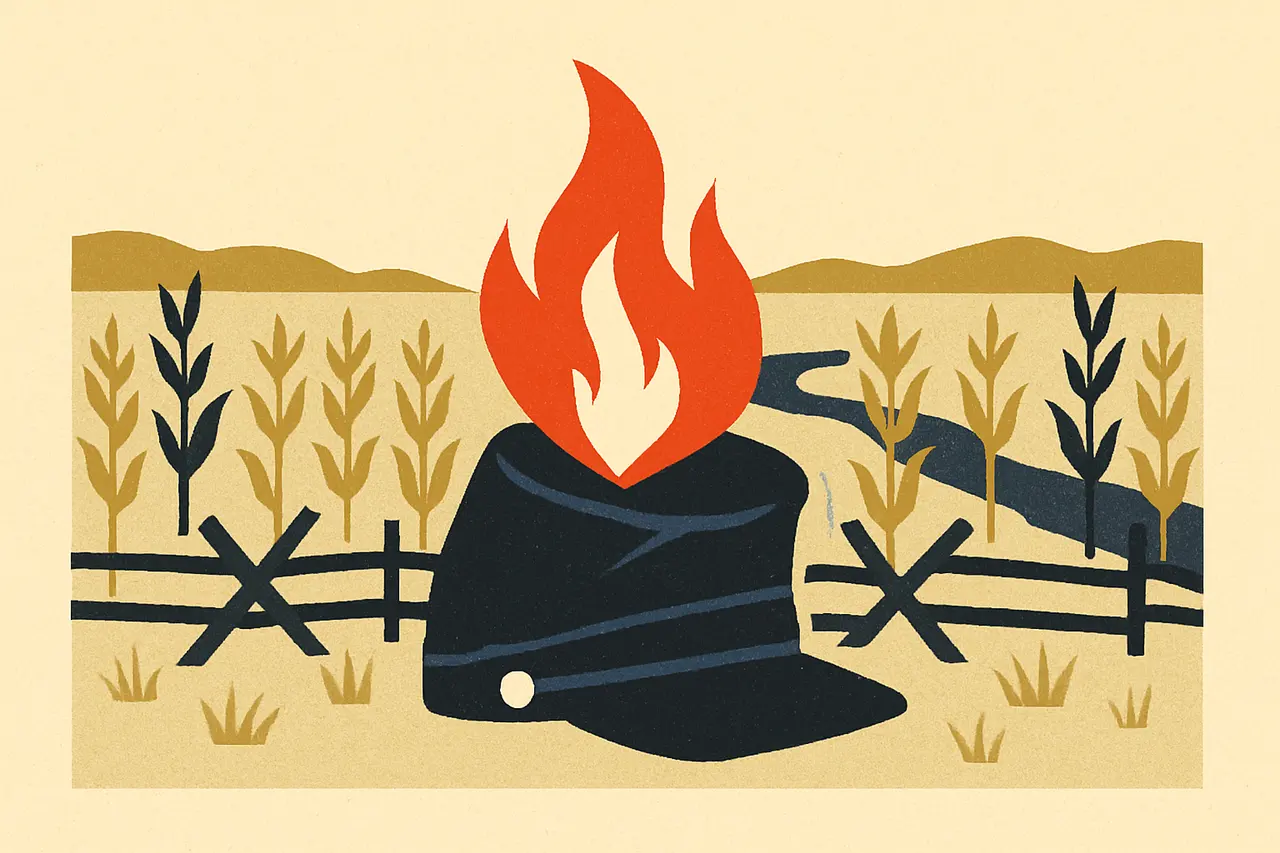
About 22,700 men fell at Antietam on September 17, 1862 — and it became the first American battlefield the public saw in photographs of the dead.
The Battle of Antietam, fought along Antietam Creek near Sharpsburg, Maryland, on September 17, 1862, was the bloodiest single-day battle in American history: about 22,700 Union and Confederate soldiers were killed, wounded, missing or captured in roughly twelve hours.
That number is often misread as deaths. Of the Union army’s 12,401 casualties, 2,108 were killed; of the Confederates’ 10,316, 1,546. That is about 3,650 men killed outright, against more than 17,000 wounded. The National Park Service notes that roughly one in seven wounded Civil War soldiers later died of their injuries, which would add perhaps 2,500 more. The slaughter was concentrated: in the Cornfield, between 5:30 and 9:30 that morning, about 8,200 men fell out of 27,000 engaged.
Strategically the day was enough for Abraham Lincoln. Lee withdrew into Virginia on the night of September 18, and Lincoln used the moment to issue the preliminary Emancipation Proclamation on September 22.
The first battlefield the public saw dead
Antietam was the first American battlefield photographed before the dead were buried. Alexander Gardner and his assistant James Gibson, the only cameramen there soon after the battle, made somewhere between 90 and 100 exposures, about seventy of them as 3-D stereo views. They were the first photographs to show Americans killed in battle.
Newspapers could not yet print photographs, but the prints went on show at Mathew Brady’s gallery in New York that October, and woodcuts copied from them spread nationwide. Reviewing the exhibition, The New York Times wrote of Brady:
“If he has not brought bodies and laid them in our door-yards and along streets, he has done something very like it.” — The New York Times, October 1862
Gardner himself seems to have had second thoughts. When he published his two-volume Photographic Sketch Book of the War, the Library of Congress notes, he left out the views of dead soldiers and used quiet landscapes instead.
Sources & references
4 referencesWell-established. Corroborated by 3 independent sources.