Tennis went from wooden rackets to graphite in a single decade
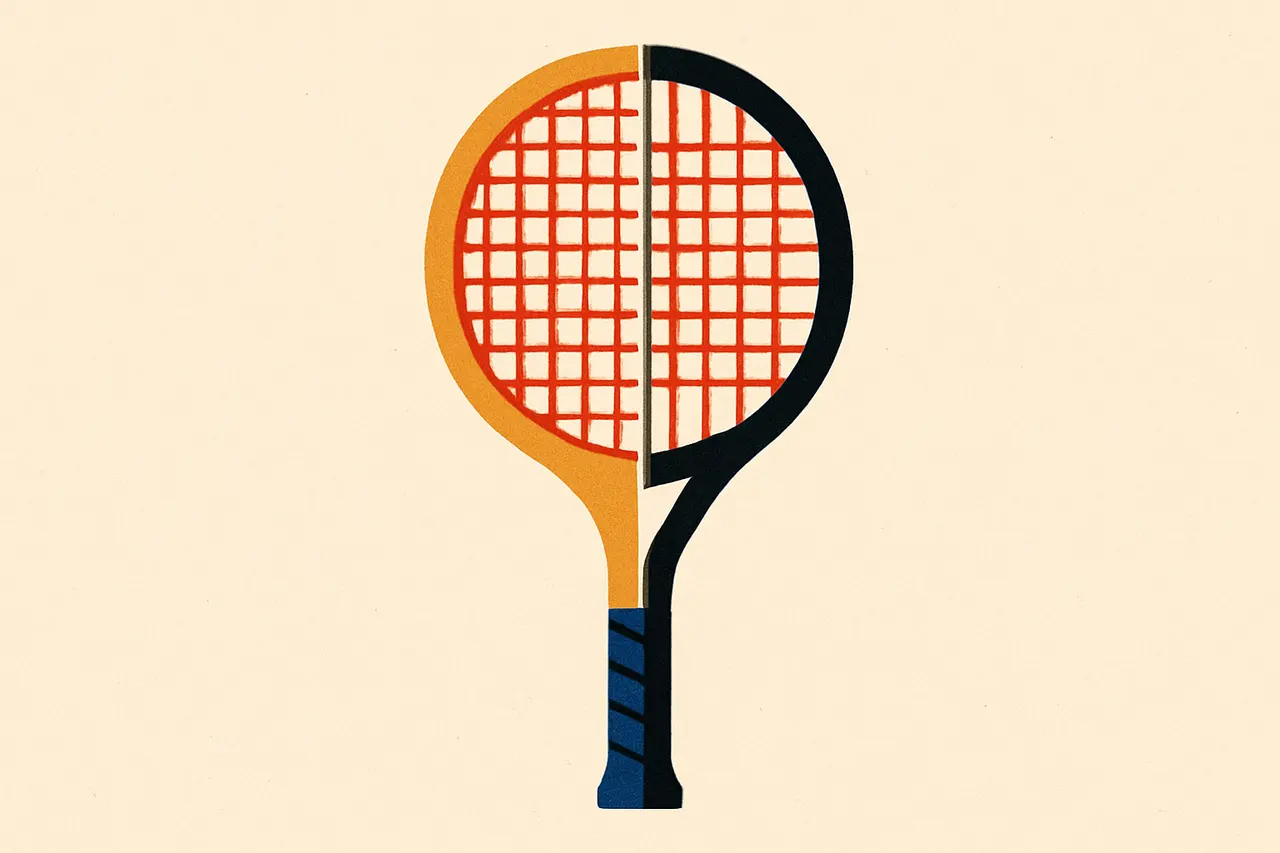
For nearly a century rackets were carved from wood; then 1980s composites quietly rebuilt the entire game.
For most of tennis history, the racket was a piece of laminated wood - heavy, flexible, with a small head and a tiny sweet spot. Frames stayed largely unchanged from the early 1900s into the 1960s.
The shift began with metal. Rene Lacoste patented a steel frame that Wilson manufactured as the T2000 in 1967, ending the wood era’s monopoly. Then came the real revolution: around 1980, graphite and other carbon-fibre composites arrived, lighter than metal yet far stiffer than wood. Designers could suddenly build larger heads without losing control, letting players swing harder and generate more spin.
The last wooden racket appeared at Wimbledon in 1987 - the close of a century-old tradition.
By the mid-1980s, manufacturers that had built wooden rackets for decades had gone fully composite. Carbon-fibre frames have dominated ever since, and the power they unlocked reshaped how the modern game is played.
Sources & references
2 referencesWell-established. Corroborated by 2 independent sources.