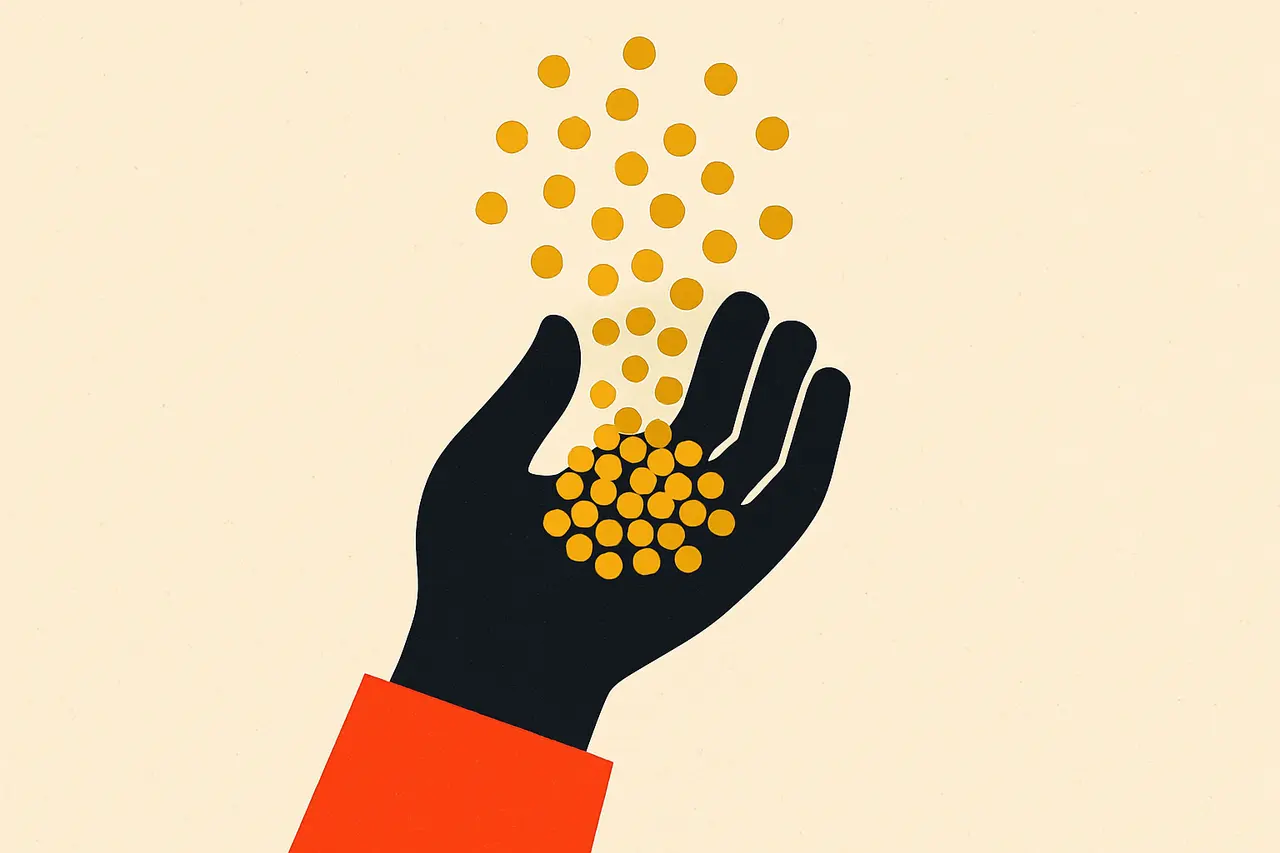
Across languages, basic color words appear in a near-universal order — and red comes first after black and white
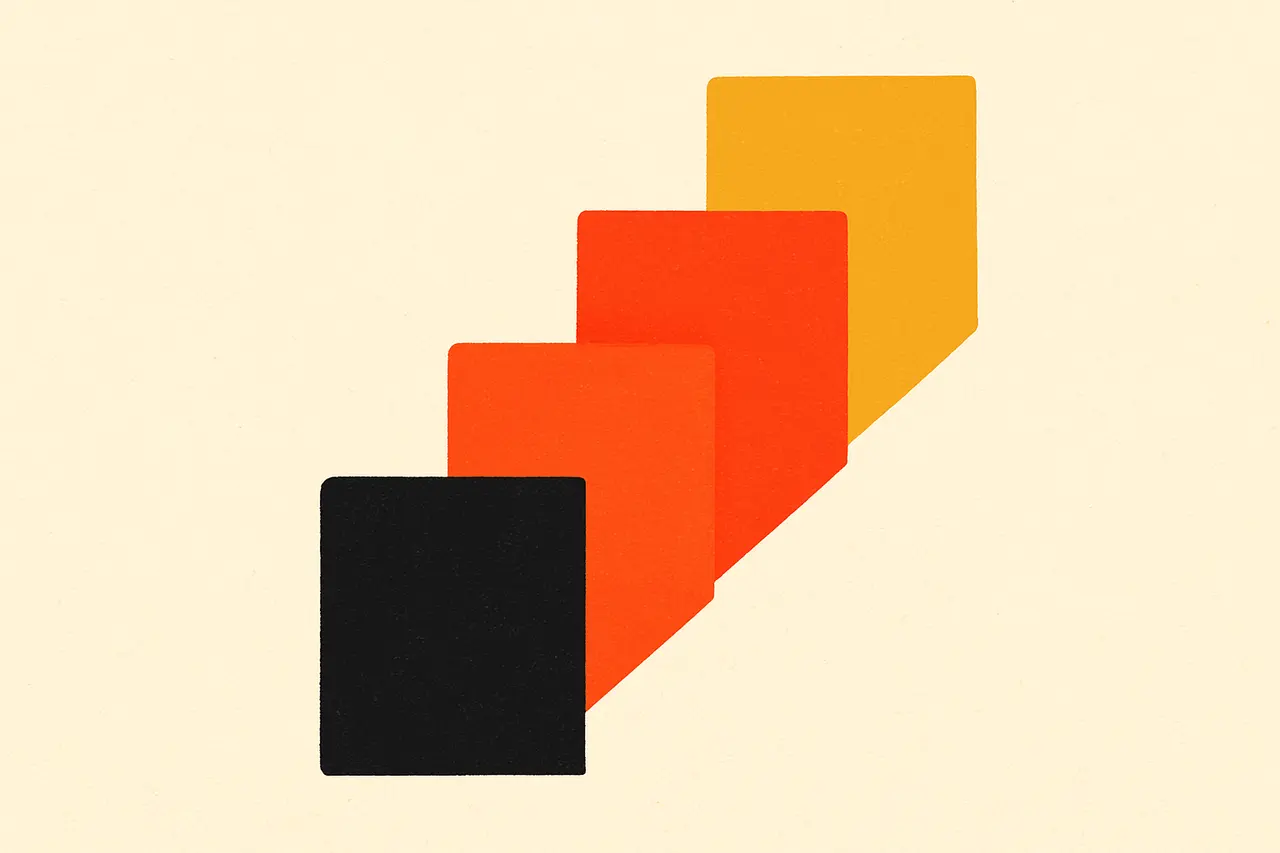
Berlin and Kay found that languages don't name colors at random: black and white come first, then red, then green and yellow, then blue.
If you handed every language in the world a fresh box of color words, you might expect chaos. In 1969, anthropologist Brent Berlin and linguist Paul Kay found something close to a recipe instead.
Surveying speakers across many unrelated languages, they reported that basic color terms enter a language in a startlingly consistent sequence. Languages with only two such terms split the spectrum into black/dark and white/light. The third term to appear, again and again, is red. Next come green and yellow, then blue, then brown, and finally the latecomers — purple, pink, orange, gray.
Add a third color word to a language, and overwhelmingly it will be red — not blue, not purple.
Berlin and Kay framed this as a set of evolutionary stages: you don’t get a word for blue until you already have words for black, white, red, and a green-or-yellow. They also argued the total inventory tops out at eleven basic categories, the set English happens to use in full.
The claim was bold enough to draw decades of pushback, and the later authors and critics loosened the strict ordering. But the core observation — that color naming is constrained, not arbitrary, and tracks something physiological about vision — reshaped how linguists think about the words for what we see.
Sources & references
2 referencesWell-established. Corroborated by 2 independent sources.