Endeavour's first flight, STS-49, caught a satellite by hand
On this day · 7 May 1992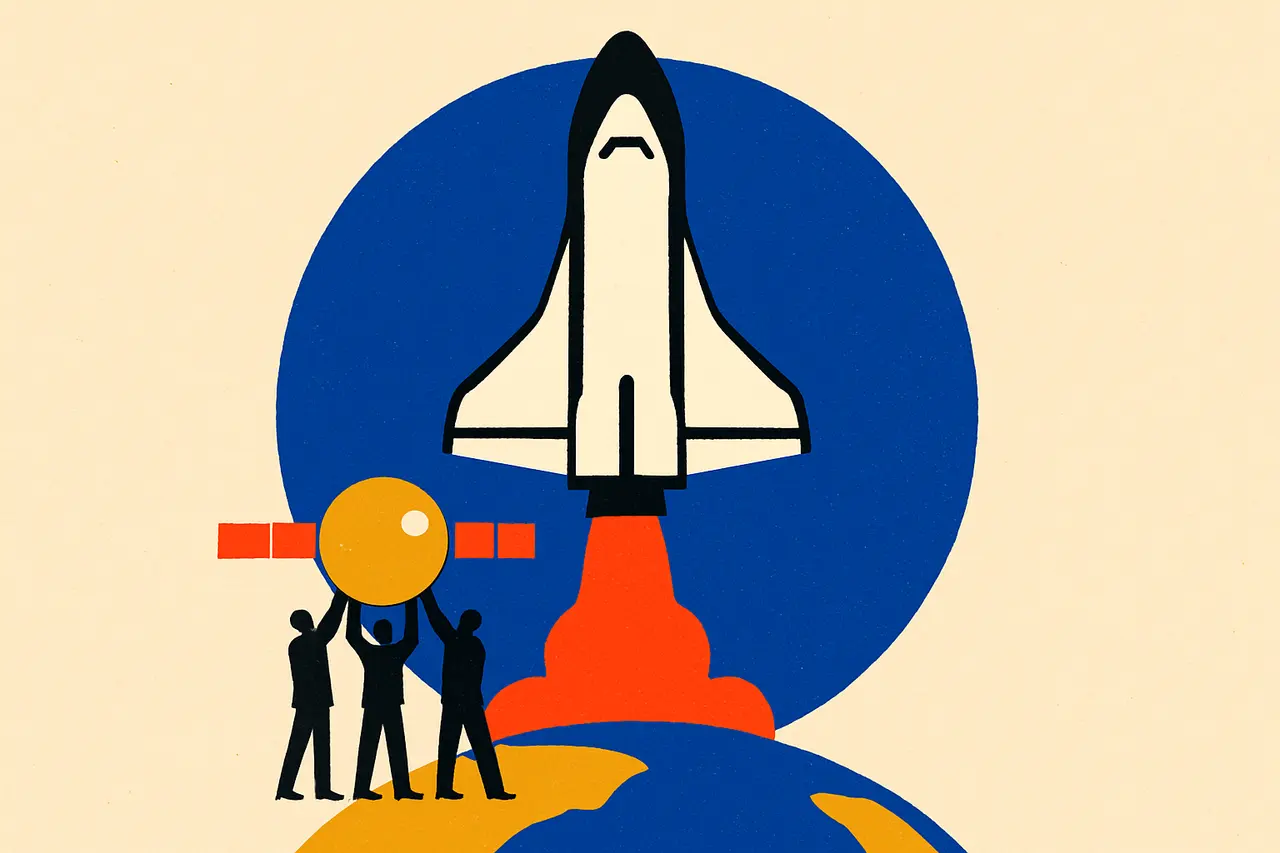
Built from spare parts and named by schoolchildren, Endeavour debuted in May 1992 with the only three-person spacewalk ever flown.
Space Shuttle Endeavour first flew on May 7, 1992, launching from Kennedy Space Center’s Pad 39B at 7:40 p.m. EDT on mission STS-49, whose crew captured a stranded satellite with their gloved hands. It was NASA’s fifth and youngest orbiter, built to replace Challenger.
NASA first considered converting the test orbiter Enterprise, then judged a new ship more cost-effective and assembled it largely from spare parts made while building Discovery and Atlantis. Its name came from a contest Congress set up after students voiced concern over Challenger’s loss: 6,154 entries from more than 70,000 students, won by Captain James Cook’s 18th-century ship.
The maiden mission’s target was the Intelsat VI (F-3) communications satellite, stuck in a useless orbit since a Titan rocket launched it in March 1990. Two spacewalks spent trying to attach a capture bar to the spinning 4.5-ton satellite failed. On a third, Pierre Thuot, Rick Hieb and Tom Akers stood in the payload bay as a human tripod and grabbed it by hand while commander Daniel Brandenstein held the orbiter a few feet away. It remains the only three-person spacewalk ever flown.
“It was really a fun mission, once we knew the ending,” Brandenstein said later. “There were times there during the middle when I wasn’t sure we were having much fun.”
What the mission delivered
- Fitted with a new kick motor, Intelsat reached geosynchronous orbit in time to relay the 1992 Summer Olympics.
- STS-49 became the first shuttle flight with four spacewalks; its 8 h 29 min outing set a duration record.
- On May 16, Endeavour landed at Edwards, California, deploying a drag chute, a post-Challenger upgrade that helped make routine Florida landings possible.
Endeavour flew 25 missions before retiring in 2011.
Sources & references
3 referencesWell-established. Corroborated by 2 independent sources.