Saharan dust fertilizes the Amazon rainforest

Each year a dust cloud the size of millions of trucks drifts across the Atlantic, replacing the exact nutrient the rainforest washes away.
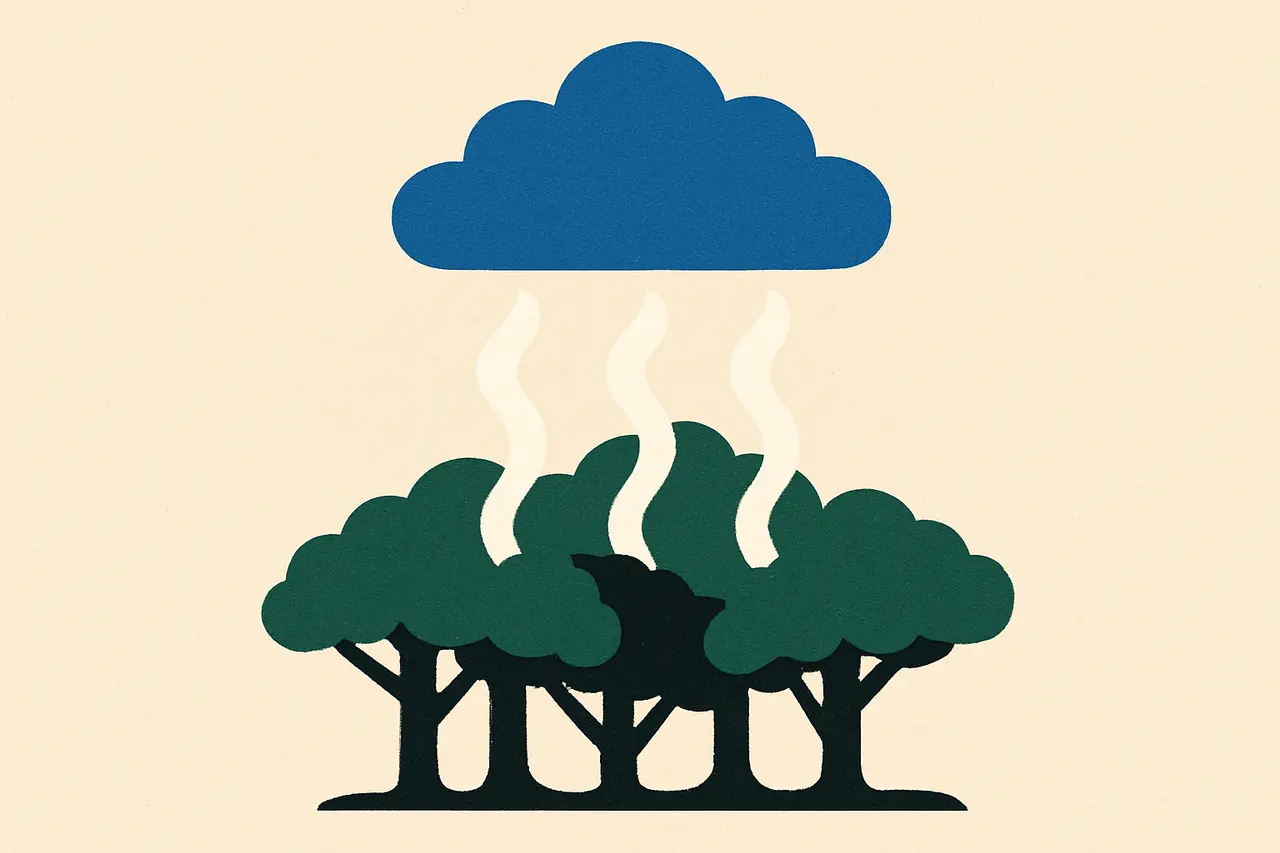
The Amazon looks impossibly lush, but its soils are surprisingly poor. Heavy tropical rain constantly strips phosphorus — a nutrient plants need to grow — out of the ground and washes it into rivers. So how does the world’s most productive rainforest keep going?
The answer blows in from another continent. Using data from NASA’s CALIPSO satellite (2007–2013), scientists led by Hongbin Yu of the University of Maryland tracked dust lifted from the Sahara — much of it from Chad’s Bodélé Depression, an ancient lakebed rich in the remains of dead microorganisms.
On average, 182 million tonnes of dust leaves Africa each year, and about 27.7 million tonnes settle over the Amazon basin after a journey of thousands of kilometres.
The dust carries roughly 22,000 tonnes of phosphorus a year — almost exactly what the rainforest loses to rain and flooding.
It is a planetary act of recycling: the slow erosion of the world’s largest hot desert quietly fertilizes the world’s largest rainforest, year after year.
Sources & references
2 referencesWell-established. Corroborated by 2 independent sources.