The Great Barrier Reef is the largest structure built by living things
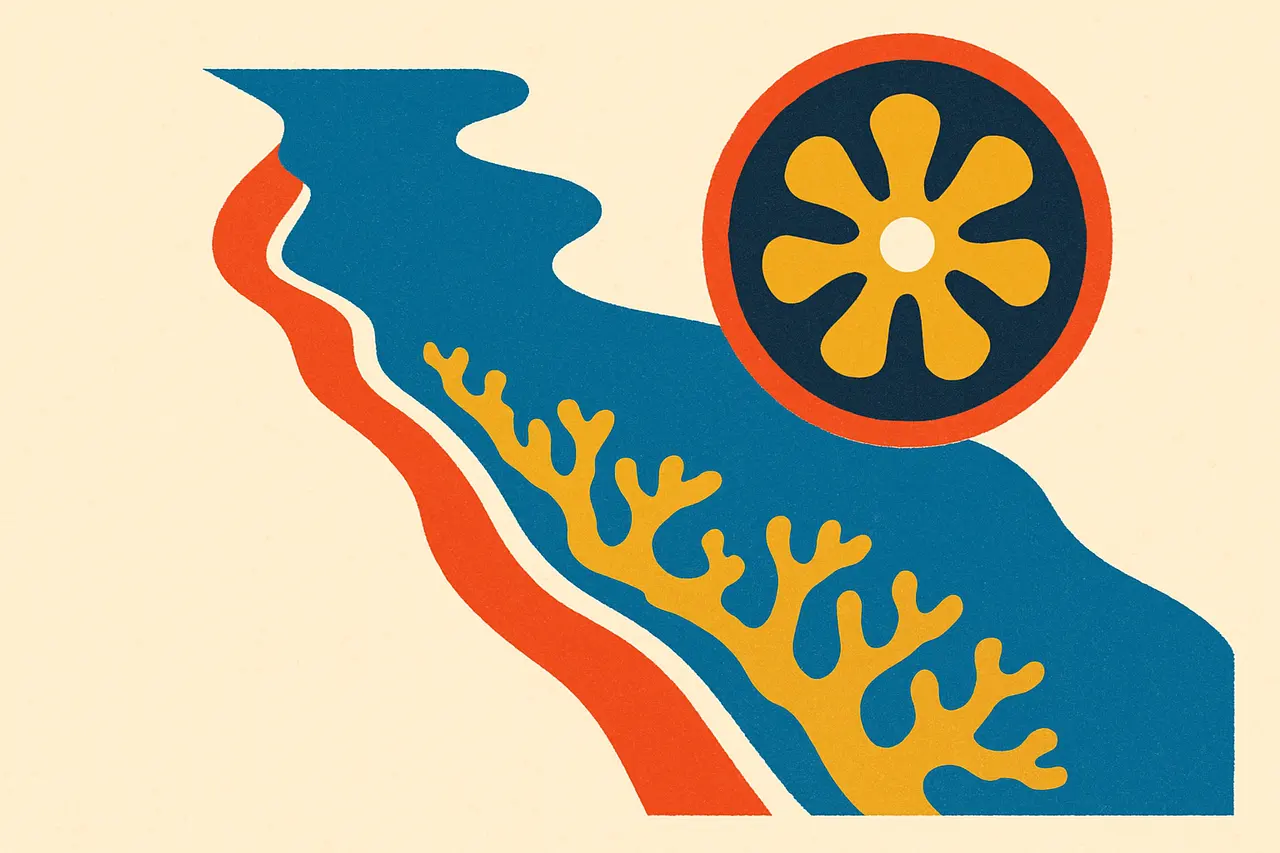
Built grain by grain by tiny coral polyps, it stretches over 2,300 km and is the only living structure visible from space.
Of everything living things have ever built — every termite mound, beaver dam, and human city — nothing compares in scale to the Great Barrier Reef. NOAA calls it simply the largest living structure on Earth, and it is large enough to be seen from space.
The numbers are staggering. The reef stretches more than 2,300 kilometers along Australia’s northeast coast and covers an area of roughly 344,000 square kilometers — larger than many countries. It is not a single reef but a vast system of nearly 3,000 individual reefs and hundreds of coral islands, all knitted together off the coast of Queensland.
What makes it almost unbelievable is the builder. The entire edifice is the work of coral polyps — soft-bodied invertebrates, many no bigger than a pinhead. Each polyp secretes a tiny cup of calcium carbonate around itself. As generations live, die, and stack their limestone skeletons atop one another, the structure grows. Over thousands of years, those microscopic contributions accumulate into a formation visible from orbit.
A wall of rock built by animals you could balance on a fingertip.
The reef in its present form is geologically young, having grown largely since the last Ice Age, when rising seas flooded the continental shelf and gave corals new shallows to colonize. Yet that brief window was enough to assemble the planet’s grandest biological construction.
It is, in the most literal sense, a city built by its smallest possible residents — and the only one visible from the void of space.
Sources & references
2 referencesWell-established. Corroborated by 2 independent sources.