Mangroves quietly prevent $65 billion in flood damage every year
These tangled coastal forests are seawalls, carbon vaults, and nurseries all at once.
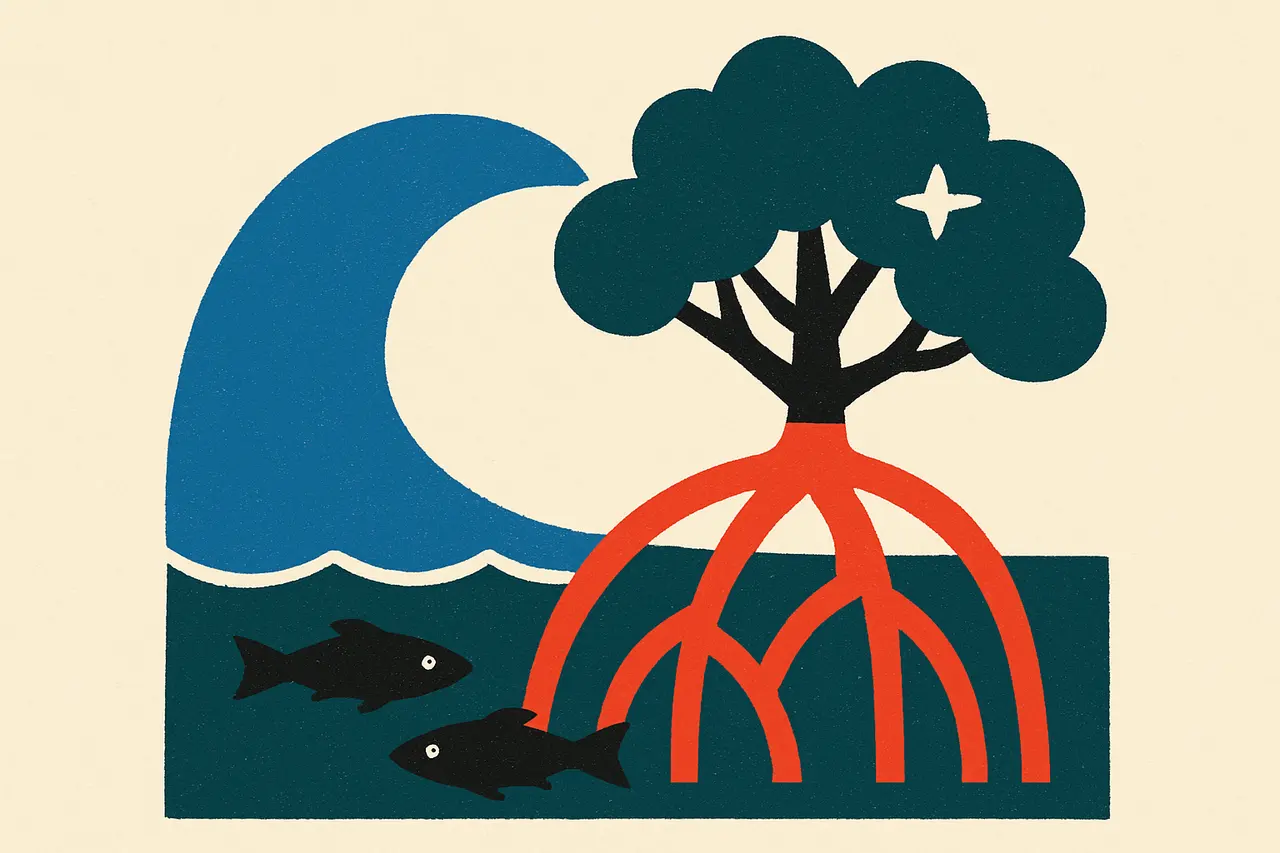
Mangroves are salt-tolerant trees that grow in the tidal zone where land meets sea, their stilt-like roots forming a dense, wave-breaking thicket. That tangle is a natural seawall: it saps the energy of storm surges and waves before they reach the shore.
The payoff is enormous. A global study in Scientific Reports estimated that mangroves prevent more than US$65 billion in flood damage every year, and that without them, 15 million more people would be flooded annually.
They are also extraordinary carbon stores. NOAA notes that the deep, waterlogged soils of coastal ecosystems like mangroves can bury many times more carbon per acre than a tropical rainforest — so-called “blue carbon.” Because little oxygen reaches that buried material, it decays slowly and locks carbon away for centuries. Protecting a mangrove fringe defends coastlines and the climate at the same time.
Sources & references
2 referencesWell-established. Corroborated by 2 independent sources.