Most Romanian revolution deaths came after Ceausescu fled
On this day · 22 December 1989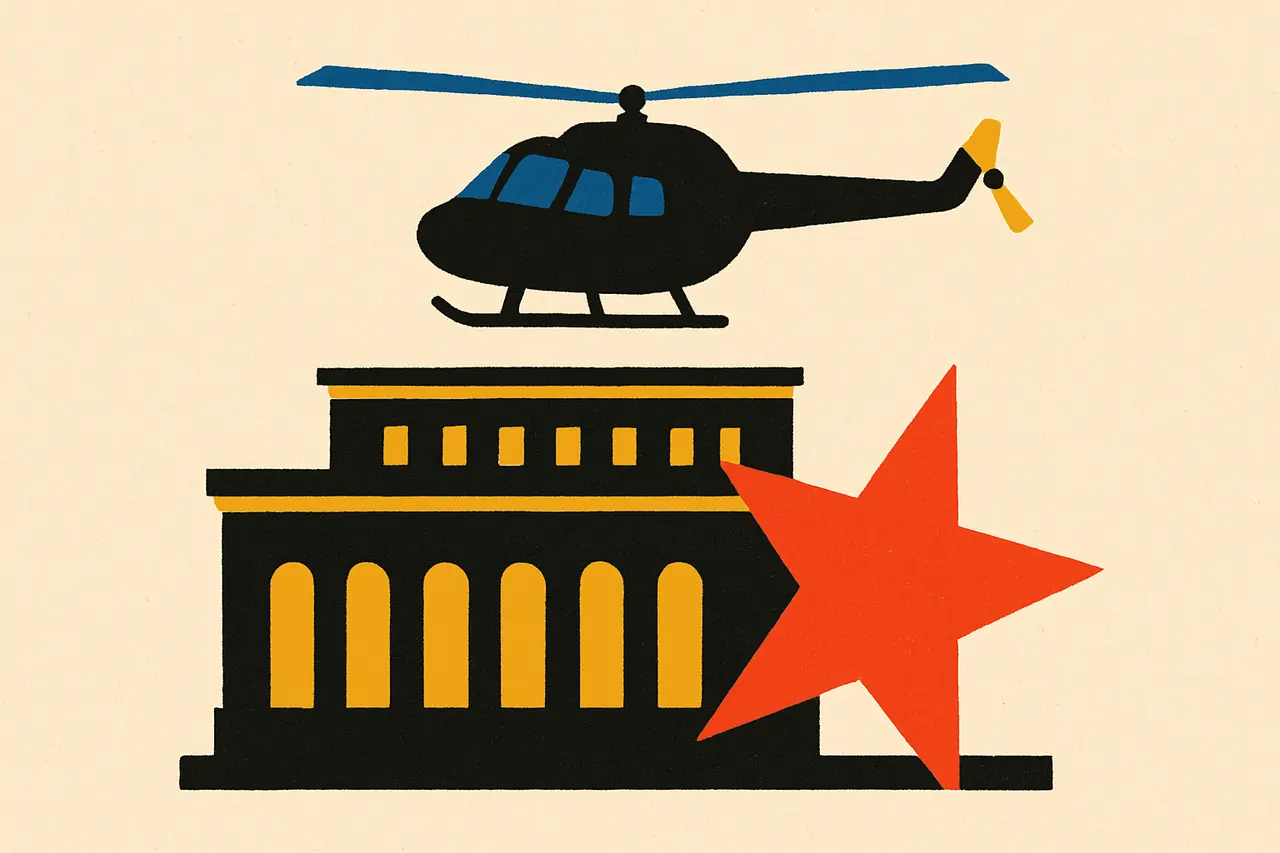
Ceausescu escaped Bucharest by helicopter on 22 December 1989, yet 942 of the uprising's 1,104 deaths happened after he had gone.
Nicolae Ceausescu fled the Communist Party’s Central Committee building in Bucharest by helicopter on 22 December 1989, but most of the Romanian Revolution’s bloodshed came after he had gone: of the 1,104 people killed, 942 died after the dictator’s escape, according to the European Network Remembrance and Solidarity.
That reverses the usual picture of a tyrant’s fall silencing the guns. Protest had begun in Timisoara and reached the capital; once demonstrators took the Central Committee building and pulled down the party’s flags, uncoordinated armed groups fought one another across the country through the night, and people were killed in the exchange of fire. The shooting eased only after the Ceausescus were dead.
Their last three days, as reconstructed by TVR, Romania’s public broadcaster:
- 22 December, about noon: the helicopter lands at the couple’s lakeside residence at Snagov, then takes off again towards Targoviste.
- 22 December, 1:30 pm: ordered down by the army, they abandon it near Boteni and continue in cars that Securitate officers flag down on the road.
- 22 December, night: after hiding in a forest, they walk into the county militia headquarters, now held by revolutionaries, and are arrested and searched.
- 24 December, evening: the new leadership around Ion Iliescu creates an exceptional military tribunal.
- 25 December, 2:50 pm: after a trial at the Targoviste garrison, both are shot by a squad of paratroopers.
Who was doing the killing after the flight has never been settled. In 2019 Romanian prosecutors charged Iliescu, who took power as Ceausescu fled, with crimes against humanity, alleging that state media whipped up fear of “terrorists” and set off chaotic, fratricidal fire that killed 862 people and wounded 2,150; he consistently denied wrongdoing. ENRS still calls Romania’s the bloodiest of the 1989 revolts, a grim contrast with the largely peaceful fall of the Berlin Wall six weeks earlier.
Sources & references
4 referencesWell-established. Corroborated by 4 independent sources.