Robert Koch identified the TB bacterium on 24 March 1882
On this day · 24 March 1882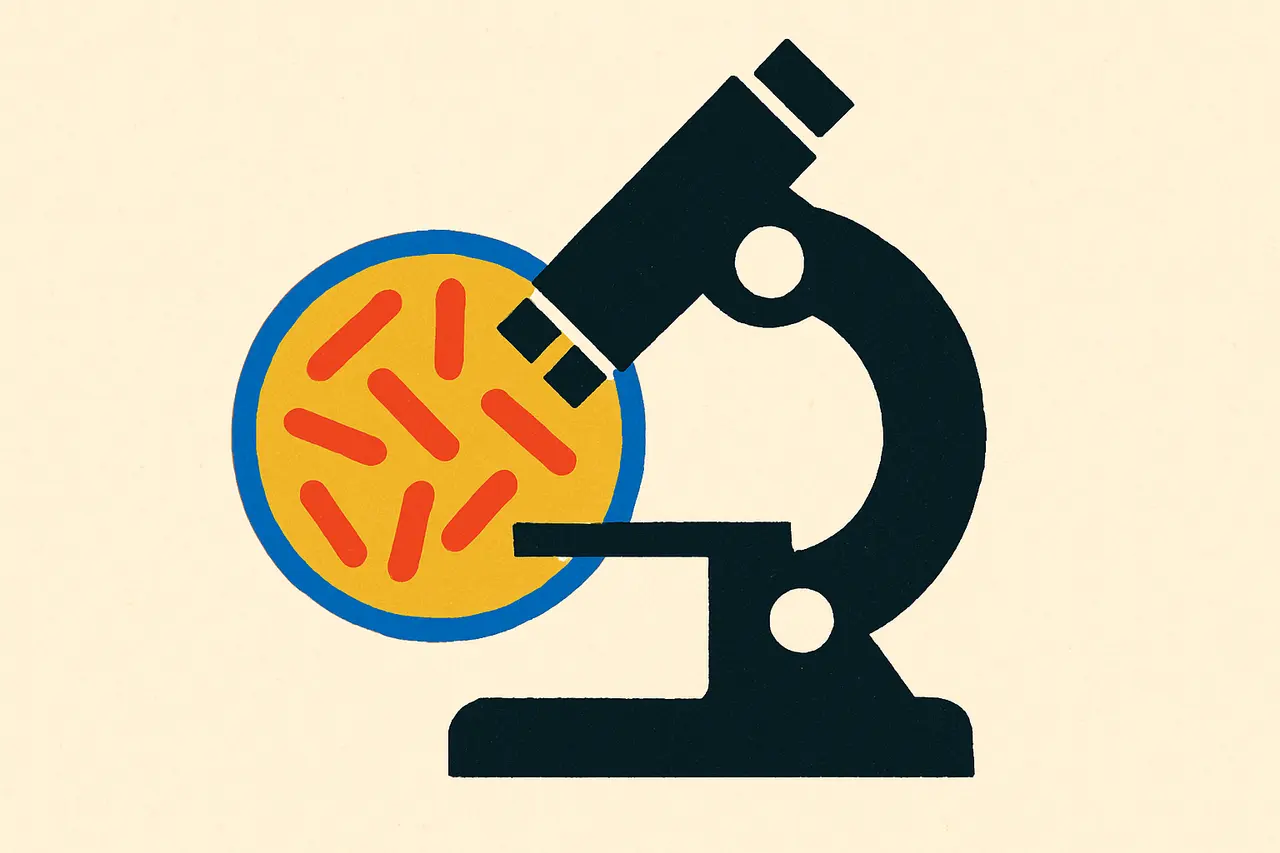
Koch's Berlin lecture revealed the germ behind a disease causing one in seven deaths. His follow-up cure failed; the disease still kills over a million a year.
Robert Koch identified the bacterium that causes tuberculosis, now called Mycobacterium tuberculosis, and announced it on 24 March 1882 in a lecture to the Berlin Physiological Society. His paper, “The Etiology of Tuberculosis”, followed three weeks later, on 10 April.
Koch opened with the scale of the problem. Statistics of his day, he told the audience, showed that one in seven of all people died of tuberculosis, and that among adults in their productive middle years it carried away one-third or more. That is a share of deaths, not of the population, a distinction some retellings lose.
The breakthrough was making an elusive, slow-growing microbe visible. With his staining method, Koch wrote, animal tissue turned brown while the tubercle bacilli appeared “beautifully blue”, a contrast so striking that even a handful of bacteria could be identified with certainty. Other researchers had already shown that TB could be passed on by inoculation; by tracing a specific bacillus through diseased tissue, Koch offered what he called “the complete proof of the parasitic nature” of a human infectious disease.
From the lecture to today
- 1882: the 24 March lecture in Berlin, a date the World Health Organization now marks as World TB Day.
- 1890: Koch unveiled tuberculin, made from devitalised tubercle bacteria, as a remedy. It failed: long-term cures never came, and some patients died after treatment. Tuberculin is still used today, as a diagnostic test.
- 1905: Koch received the Nobel Prize in Physiology or Medicine for his tuberculosis work.
- 2024: tuberculosis killed 1.23 million people, and it remains the world’s leading cause of death from a single infectious agent.
Koch made the germ visible in 1882; more than 140 years later, the disease he described is preventable and curable, yet still among the top ten causes of death worldwide.
Sources & references
5 referencesWell-established. Corroborated by 4 independent sources.