Reagan's own advisers fought to cut 'tear down this wall'
On this day · 12 June 1987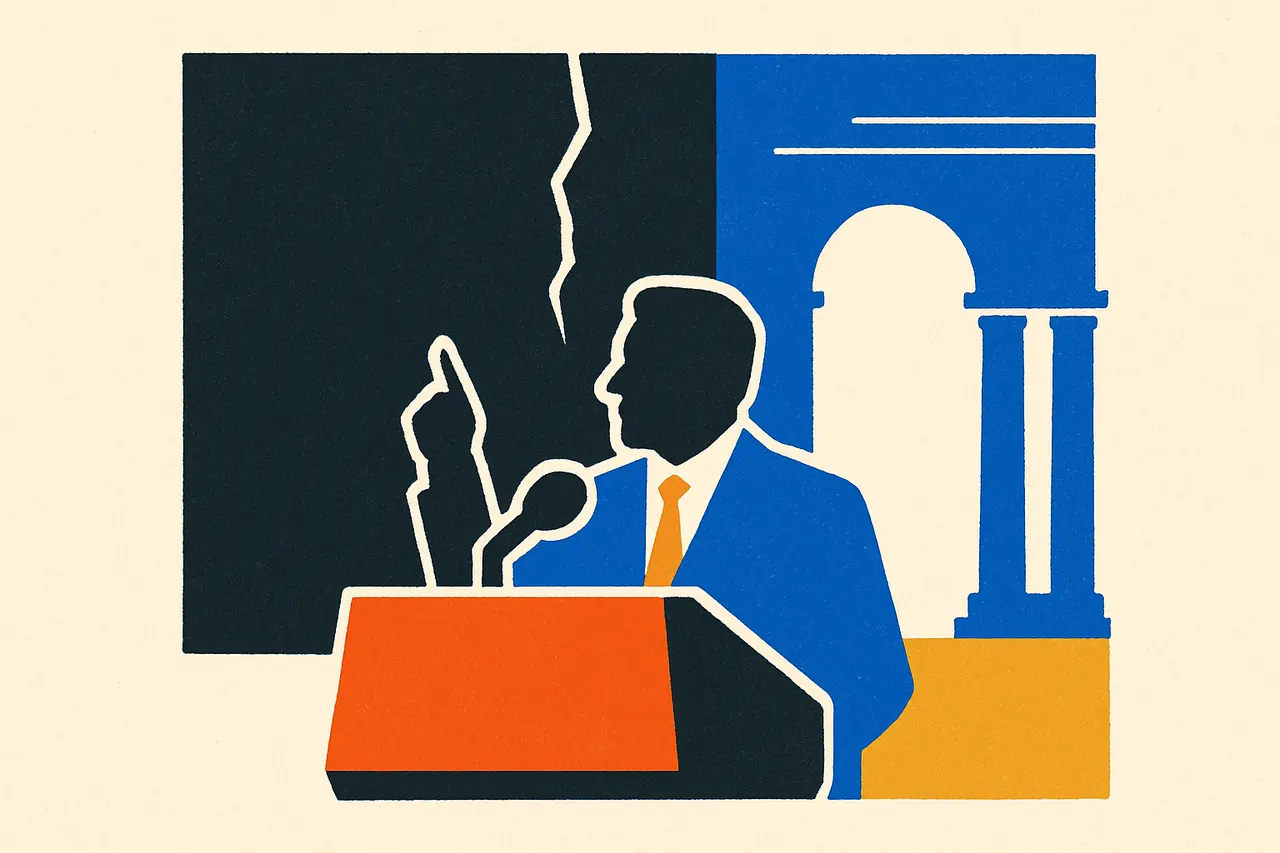
The State Department and NSC sent at least seven alternative drafts without the line. The idea had come from a Berlin dinner party.
President Ronald Reagan said ‘Mr. Gorbachev, tear down this wall!’ at West Berlin’s Brandenburg Gate on 12 June 1987, and he said it over weeks of objections from the State Department and the National Security Council, which circulated at least seven alternative drafts with the line taken out. The account comes from the speech’s author, White House speechwriter Peter Robinson, writing in the National Archives’ journal Prologue.
The idea was not a Washington invention. On a scouting trip, Robinson was told by the senior American diplomat in Berlin to avoid inflammatory statements about the wall, because West Berliners had grown used to it. At a dinner that evening his hostess, Ingeborg Elz, disagreed angrily: if Gorbachev was serious about glasnost and perestroika, she said, he could prove it by getting rid of the wall. Robinson made her remark the centre of the speech.
How the line survived:
- April 1987: Robinson is assigned the speech and told to expect a crowd of about 10,000. His first attempts read ‘Herr Gorbachev, bring down this wall’.
- 18 May: In the Oval Office, Reagan tells his writers: ‘That wall has to come down. That’s what I’d like to say to them.’
- Late May to early June: State and the NSC call the draft naive and needlessly provocative; deputy national security adviser Colin Powell argues against it, and Secretary of State George Shultz warns it will affront Gorbachev.
- 5 June: In a garden in Italy, deputy chief of staff Ken Duberstein briefs Reagan on the objections. Reagan smiles and says, ‘Let’s leave it in.’
- 12 June: On the way to the wall he tells Duberstein, ‘The boys at State are going to kill me, but it’s the right thing to do.’
- 9 November 1989: The Berlin Wall opens after a garbled press conference.
The speech came 19 months after Reagan and Gorbachev first met at Geneva, and the line was built as an escalation: ‘come here to this gate’, then ‘open this gate’, then ‘tear down this wall’.
Sources & references
3 referencesWell-established. Corroborated by 3 independent sources.