Pocahontas married John Rolfe in 1614, not John Smith
On this day · 5 April 1614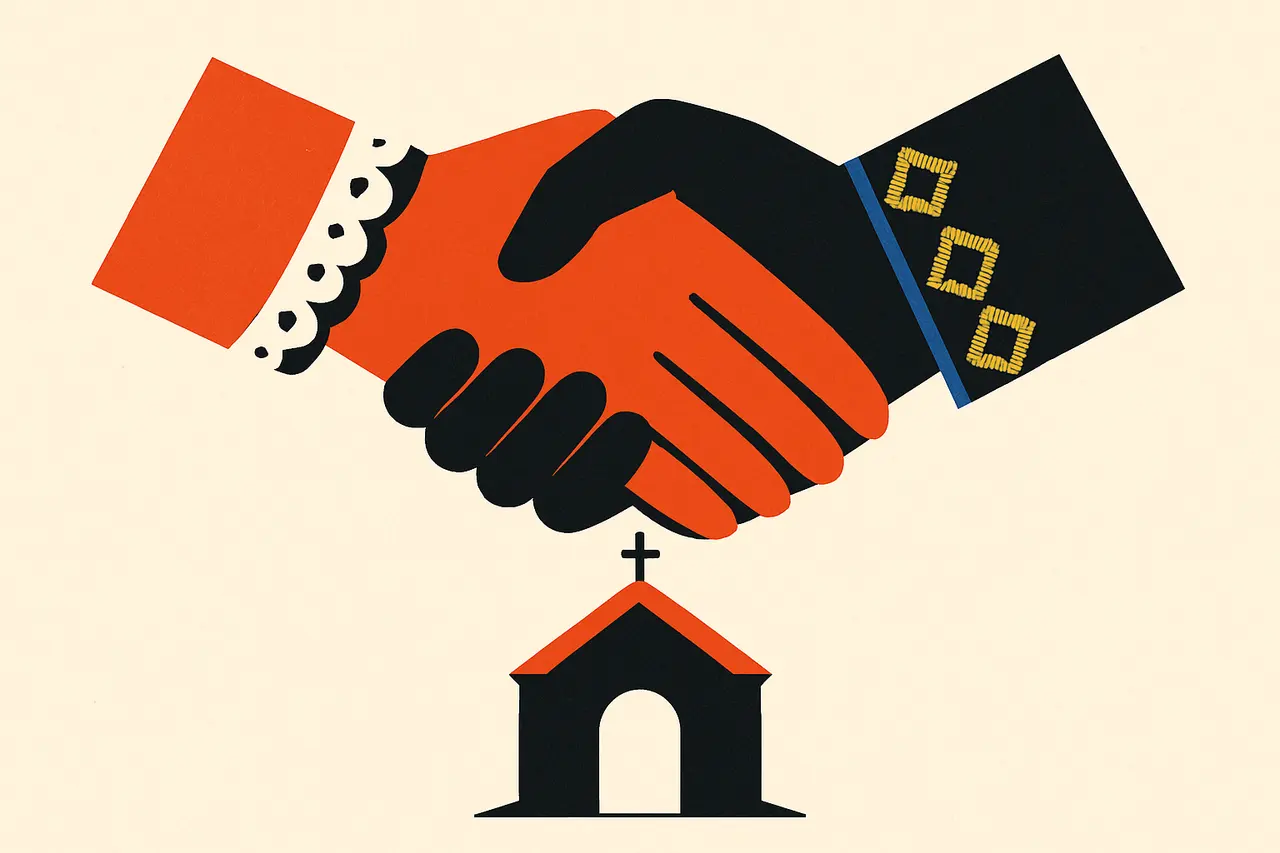
The April 5, 1614 Jamestown wedding of a captive Powhatan woman and a tobacco planter bought Virginia a brief 'Peace of Pocahontas.'
Pocahontas married the tobacco planter John Rolfe in the church at Jamestown on April 5, 1614 — not John Smith, whom she never married — and she did so as a captive of the English, not a free envoy. Her father, the paramount chief Powhatan, consented and sent her uncle Opachisco and two of his sons to witness the ceremony.
The wedding followed a year as a hostage. In spring 1613 Captain Samuel Argall lured her aboard his ship with help from the Patawomeck leader Iopassus, who was rewarded with a small copper kettle, and held her against the return of English prisoners, stolen weapons and corn. She had probably already married a Powhatan man, Kocoum, in 1610. Rolfe agonised for weeks over taking a non-Christian “strange wife,” then wrote that he would marry her:
“for the good of the plantation, the honor of our country, for the glory of God, for mine own salvation…”
A woman with five names
| Name | Origin | When |
|---|---|---|
| Amonute | Given name | At birth, about 1596 |
| Matoaka | Private name | Alongside Amonute |
| Pocahontas | Nickname, “playful one” | Childhood onward |
| Rebecca | Baptismal name | 1614 |
| Lady Rebecca Rolfe | Title used in England | 1616–1617 |
She left no writings, and none of her thoughts or feelings were recorded first-hand; everything we know was written by others, mostly English colonists, which is why the Mattaponi tribe’s oral history now offers a different account of key episodes.
The marriage bought the “Peace of Pocahontas,” a lull in the fighting that had dogged the colony since Jamestown’s founding in 1607. A son, Thomas, followed. In 1616 the Virginia Company paid for the family to tour England as living advertising for the colony, and she sat near King James I at a court masque.
In March 1617, as the family set off for Virginia, she fell gravely ill and was taken ashore at Gravesend, where she died aged about 21; she was buried at St. George’s Church on March 21, 1617. Powhatan died within a year, and the peace began to unravel.
Sources & references
3 referencesWell-established. Corroborated by 3 independent sources.