Jacob Roggeveen sighted Easter Island on Easter Sunday
On this day · 5 April 1722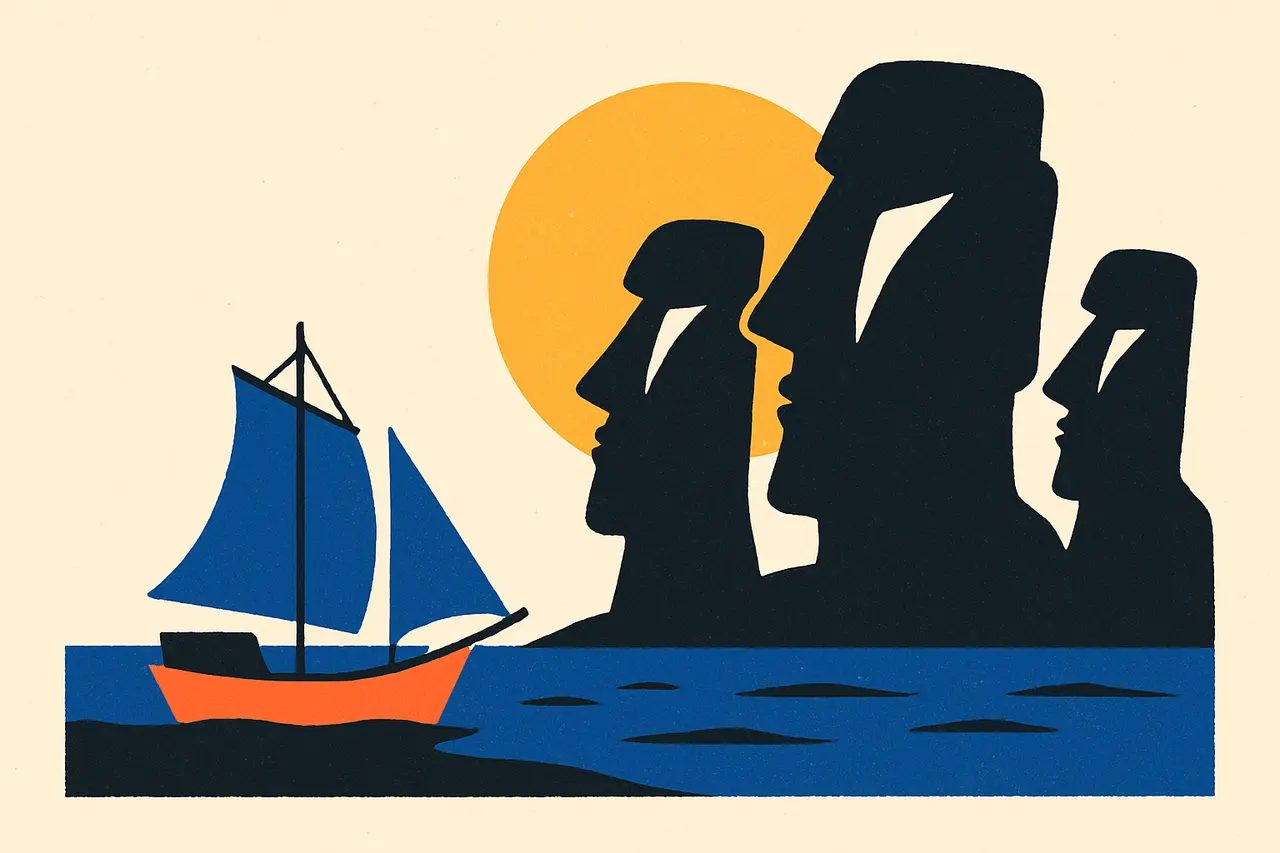
Hunting a phantom southern continent, a Dutch fleet stumbled onto one of the most isolated islands on Earth.
Dutch admiral Jacob Roggeveen was not looking for Easter Island. Sailing for the Dutch West India Company, he was chasing a rumored southern continent across the empty South Pacific when, on Easter Sunday, April 5, 1722, his lookouts spotted a low coastline on the horizon.
It was a speck of land more than a thousand miles from anywhere, and the crew named it for the day they found it: Paasch-Eyland, Easter Island. Roggeveen’s logs describe a population living among colossal stone figures, the moai, carved and raised by the island’s Rapa Nui people.
The visit lasted barely a day, but it ended roughly 1,400 years of isolation.
The encounter was brief and, for the islanders, ominous; it marked the first recorded European contact with a society that had developed in extraordinary solitude. The statues that astonished Roggeveen still stand, and still guard most of their secrets.
Sources & references
2 referencesWell-established. Corroborated by 2 independent sources.