Cabral reached Brazil in 1500, but Pinzón likely got there first
On this day · 22 April 1500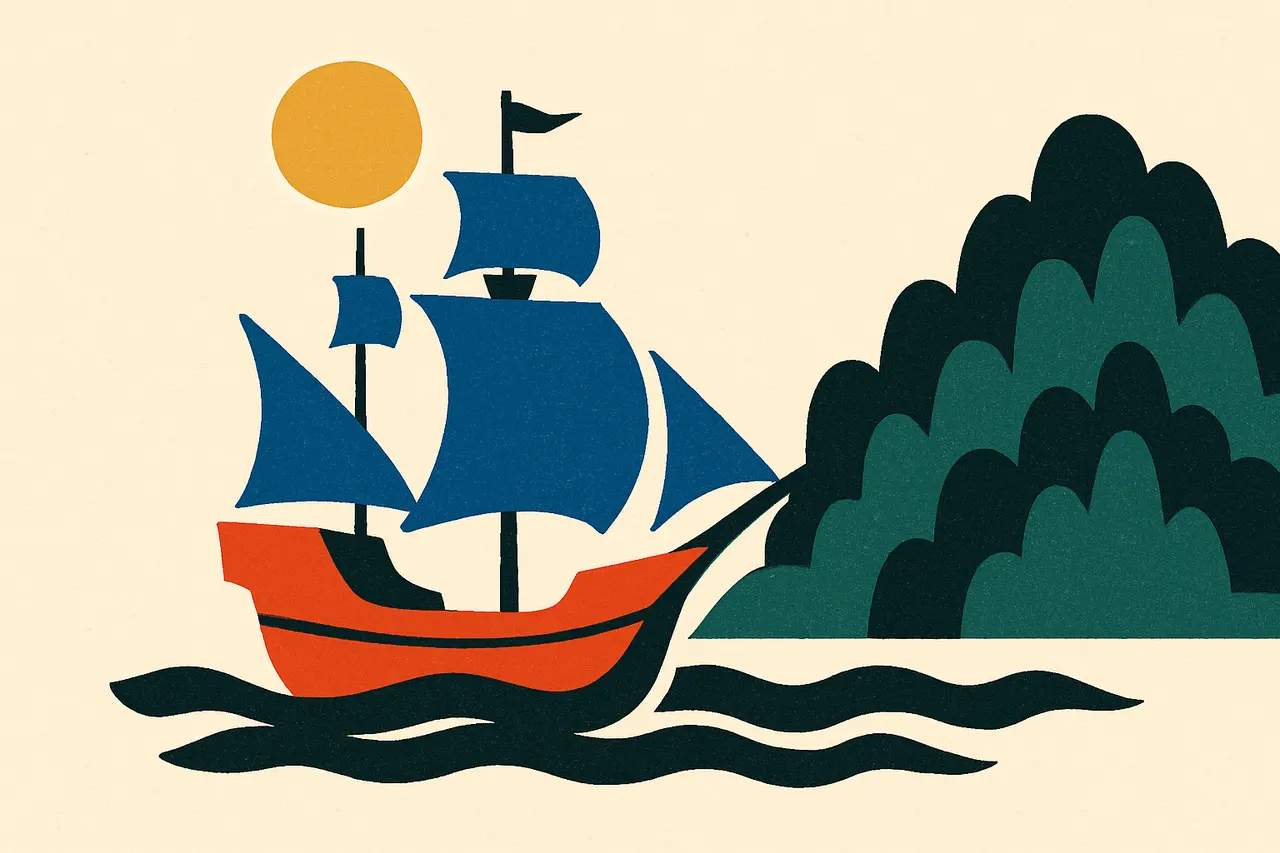
Cabral's fleet sighted Brazil on April 22, 1500 — months after Spanish captains — yet the Treaty of Tordesillas made his landfall the one that counted.
Pedro Álvares Cabral’s fleet sighted the coast of Brazil on April 22, 1500, at a peak the crew named Monte Pascoal in today’s Bahia — but he was probably not the first European there. Spanish captain Vicente Yáñez Pinzón and Diego de Lepe reached Brazil’s northeast in the first months of 1500, and a Portuguese voyage under Duarte Pacheco Pereira may have sighted the coast as early as 1498.
What Cabral’s fleet did next is far better documented than any rival claim. On April 23 a boat under Nicolau Coelho made the first contact with the Tupiniquim people; on April 26 the first Mass on Brazilian soil was said at the bay now called Baía Cabrália; and on May 2 the ships left for India after raising a great wooden cross and sending a supply ship home with the news. Three main accounts survive, the best known being the letter of the fleet’s clerk, Pêro Vaz de Caminha, to King Manuel I.
Why Cabral gets the credit
Location and law. Under the 1494 Treaty of Tordesillas, King João II had insisted the dividing line sit 370 leagues west of the Cape Verde islands rather than the 100 leagues Spain’s monarchs proposed, and Cabral’s landfall fell on Portugal’s side of it. Pinzón’s visit gave Spain no foothold; Cabral’s claim became a colony.
Historians still argue over whether the landing was an accident. One camp points to the wide south-westerly arc the fleet used to escape the equatorial calms, and to the absence of any written order to look for land. The other notes that no storm was recorded, and that Lisbon sat on the news for almost a year — from the supply ship’s arrival until the rest of the India fleet came home in mid-1501 — which looks like a secret being kept.
Either way, the name the crew chose, Terra de Vera Cruz (Land of the True Cross), did not last. By 1503 the coast was being called after brazilwood, the red-dye timber that became its first big export.
Sources & references
3 referencesWell-established. Corroborated by 3 independent sources.